Trump Says US-Iran War Must End Soon as Middle East Tensions Continue
Digital desk
US President Donald Trump says the Iran conflict must end soon as regional violence continues, oil prices rise and diplomatic efforts intensify across the Middle East.
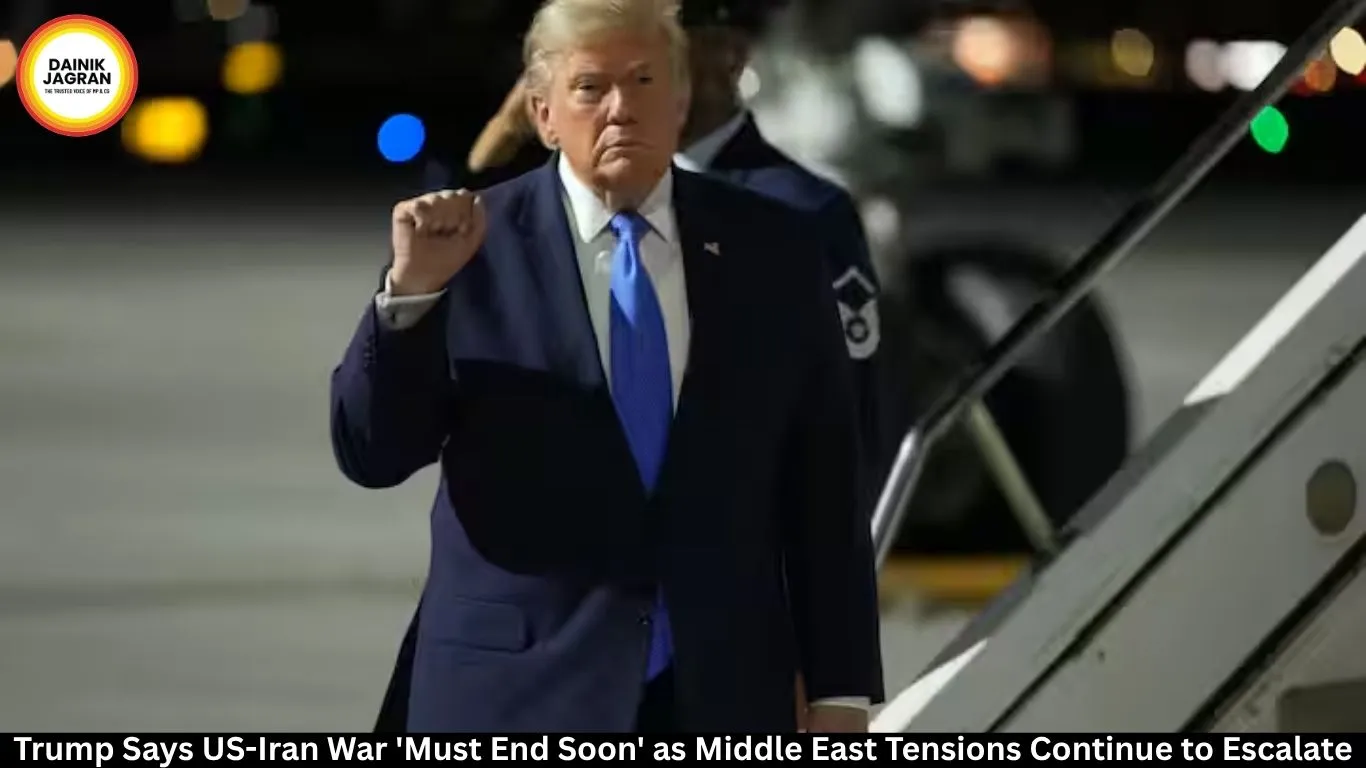
US President Donald Trump has expressed confidence that the ongoing conflict involving the United States and Iran could end "pretty soon," even as military tensions continue across the Middle East and global markets remain on edge.
Speaking to reporters in Washington, Trump dismissed reports suggesting the US was facing ammunition shortages, asserting that the country possesses an "unlimited supply" of weapons and remains fully prepared for any escalation.
"We are in very good shape. We have literally massive amounts of ammunition," Trump said.
Trump Optimistic About Conflict
The US President said he believes the conflict cannot continue indefinitely, arguing that Iran "can't go much longer" under the current circumstances.
His remarks come amid continued military exchanges and heightened regional instability involving Iran, Israel and Iran-backed armed groups across West Asia.
Despite his optimistic outlook, there has been no official announcement regarding ceasefire negotiations or a formal diplomatic breakthrough.
Iran Accuses US of Economic Pressure
Iranian President Masoud Pezeshkian accused the United States of maintaining "maximum pressure" through sanctions and economic restrictions.
He claimed that recent attacks had severely affected Iran's energy infrastructure, resulting in the loss of nearly 230 million cubic metres of natural gas production per day.
Pezeshkian, however, maintained that coordinated governance and regional cooperation had helped Iran manage the crisis despite continued military pressure.
Violence Continues Across the Region
The broader regional conflict showed little sign of easing.
In occupied Jerusalem, Hamas condemned Israeli military operations targeting towns and refugee camps, including the Qalandiya refugee camp, accusing Israel of escalating violence against Palestinians.
Meanwhile, Israel confirmed that two Israeli soldiers were killed in an explosion in southern Lebanon, marking the first Israeli military fatalities since a ceasefire with Hezbollah came into effect.
Israeli authorities said operations in southern Lebanon have continued despite the fragile truce.
Saudi Arabia, France Discuss Regional Security
Regional diplomatic activity also intensified as Saudi Crown Prince Mohammed bin Salman and French President Emmanuel Macron held discussions on Middle East security and freedom of navigation in the Red Sea.
According to Saudi state media, the leaders reviewed regional stability and ongoing efforts to protect maritime routes following attacks linked to Yemen's Iran-backed Houthi movement.
Oil Prices Rise on Strait of Hormuz Concerns
Global oil markets reacted to the continued uncertainty, with Brent crude rising to around $83.48 per barrel after reports of Iranian military activity targeting what Tehran described as "hostile targets" near the Strait of Hormuz.
The strategic waterway remains one of the world's most important energy shipping routes, and any disruption has the potential to impact global crude supplies.
Reports also suggested Iran is exploring diplomatic efforts through Oman to ease maritime tensions in the region.
Conflict Continues to Shape Global Outlook
Although President Trump has indicated that the conflict could conclude in the near future, military operations, diplomatic engagements and energy market volatility continue to reflect the fragile security situation across West Asia.
Analysts say developments in the coming days—including any progress in negotiations or further escalation on the ground—will be closely watched by governments and financial markets worldwide.
Trump Says US-Iran War Must End Soon as Middle East Tensions Continue
Digital desk
US President Donald Trump has expressed confidence that the ongoing conflict involving the United States and Iran could end "pretty soon," even as military tensions continue across the Middle East and global markets remain on edge.
Speaking to reporters in Washington, Trump dismissed reports suggesting the US was facing ammunition shortages, asserting that the country possesses an "unlimited supply" of weapons and remains fully prepared for any escalation.
"We are in very good shape. We have literally massive amounts of ammunition," Trump said.
Trump Optimistic About Conflict
The US President said he believes the conflict cannot continue indefinitely, arguing that Iran "can't go much longer" under the current circumstances.
His remarks come amid continued military exchanges and heightened regional instability involving Iran, Israel and Iran-backed armed groups across West Asia.
Despite his optimistic outlook, there has been no official announcement regarding ceasefire negotiations or a formal diplomatic breakthrough.
Iran Accuses US of Economic Pressure
Iranian President Masoud Pezeshkian accused the United States of maintaining "maximum pressure" through sanctions and economic restrictions.
He claimed that recent attacks had severely affected Iran's energy infrastructure, resulting in the loss of nearly 230 million cubic metres of natural gas production per day.
Pezeshkian, however, maintained that coordinated governance and regional cooperation had helped Iran manage the crisis despite continued military pressure.
Violence Continues Across the Region
The broader regional conflict showed little sign of easing.
In occupied Jerusalem, Hamas condemned Israeli military operations targeting towns and refugee camps, including the Qalandiya refugee camp, accusing Israel of escalating violence against Palestinians.
Meanwhile, Israel confirmed that two Israeli soldiers were killed in an explosion in southern Lebanon, marking the first Israeli military fatalities since a ceasefire with Hezbollah came into effect.
Israeli authorities said operations in southern Lebanon have continued despite the fragile truce.
Saudi Arabia, France Discuss Regional Security
Regional diplomatic activity also intensified as Saudi Crown Prince Mohammed bin Salman and French President Emmanuel Macron held discussions on Middle East security and freedom of navigation in the Red Sea.
According to Saudi state media, the leaders reviewed regional stability and ongoing efforts to protect maritime routes following attacks linked to Yemen's Iran-backed Houthi movement.
Oil Prices Rise on Strait of Hormuz Concerns
Global oil markets reacted to the continued uncertainty, with Brent crude rising to around $83.48 per barrel after reports of Iranian military activity targeting what Tehran described as "hostile targets" near the Strait of Hormuz.
The strategic waterway remains one of the world's most important energy shipping routes, and any disruption has the potential to impact global crude supplies.
Reports also suggested Iran is exploring diplomatic efforts through Oman to ease maritime tensions in the region.
Conflict Continues to Shape Global Outlook
Although President Trump has indicated that the conflict could conclude in the near future, military operations, diplomatic engagements and energy market volatility continue to reflect the fragile security situation across West Asia.
Analysts say developments in the coming days—including any progress in negotiations or further escalation on the ground—will be closely watched by governments and financial markets worldwide.
Recommended For You
--------
๐จ Beat the News Rush โ Join Now!
Get breaking alerts, hot exclusives, and game-changing stories instantly on your phone. No delays, no fluff โ just the edge you need. โก
Tap to join:ย
๐ข WhatsApp Channel: Dainik Jagran MP CG
Crave more?
๐ Facebook: Dainik Jagran MP CG English
๐ ง Twitter (X): Dainik Jagran MP CG
๐ Instagram: Dainik Jagran MP CG
Share the fire โ keep your crew ahead! ๐๏ธ๐ฅ