


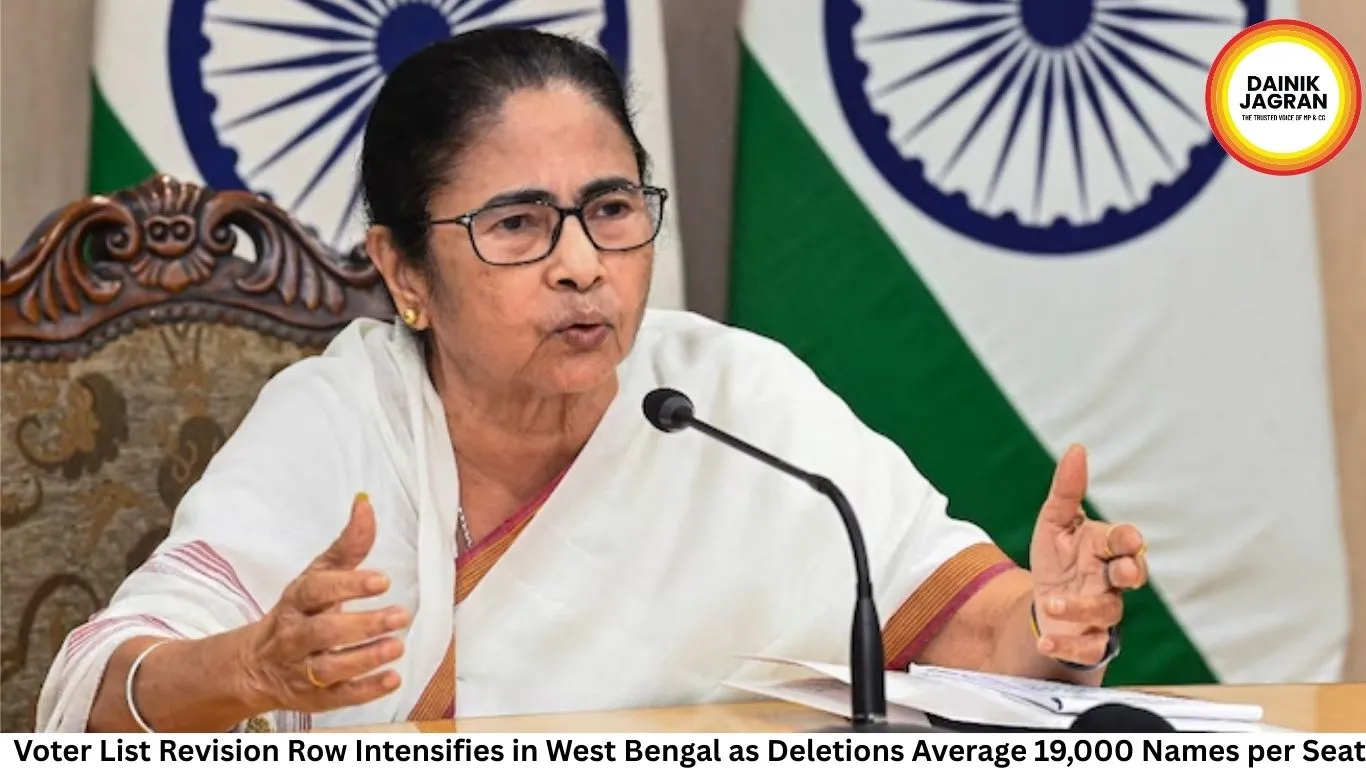
Voter List Revision Row Intensifies in West Bengal as Deletions Average 19,000 Names per Seat
Digital Desk
According to data compiled from draft rolls, more than 58 lakh names have been deleted so far, while around 1.26 crore notices have been issued to voters flagged under categories such as “logical discrepancy” or “unmapped.” The revision process has led to long queues at election offices across Kolkata and other districts as residents submit documents to verify identity details and restore entries.
Chief Minister Mamata Banerjee has challenged aspects of the revision exercise in the Supreme Court of India, portraying the issue as a rights concern. Party spokesperson Kunal Ghosh alleged the verification drive has unfairly targeted genuine voters, claiming that “over 1.25 crore Bengalis have been made to stand in line” due to discrepancies, and said the controversy has politically benefited the ruling party by energising its support base.
State BJP leaders, however, defended the revision, arguing it is necessary to remove duplicate or ineligible names. State president Samik Bhattacharya said the clean-up would expose so-called “ghost voters” and ensure fair polling. He alleged that irregularities in past rolls had influenced electoral outcomes, a charge the ruling party denies.
Election data underscores why the revision has drawn scrutiny. In the 2021 Assembly polls, 166 of the state’s 294 seats were decided by margins of less than 25,000 votes. Analysts note that changes to thousands of entries in closely contested constituencies could significantly alter electoral arithmetic once the final rolls are published.
Many notices stem from minor spelling variations or inconsistencies between documents and voter lists, such as differences in surnames or initials. Election officials have urged residents not to panic and to verify their status online or through local Booth Level Officers. Those whose names were removed can apply for restoration using Form-6, after which field verification and hearings may be conducted before inclusion in the final list.
With political parties closely monitoring each update, the voter roll revision has effectively become the first battleground of the state’s next election cycle, even before formal campaigning begins.
.jpg)




