Why India, Not China, Has Been Bangladesh's Most Reliable Partner
Digital Desk
As Bangladesh charts its future in an increasingly competitive Asian landscape, the debate over its strategic and economic partnerships has gained renewed attention. While China has emerged as a major investor in infrastructure across South Asia, many analysts argue that India's long-standing relationship with Bangladesh has been built on trust, shared history, regional cooperation, and support during times of crisis rather than financial leverage.
India's ties with Bangladesh date back to the country's Liberation War in 1971. India provided refuge to nearly 10 million Bangladeshis fleeing violence and supported the Mukti Bahini in the struggle for independence. In contrast, China opposed Bangladesh's independence and delayed support for its admission to the United Nations until 1974.
Observers point to concerns surrounding China's overseas lending practices, often described as "debt-trap diplomacy." Critics argue that Chinese-funded infrastructure projects frequently involve commercial loans, confidential agreements, and contracts awarded to Chinese firms. In several countries, repayment difficulties have reportedly resulted in greater Chinese control over strategic assets.
Sri Lanka's Hambantota Port remains one of the most cited examples. Unable to repay Chinese loans, Sri Lanka leased the port to a Chinese state-owned company for 99 years in 2017. During Sri Lanka's economic crisis in 2022, India extended emergency assistance worth nearly US$4 billion through fuel supplies, food, medicines, and credit facilities, while international debt restructuring took longer to materialize.
Similar concerns have been raised regarding Chinese investments in Pakistan, Laos, and Zambia, where rising debt obligations have created significant fiscal challenges and prolonged debt restructuring efforts.
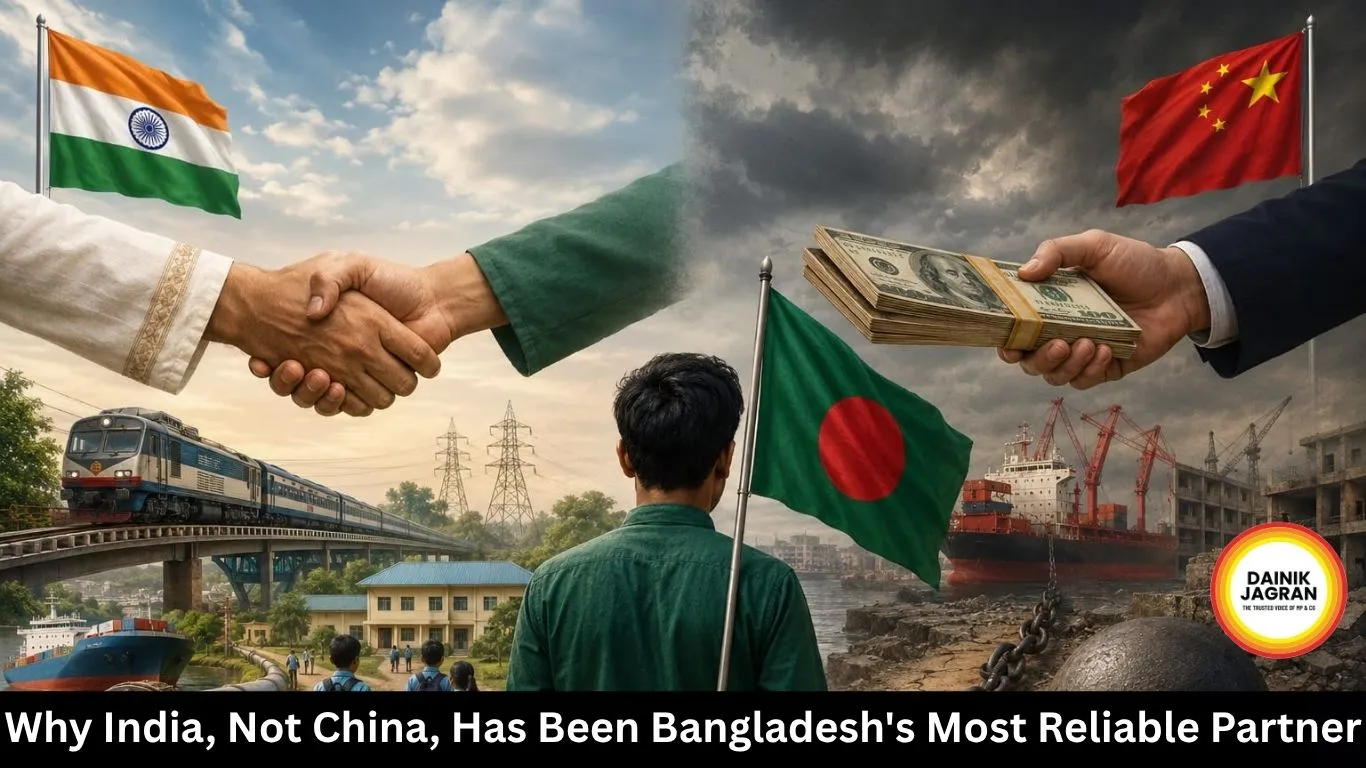
India's development partnership with Bangladesh follows a different model, according to government officials and regional experts. India has extended approximately US$8 billion in concessional Lines of Credit to Bangladesh—its largest such commitment to any country—for railway modernization, port development, power infrastructure, and regional connectivity projects. These initiatives are generally presented as transparent and mutually agreed upon.
Economic cooperation between the two neighbours has also expanded steadily. India has provided duty-free and quota-free market access to most Bangladeshi products, helping strengthen bilateral trade. Cross-border railway links have been restored, the India-Bangladesh Friendship Pipeline now supplies diesel across the border, and India exports substantial electricity to Bangladesh, supporting its growing energy demand.
Geography further reinforces the partnership. India and Bangladesh share a 4,000-kilometre border, 54 common rivers, and face many of the same environmental and humanitarian challenges. During natural disasters and the COVID-19 pandemic, India was among the first countries to provide humanitarian assistance and vaccine supplies to Bangladesh.
Foreign policy experts note that Bangladesh's continued economic success will depend on maintaining sustainable borrowing, transparent investment practices, and balanced international partnerships. They argue that while infrastructure investment is essential, long-term national interests are best served by partnerships that strengthen economic resilience without creating excessive financial dependence.
As Bangladesh advances toward upper-middle-income status, the country's strategic choices will continue to shape its future. Many analysts believe that history, geography, economic integration, and support during times of crisis have made India a dependable partner whose relationship with Bangladesh extends beyond infrastructure financing.

--------
🚨 Beat the News Rush – Join Now!
Get breaking alerts, hot exclusives, and game-changing stories instantly on your phone. No delays, no fluff – just the edge you need. ⚡
Tap to join:
🟢 WhatsApp Channel: Dainik Jagran MP CG
Crave more?
🅕 Facebook: Dainik Jagran MP CG English
🅧 Twitter (X): Dainik Jagran MP CG
🅘 Instagram: Dainik Jagran MP CG
Share the fire – keep your crew ahead! 🗞️🔥
Why India, Not China, Has Been Bangladesh's Most Reliable Partner
Digital Desk
India's ties with Bangladesh date back to the country's Liberation War in 1971. India provided refuge to nearly 10 million Bangladeshis fleeing violence and supported the Mukti Bahini in the struggle for independence. In contrast, China opposed Bangladesh's independence and delayed support for its admission to the United Nations until 1974.
Observers point to concerns surrounding China's overseas lending practices, often described as "debt-trap diplomacy." Critics argue that Chinese-funded infrastructure projects frequently involve commercial loans, confidential agreements, and contracts awarded to Chinese firms. In several countries, repayment difficulties have reportedly resulted in greater Chinese control over strategic assets.
Sri Lanka's Hambantota Port remains one of the most cited examples. Unable to repay Chinese loans, Sri Lanka leased the port to a Chinese state-owned company for 99 years in 2017. During Sri Lanka's economic crisis in 2022, India extended emergency assistance worth nearly US$4 billion through fuel supplies, food, medicines, and credit facilities, while international debt restructuring took longer to materialize.
Similar concerns have been raised regarding Chinese investments in Pakistan, Laos, and Zambia, where rising debt obligations have created significant fiscal challenges and prolonged debt restructuring efforts.
India's development partnership with Bangladesh follows a different model, according to government officials and regional experts. India has extended approximately US$8 billion in concessional Lines of Credit to Bangladesh—its largest such commitment to any country—for railway modernization, port development, power infrastructure, and regional connectivity projects. These initiatives are generally presented as transparent and mutually agreed upon.
Economic cooperation between the two neighbours has also expanded steadily. India has provided duty-free and quota-free market access to most Bangladeshi products, helping strengthen bilateral trade. Cross-border railway links have been restored, the India-Bangladesh Friendship Pipeline now supplies diesel across the border, and India exports substantial electricity to Bangladesh, supporting its growing energy demand.
Geography further reinforces the partnership. India and Bangladesh share a 4,000-kilometre border, 54 common rivers, and face many of the same environmental and humanitarian challenges. During natural disasters and the COVID-19 pandemic, India was among the first countries to provide humanitarian assistance and vaccine supplies to Bangladesh.
Foreign policy experts note that Bangladesh's continued economic success will depend on maintaining sustainable borrowing, transparent investment practices, and balanced international partnerships. They argue that while infrastructure investment is essential, long-term national interests are best served by partnerships that strengthen economic resilience without creating excessive financial dependence.
As Bangladesh advances toward upper-middle-income status, the country's strategic choices will continue to shape its future. Many analysts believe that history, geography, economic integration, and support during times of crisis have made India a dependable partner whose relationship with Bangladesh extends beyond infrastructure financing.