


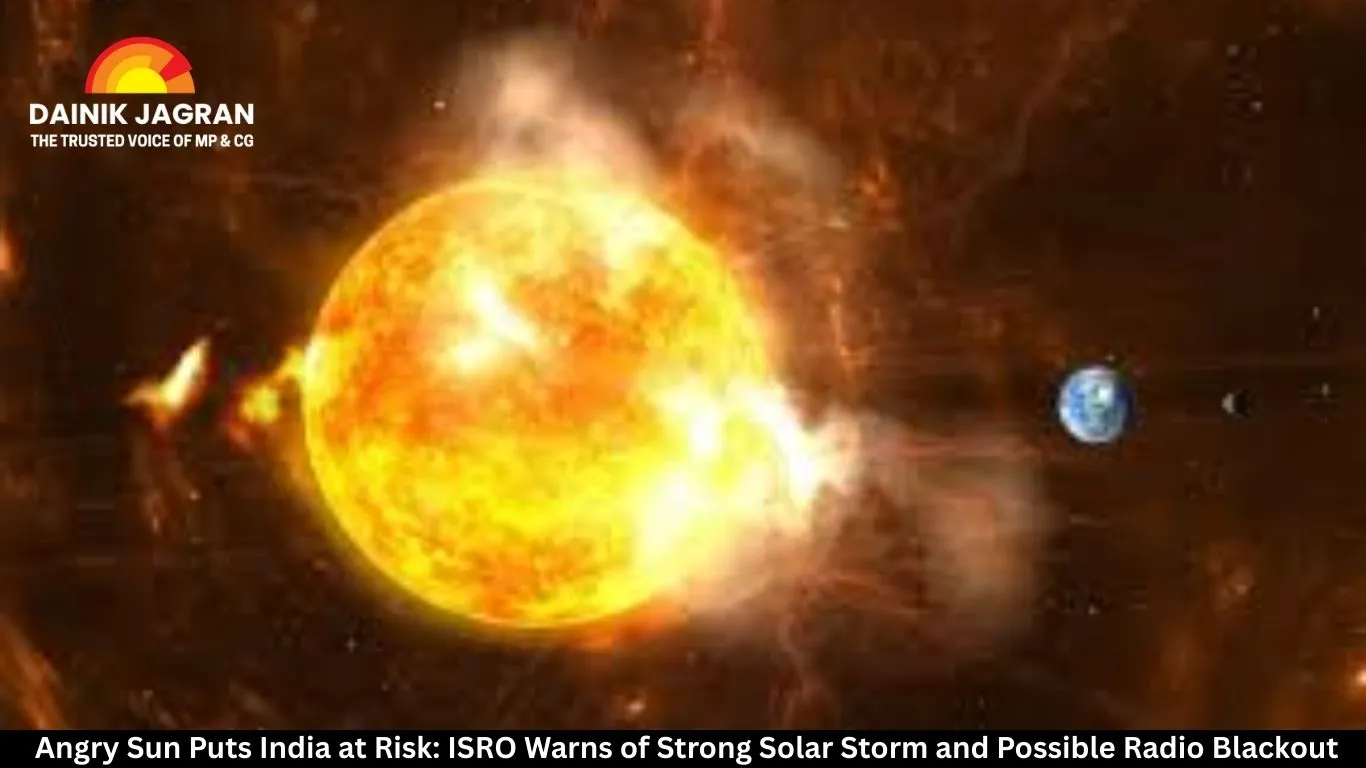
Angry Sun Puts India at Risk: ISRO Warns of Strong Solar Storm and Possible Radio Blackout
Digital Desk
India is on high alert as the Sun shows signs of extreme activity. The Indian Space Research Organisation (ISRO) has issued a fresh warning after detecting an intense solar storm that could lead to radio blackouts and disruptions in satellite-based services across the country. Scientists say the latest solar flare is among the strongest seen in recent years, raising concerns for communication networks, navigation systems, and power infrastructure.
What Is a Solar Storm and Why Is It Dangerous?
A solar storm occurs when the Sun releases massive bursts of energy in the form of solar flares or coronal mass ejections (CMEs). These explosions send charged particles racing toward Earth at the speed of light, reaching our planet in just 7–8 minutes.
Normally, Earth’s magnetic field acts as a protective shield. However, when solar activity becomes extremely intense, this protection can weaken, allowing energetic particles to enter the upper atmosphere and cause disturbances.
Why This Solar Storm Is More Intense
According to scientists, the current solar event comes from an active sunspot region that has released an X8.1-class solar flare. Solar flares are classified based on X-ray energy output:
A, B, C-class: Minor impact
M-class: Moderate, may affect polar regions
X-class: Extremely powerful and dangerous
Each class is 10 times stronger than the previous one. An X8.1 flare is considered extremely intense and capable of causing widespread technological disruptions.
ISRO’s Warning and India’s Preparedness
ISRO has stated that it is closely monitoring over 50 operational Indian satellites following repeated solar eruptions observed since early February. The main concern is a potential radio blackout, classified as an R5-level event, which is the most severe category.
Possible impacts include:
Disruption in radio communication and aviation signals
GPS and navigation errors
Mobile networks and satellite TV interruptions
Increased stress on power grids and transformers
To reduce damage, ISRO may temporarily adjust satellite orientation and protect sensitive instruments from direct solar exposure.
Why This Matters Right Now
The Sun is currently passing through its 11-year solar cycle peak, known as solar maximum. During this phase, solar storms become more frequent and intense. With India increasingly dependent on satellite technology for communication, navigation, defense, and digital services, space weather has become a critical national concern.
Is There Any Positive Effect?
Yes. Strong solar storms can also create breathtaking auroras. Under very intense conditions, northern lights have even been spotted in parts of Ladakh, offering a rare visual treat.
While solar storms are natural cosmic events, their impact on modern technology can be serious. ISRO’s timely warning highlights the importance of space weather monitoring in today’s connected world. As scientists keep a close watch on the “angry Sun,” the coming days will be crucial in determining whether India faces temporary disruptions—or safely rides out the storm.




.jpg)




