


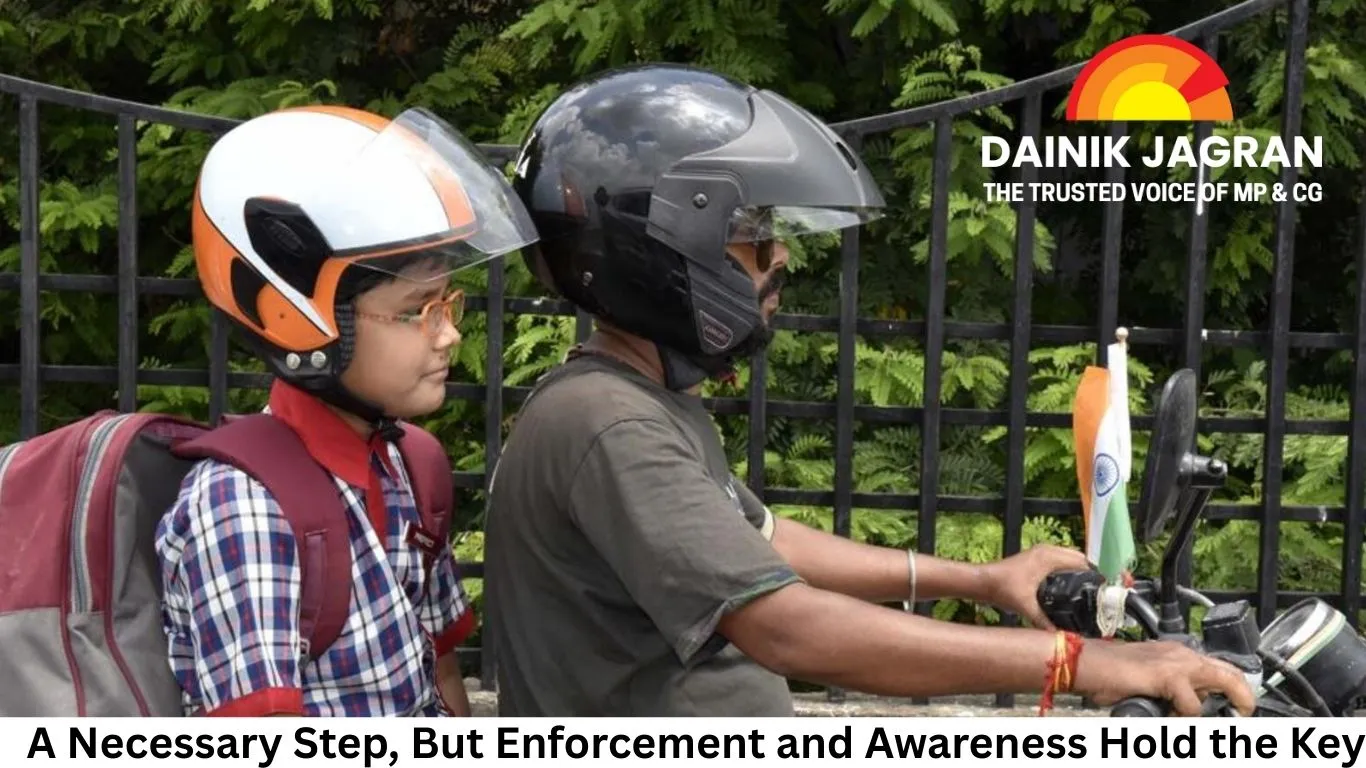
Double Helmet Rule: A Necessary Step, But Enforcement and Awareness Hold the Key
Digital Desk
India continues to record one of the highest numbers of road accident fatalities in the world, with two-wheeler users accounting for a significant share. According to official statistics, head injuries remain the leading cause of death in motorcycle accidents. In this context, insisting that only the rider wear a helmet while the pillion remains unprotected defeats the very purpose of safety regulations. A crash does not discriminate between who is driving and who is sitting behind.
From a public policy perspective, the double helmet rule aligns with the broader goal of reducing preventable deaths. Countries with strict helmet compliance have consistently reported lower fatality rates. The logic is simple: helmets save lives. Extending this protection to pillion riders, including women and children, is a rational and evidence-based decision.
However, the challenge lies in implementation. Sporadic enforcement, lack of clarity on penalties, and public resistance often dilute the impact of such rules. In many cities, compliance improves briefly after crackdowns, only to fade once enforcement eases. This indicates that punishment alone cannot bring lasting change.
Authorities must complement enforcement with sustained awareness campaigns that explain the “why” behind the rule, not just the “what.” Affordability is another concern, particularly for families who may need an additional helmet. Subsidised helmets or partnerships with manufacturers could address this gap and improve acceptance.
The double helmet rule should not be viewed as an unnecessary burden, but as a shared responsibility between the state and citizens to prioritise life over convenience. When implemented with consistency, empathy and education, it has the potential to significantly reduce fatalities and make Indian roads safer for everyone.




.jpg)




