


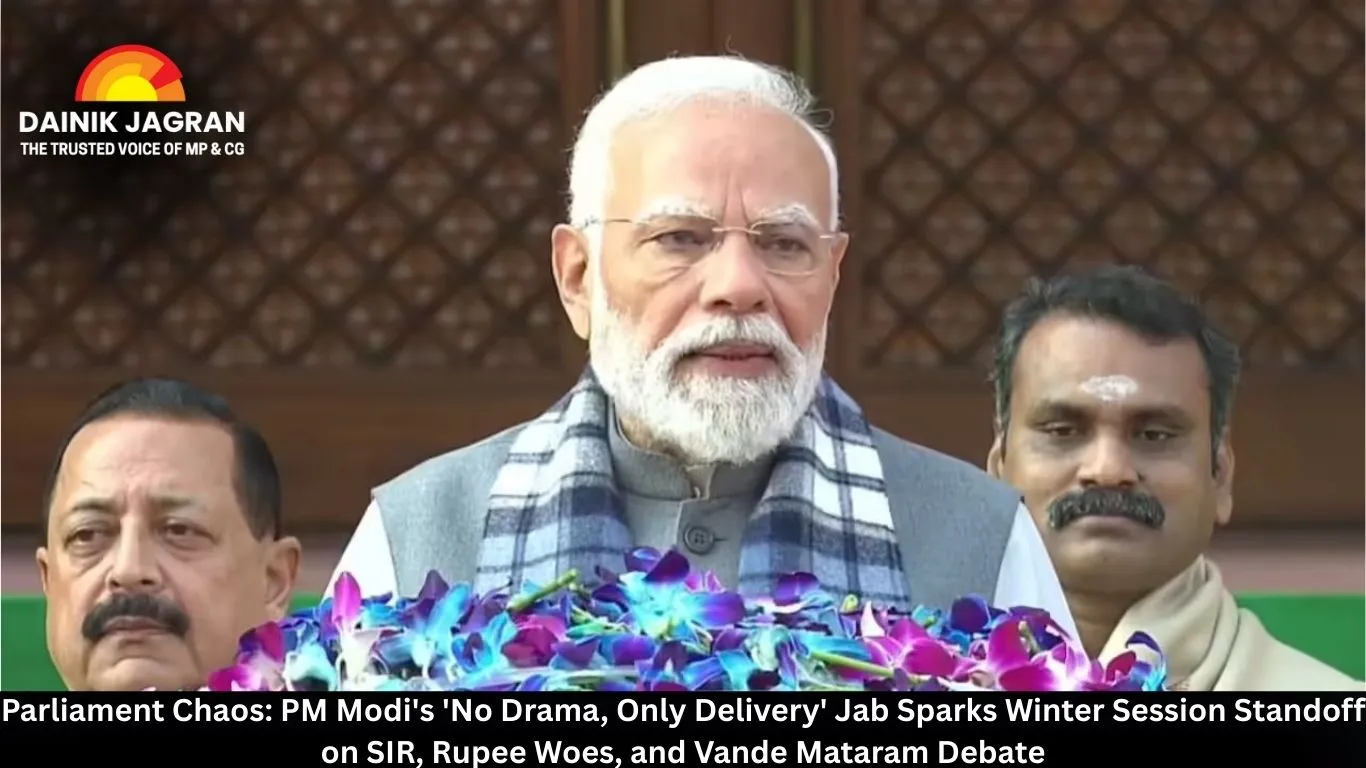
Parliament Chaos: PM Modi's 'No Drama, Only Delivery' Jab Sparks Winter Session Standoff on SIR, Rupee Woes, and Vande Mataram Debate
Digital Desk
In the heart of India's democracy, the Winter Session of Parliament opened on December 1, 2025, not with policy breakthroughs, but with the familiar echo of chaos—slogans, walkouts, and adjournments. Prime Minister Narendra Modi's morning briefing set the tone: "No drama, only delivery."
Speaking to the media amid the crisp Delhi winter, Modi subtly targeted the opposition, accusing them of turning the House into a "frustration outlet" rather than a forum for governance. "Slogans can be chanted elsewhere; here, we need policies, not noise," he quipped, shifting blame for stalled proceedings squarely onto the INDIA bloc led by Rahul Gandhi.
The opposition fired back, undeterred. Their core demand? An urgent debate on the Special Intensive Revision (SIR) of electoral rolls in 12 states and Union territories—a process they claim is overburdening Booth Level Officers (BLOs), leading to tragic deaths and protests.
"People are dying, families are suffering—how is this drama?" thundered Congress leader Mallikarjun Kharge in Rajya Sabha. Joined by allies, they stormed the Well of the House with placards, halting Lok Sabha proceedings twice by noon.
Bills on GST for Manipur and health cess were tabled amid the din, but no real work happened. Rajya Sabha fared slightly better, with a ceremonial welcome for new Chairman C.P. Radhakrishnan, but even there, SIR demands triggered a walkout after Minister Kiren Rijiju's vague assurances: "We're not rejecting discussion, just give it time."
This isn't isolated—PRS Legislative Research pegs the last Monsoon Session's productivity at a dismal 29% in Lok Sabha, 34% in Rajya Sabha. Over five years, it's hovered around 60%, a far cry from the robust debates our founders envisioned.
As an opinion, it's high time both sides own up: The BJP's majority carries extra responsibility to bridge divides, not dismiss concerns as "drama." The opposition, too, must prioritize dialogue over disruption. With just 15 sitting days till December 19, 25% of time allotted to them, this session risks becoming another missed opportunity. Imagine if energy went into tackling unemployment, pollution, or the Delhi blast instead?
On the SIR front, experts like constitutional scholar Pratap Bhanu Mehta argue for focused talks on legal tweaks under the Representation of the People Act, without politicizing operational glitches. BLO suicides in opposition-ruled states highlight real pain—petitions demand removing mandatory duties, and Assam's NRC hangover adds complexity.
Yet, government stonewalling on a date fuels distrust. In a clever pivot, sources hint at a 10-hour debate on Vande Mataram's 150th anniversary by December 4-5, with Modi possibly joining. Is this a genuine cultural nod or a distraction from SIR heat? The opposition calls it a "red herring," recalling Congress's historical embrace of the anthem minus controversial stanzas.
Beyond the House, headlines screamed urgency. The Red Fort car blast probe, 20 days in, stretched to Bihar's Khagaria with NIA raids on suspects' kin—unearthing electronic trails in a white-collar module spanning Kashmir to Lucknow. Al-Falah University's founder landed in judicial custody amid minority status scrutiny.
Aviation alarms rang louder: Minister Ram Mohan Naidu admitted GPS spoofing incidents at major airports, disrupting 800 Delhi flights recently. These cyber tricks fake satellite signals, misleading navigation—government vows tighter tech, but is it enough?
Economically, the rupee's plunge to 89.79 against the dollar (closing at 89.53) revives Modi's old jabs at past regimes. Blame game aside, culprits are clear: surging crude oil (India's import bill balloons), gold demand, FPI outflows, and debt repayments.
As FPIs flee for greener pastures, Modi's "investor-friendly" narrative wobbles. Meanwhile, the government's disinvestment push—selling 6% in Bank of Maharashtra for ₹2,600 crore—sparks privatization debates: Efficiency boost or asset sell-off?
Democracy thrives on debate, not deadlock. Modi's call for delivery resonates, but only if paired with openness. With environment woes (AQI still choking) and unaddressed manifestos, this session must deliver—or risk eroding faith in Parliament's hallowed halls.
As citizens, we demand better: Let's turn the temple of democracy into a workshop for the people, not a stage for endless drama.



.jpg)




