


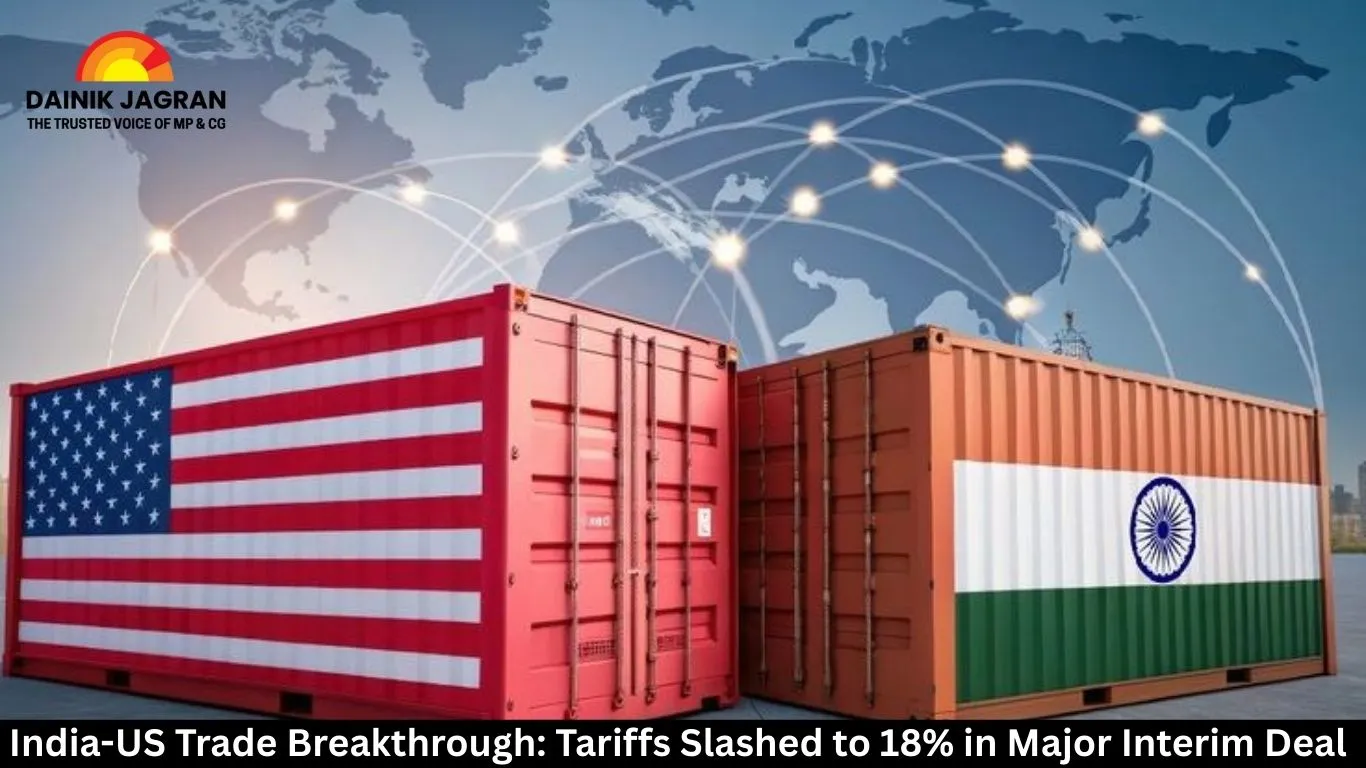
India-US Trade Breakthrough: Tariffs Slashed to 18% in Major Interim Deal
Digital Desk
In a significant diplomatic and economic breakthrough, India and the United States have agreed on a framework for an interim trade agreement, bringing to a close nearly a year of strained commercial relations. The core of the deal sees the punishing U.S. tariffs on Indian goods slashed from a high of 50% down to 18%, providing immediate relief to a wide range of Indian exporters.
The joint statement, released by the White House and India's Commerce Ministry, outlines a "reciprocal and mutually beneficial" pathway forward, affirming both nations' commitment to negotiating a broader bilateral trade pact. This interim step marks a crucial reset after tensions escalated in 2025 when the Trump administration imposed steep tariffs, partly in response to India's purchases of Russian oil.
The Tariff Transformation: From Penalty to Parity
The most immediate impact of the deal is a drastic reduction in the cost of Indian goods entering the United States. The U.S. has revoked the 25% penal tariff imposed over the Russian oil issue and reduced the base reciprocal tariff, bringing the total levy down to 18%. This is not just a relief but a strategic advantage.
Commerce Minister Piyush Goyal emphasized that the new rate is lower than what India's direct competitors face. "In comparison, the US has imposed nearly 35% duty on China, 20% on Vietnam, 20% on Bangladesh, and 19% on Indonesia. India’s tariff is lower than all these competing countries," Goyal stated. This positions Indian products like textiles, leather, and handicrafts more favourably in the massive U.S. market.
What India Gains: Market Access and MSME Boost
For India, the agreement unlocks unprecedented opportunity. Minister Goyal hailed the deal as one that will "open a $30 trillion market for Indian exporters". Key gains include:
Zero Duty Access: A wide range of Indian products will now enter the U.S. with zero tariffs, including generic pharmaceuticals, gems and diamonds, and aircraft parts.
MSME and Employment Boost: The tariff reduction is a major win for Micro, Small, and Medium Enterprises (MSMEs) in labour-intensive sectors. It is expected to revive clusters in textiles (Ludhiana, Tirupur), leather (Kanpur), and handicrafts, potentially creating hundreds of thousands of new jobs.
Protected Sensitive Sectors: In a critical negotiation win, India has fully shielded its agriculture and dairy sectors. Sensitive products like wheat, rice, milk, poultry, and ethanol have been kept out of the deal, safeguarding farmer interests and rural livelihoods.
What the US Gains: Industrial and Agricultural Openings
In return, India has agreed to eliminate or reduce tariffs on all U.S. industrial goods and a "broad basket" of agricultural products. This provides American manufacturers and farmers with improved access to the Indian market. Concessions are expected in areas where India has limited domestic supply, such as certain agricultural goods like Distiller’s Dried Grains (DDGS), soyabean oil, and alcoholic beverages like wine and spirits.
The U.S. has also cited a commitment from India to purchase American energy products, a move linked to winding down imports of Russian crude. While Indian officials have stressed energy diversification as a sovereign priority, the deal aligns with Washington's strategic goals.
The Road Ahead and Political Reaction
The formal signing of the interim agreement is expected by mid-March 2026. This framework paves the way for negotiations on a full-fledged Bilateral Trade Agreement (BTA), initiated by Prime Minister Narendra Modi and President Donald Trump in February 2025.
The deal has ignited political debate at home. While the government celebrates it as a balanced victory, opposition parties have slammed it. Congress leader Randeep Singh Surjewala accused the government of delivering "a blow to the stomachs of India's 720 million farmers," warning of American agricultural products flooding the Indian market. Minister Goyal has firmly rejected these criticisms, assuring that farmers' and MSMEs' interests are "fully protected".
A Strategic Pivot in Global Trade
This interim deal does more than adjust tariff numbers. It signifies a strategic recalibration between the world's largest democracies amid shifting global trade alliances. Coming close on the heels of India's landmark free trade agreement with the European Union, it underscores New Delhi's multi-aligned trade diplomacy and its appeal as a reliable supply chain alternative.
For Indian businesses, especially small exporters, it offers a breath of fresh air and a chance to reclaim competitive ground. As the two nations work toward a final pact in the coming weeks, the focus will be on converting this framework into sustained economic growth and deeper strategic partnership.



.jpg)




