


India's Air Pollution Crisis: A Public Health Emergency Claiming Millions of Lives
Digital Desk
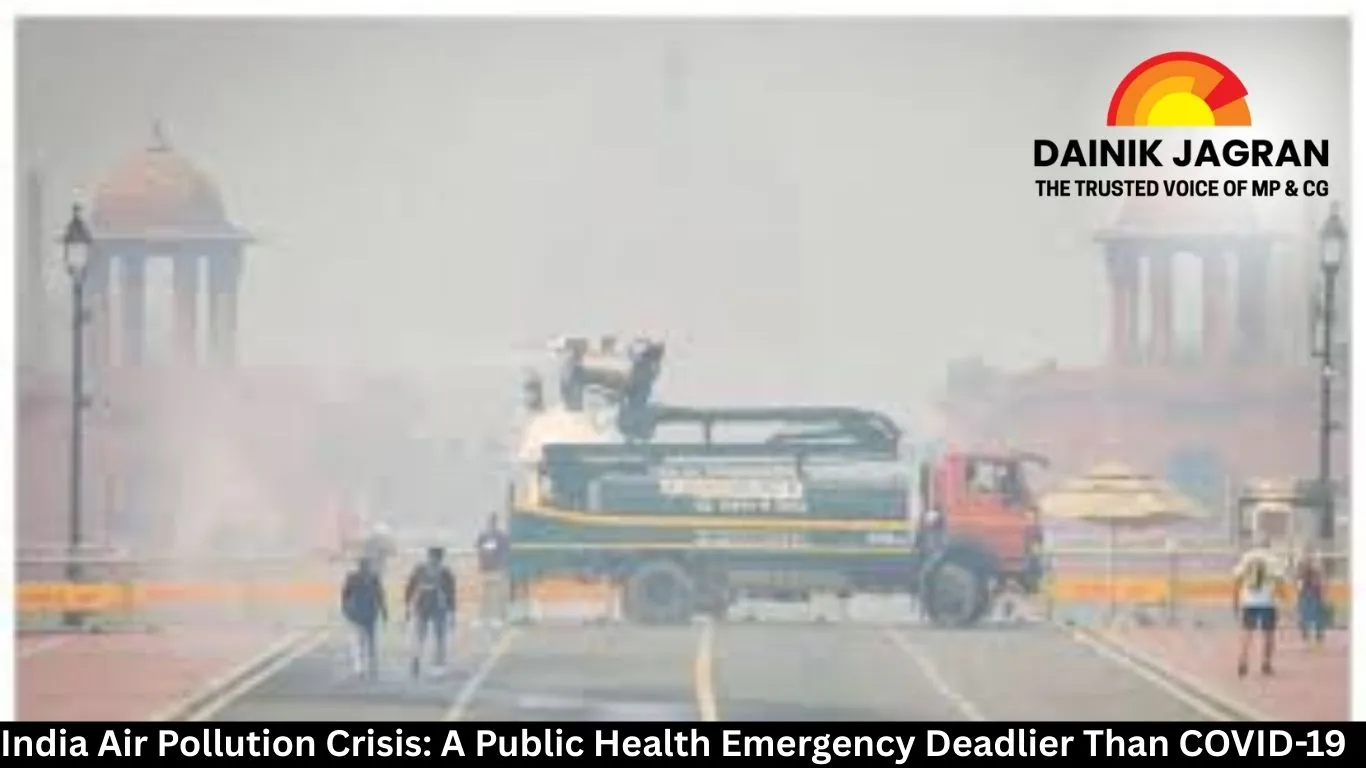
A disturbing new reality is emerging: India is now a world leader in air pollution. A recent analysis for October 2025 revealed a startling fact—all 40 of the world's most polluted cities were in India, from Sri Ganganagar and Hisar to Delhi and Ghaziabad .
The pollution levels are not just poor; they are catastrophic. In many northern cities, concentrations of PM2.5—fine, deadly particles that enter the bloodstream—routinely soar to 10, 20, or even 30 times the World Health Organization's (WHO) safe guideline of 5 micrograms per cubic meter. On the worst days, levels can spike to 400, 500, or higher.
The Silent Health Catastrophe
The human cost of this toxic air is staggering and often underreported. Data from the State of Global Air report indicates that in 2023, over 2 million deaths in India were linked to air pollution. To put this in perspective, global studies note that air pollution now claims more lives annually than major pandemics like COVID-19, making it a relentless, silent public health emergency.
The crisis spares no one, not even the unborn. Medical research increasingly shows a direct link between toxic air and devastating health outcomes for children. Toxic particles can cross the placental barrier, leading to higher risks of stillbirth, preterm delivery, and low birth weight. Doctors report a rise in newborns with underdeveloped lungs and congenital asthma, setting the stage for a lifetime of health challenges.
Economic and Systemic Failure
Beyond health, the economic toll is immense. Studies estimate that the premature deaths and diseases caused by pollution cost India nearly 1.4% of its GDP annually, amounting to tens of thousands of crores in losses.
Despite the scale of the disaster, the political and administrative response has been widely criticized as fragmented and inadequate. The problem is often treated as a seasonal issue limited to winter, rather than the year-round national crisis it is. Accountability is diluted as central, state, and municipal authorities engage in a cycle of blame-shifting over sources like stubble burning, industrial emissions, and vehicular pollution.
Lessons from China's "War on Pollution"
India's current situation mirrors China's a decade ago, when cities like Beijing were shrouded in smog. Facing public outrage and health data showing 500,000 premature deaths per year, China declared a national "War on Pollution" in 2013.
Their strategy, which India could learn from, was centralized, strict, and measurable:
Massive Investment & Accountability: China spent over $100 billion and, critically, linked the career promotions of local officials to achieving clean air targets in their jurisdictions.
Radical Systemic Changes: It forced a shift from coal to natural gas for home heating, shut down or relocated thousands of polluting factories, and mandated pollution control technology in heavy industries.
Promotion of Clean Tech: The country aggressively pushed electric vehicles and expanded public metro networks. Between 2015 and 2022, this concerted effort led to a 36% drop in national PM2.5 levels.
The Path Forward for India
Experts argue that incremental steps are no longer sufficient. India requires a radical transformation in its approach, modeled on decisive action rather than political rhetoric.
1. National Authority with Power: A powerful, centralized authority with the mandate to enforce pollution control rules across state lines.
2. Stringent Accountability: Tying the performance evaluations of district collectors and city commissioners directly to air quality improvements in their areas.
3. Phasing Out Coal: Setting a strict, non-negotiable timeline for transitioning power plants and industries away from coal to cleaner fuels, coupled with a massive, mission-mode expansion of solar and wind energy.
4. Incentive-Based Public Action: Moving beyond fines to a system of tangible public incentives—like tax rebates for green housing, free tolls for electric vehicles, and reduced utility bills for pollution-free residential zones.
The message from health professionals is clear: clean air is as fundamental as education for a nation's foundation and future.
Until India treats its toxic air with the same urgency as a wartime threat, its aspirations for global leadership will remain clouded in smog, paid for with the health of millions of its citizens. The time for a declared public health emergency is now.




.jpg)




