

The Bhopal gas tragedy is often described as the world’s worst industrial disaster, but at its core, it was something far more disturbing: a complete collapse of accountability, governance, and corporate ethics. The fatal night of December 2–3, 1984, was not an unfortunate accident,it was the culmination of years of ignored warnings, neglected safety standards, and reckless corporate behavior. A plant already known for poorly maintained equipment, repeated safety lapses, and alarming negligence was allowed to operate in the heart of a densely populated city. When disaster finally struck, the system that should have protected the people of Bhopal instead failed them at every level.
What makes this tragedy especially heartbreaking is the long shadow it continues to cast. Four decades later, the people of Bhopal are still waiting for justice that has been painfully slow, fragmented, and often symbolic. Survivors continue to battle chronic respiratory issues, eye disorders, neurological problems, and mental health impacts. Even more devastating is the generational toll, children and grandchildren of survivors are still born with congenital disorders linked to toxic exposure. Instead of closure, survivors have endured decades of court petitions, bureaucratic hurdles, and broken promises.
The tragedy exposed the alarming ease with which powerful multinational corporations can escape responsibility when shielded by legal loopholes and global political complications. Union Carbide and its leadership faced shockingly limited accountability for a disaster that killed thousands and injured countless more. Weak environmental regulations, poor enforcement, and political compromises allowed systemic failures to persist long after the leak. As a result, India had to confront a harsh truth: corporate impunity thrives when regulatory oversight is weak and when human lives are valued less than economic gain.
Yet, amidst this long struggle, the people of Bhopal have shown extraordinary resilience. Survivors, activists, and grassroots organizations have fought relentlessly to keep the issue alive in India’s conscience. Their persistence has pushed governments, courts, and international bodies to revisit compensation, environmental cleanup, and healthcare commitments. Their fight is a reminder that justice is not given,it is demanded, often at great personal cost.

The true memorial to the victims of Bhopal cannot be limited to candle marches, annual tributes, or symbolic statements. The real tribute lies in ensuring that such negligence is never repeated. This requires stronger environmental laws, stricter corporate liability, transparent governance, and unwavering state support for communities still suffering. It also requires India to prioritize industrial safety and environmental justice not as optional concerns, but as essential pillars of national policy.
The Bhopal gas tragedy is not merely a chapter in history,it is an ongoing lesson in what happens when oversight fails, when corporations prioritize profit over people, and when governments ignore early warnings. Until the last survivor receives justice and systemic reforms become the norm rather than the exception, Bhopal will continue to stand as a powerful warning for the future.

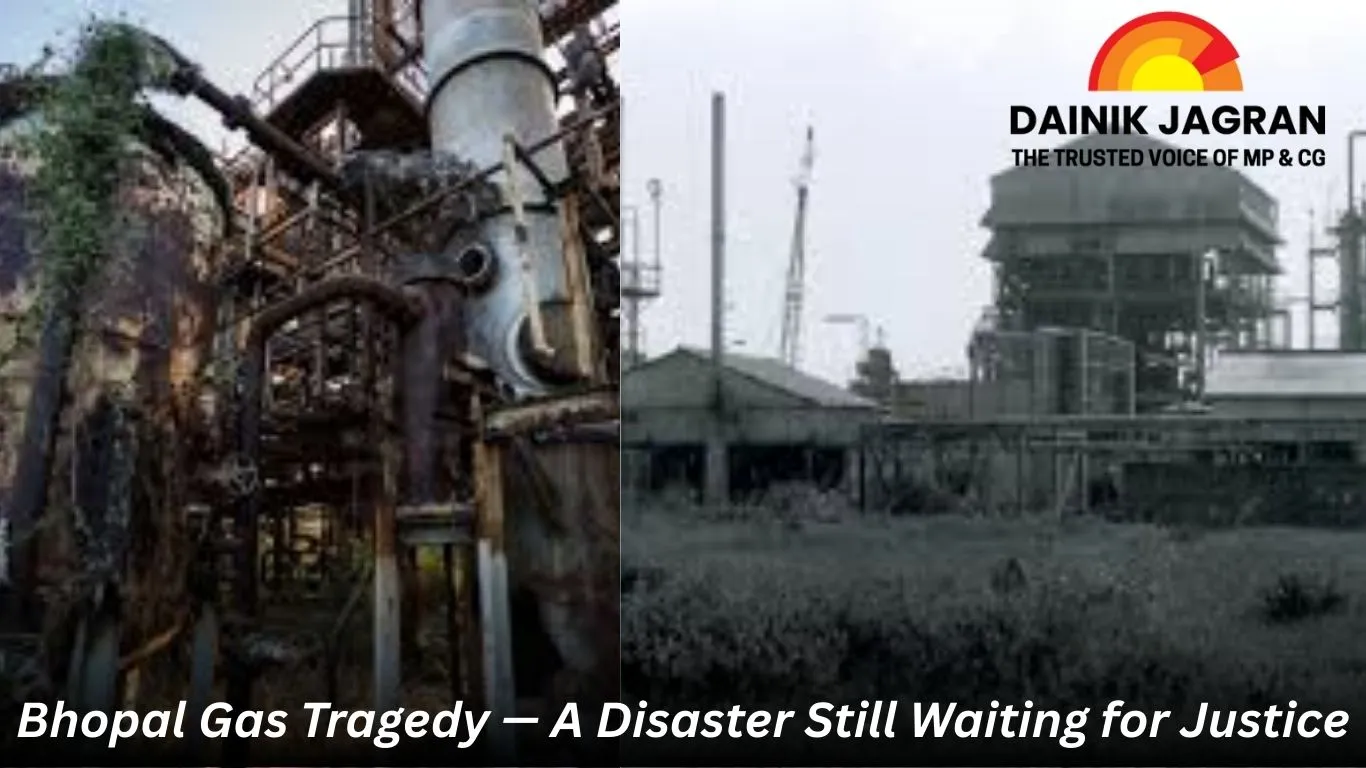
Bhopal Gas Tragedy — A Wound That Still Demands Justice
Opinion desk
The Bhopal gas tragedy is often described as the world’s worst industrial disaster, but at its core, it was something far more disturbing: a complete collapse of accountability, governance, and corporate ethics. The fatal night of December 2–3, 1984, was not an unfortunate accident,it was the culmination of years of ignored warnings, neglected safety standards, and reckless corporate behavior. A plant already known for poorly maintained equipment, repeated safety lapses, and alarming negligence was allowed to operate in the heart of a densely populated city. When disaster finally struck, the system that should have protected the people of Bhopal instead failed them at every level.
What makes this tragedy especially heartbreaking is the long shadow it continues to cast. Four decades later, the people of Bhopal are still waiting for justice that has been painfully slow, fragmented, and often symbolic. Survivors continue to battle chronic respiratory issues, eye disorders, neurological problems, and mental health impacts. Even more devastating is the generational toll, children and grandchildren of survivors are still born with congenital disorders linked to toxic exposure. Instead of closure, survivors have endured decades of court petitions, bureaucratic hurdles, and broken promises.
The tragedy exposed the alarming ease with which powerful multinational corporations can escape responsibility when shielded by legal loopholes and global political complications. Union Carbide and its leadership faced shockingly limited accountability for a disaster that killed thousands and injured countless more. Weak environmental regulations, poor enforcement, and political compromises allowed systemic failures to persist long after the leak. As a result, India had to confront a harsh truth: corporate impunity thrives when regulatory oversight is weak and when human lives are valued less than economic gain.
Yet, amidst this long struggle, the people of Bhopal have shown extraordinary resilience. Survivors, activists, and grassroots organizations have fought relentlessly to keep the issue alive in India’s conscience. Their persistence has pushed governments, courts, and international bodies to revisit compensation, environmental cleanup, and healthcare commitments. Their fight is a reminder that justice is not given,it is demanded, often at great personal cost.
The true memorial to the victims of Bhopal cannot be limited to candle marches, annual tributes, or symbolic statements. The real tribute lies in ensuring that such negligence is never repeated. This requires stronger environmental laws, stricter corporate liability, transparent governance, and unwavering state support for communities still suffering. It also requires India to prioritize industrial safety and environmental justice not as optional concerns, but as essential pillars of national policy.
The Bhopal gas tragedy is not merely a chapter in history,it is an ongoing lesson in what happens when oversight fails, when corporations prioritize profit over people, and when governments ignore early warnings. Until the last survivor receives justice and systemic reforms become the norm rather than the exception, Bhopal will continue to stand as a powerful warning for the future.




.jpg)




