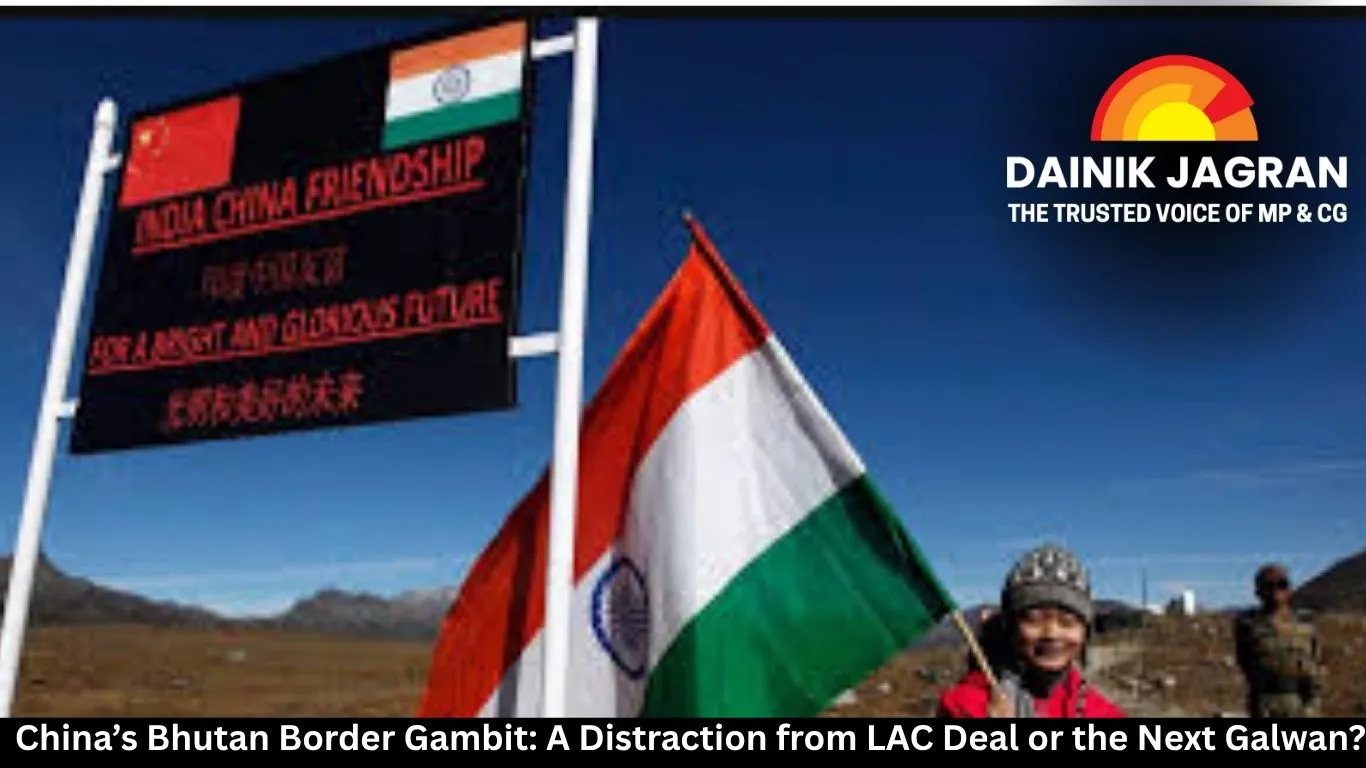
China’s Bhutan Border Gambit: A Distraction from LAC Deal or the Next Galwan?
Digital Desk
The ink on the India-China LAC disengagement pact—inked to restore pre-2020 status quo in Galwan and Pangong Tso—has barely dried, yet satellite imagery reveals a chilling parallel: China has built 22 new villages inside Bhutanese territory since 2020.
Former Foreign Secretary Shyam Saran’s prescient warning about China’s “Middle Kingdom Syndrome” rings truer than ever. This isn’t altruism; it’s salami-slicing 2.0, and Bhutan is the new slice.
The Bhutan Blueprint: From Herders to Hamlets
China’s playbook is textbook expansionism. First, nomadic Tibetan herders “graze” into disputed Bhutanese pastures. Next, PLA “protects” them with temporary shelters. Then come roads, electricity, and voilà permanent villages with 7,000 Han settlers, all systematically connected to Chinese towns, not Thimphu.
The latest targets? Beyul Khenpajong and Menchuma Valley in eastern Bhutan, plus renewed claims on the Sakteng Wildlife Sanctuary a region China never historically contested until 2020.
This isn’t random settlement. It’s strategic colonization. As CDS Bipin Rawat warned, China’s “salami-slicing” creates facts on the ground, then offers “package deals”: “Give us Doklam, take this barren pasture.”
Bhutan, with an 8,000-strong army, can’t counter the PLA alone. India’s 2017 Doklam intervention where Indian troops faced down Chinese bulldozers wasn’t charity; it was self-preservation. Doklam overlooks the Siliguri Corridor, India’s 22-km-wide “Chicken’s Neck.” A Chinese perch there could sever Northeast India in hours.
LAC Deal: Trojan Horse or Genuine De-escalation?
The October 2024 LAC agreement promises disengagement, de-escalation, and de-induction returning to April 2020 positions. Optimists cheer. Realists smell distraction.
Galwan’s ghosts linger: 15 June 2020 saw Col. Santosh Babu martyred after Chinese troops reneged on tent removal promises, sparking a brutal clash. China seized 38,000 sq km of Aksai Chin decades ago; why trust their word now?
Meanwhile, Bhutan faces a tri-junction trap. China’s new villages flank Doklam (west) and Sakteng (east), encircling Bhutan’s strategic core. If Thimphu accepts China’s “land swap,” India loses oversight of the Chumbi Valley a dagger aimed at Siliguri. Bhutan’s youth, lured by Chinese investment, pressure parliament for economic diversification. India’s hydropower partnerships helped, but Beijing’s chequebook diplomacy is louder.
India’s Counter: Tunnels, Transit, and Trust
India must act, not react.
1. Fortify Siliguri: Accelerate BRO’s black-top roads (Doklam access now ~1 hour vs. 7+ earlier) and build bomb-proof tunnels for uninterrupted Northeast supply lines.
2. Bangladesh Transit: Offer Dhaka an irresistible trade corridor deal to bypass Siliguri vulnerability.
3. Bhutan Bind: Deepen military training (1,700 Indian personnel already embedded) and counter China’s economic seduction with tech and tourism FDI.
Sardar Patel saw this in 1947: “Hindi-Chini bhai-bhai is a myth; China expands by culture and history.” The LAC deal buys time, not trust. China’s Bhutan villages aren’t peace offerings they’re forward operating bases in slow motion. India must keep its eyes open, powder dry, and Bhutan firmly in its corner. Anything less risks a two-front strategic blunder.

--------
🚨 Beat the News Rush – Join Now!
Get breaking alerts, hot exclusives, and game-changing stories instantly on your phone. No delays, no fluff – just the edge you need. ⚡
Tap to join:
🟢 WhatsApp Channel: Dainik Jagran MP CG
Crave more?
🅕 Facebook: Dainik Jagran MP CG English
🅧 Twitter (X): Dainik Jagran MP CG
🅘 Instagram: Dainik Jagran MP CG
Share the fire – keep your crew ahead! 🗞️🔥
China’s Bhutan Border Gambit: A Distraction from LAC Deal or the Next Galwan?
Digital Desk
Former Foreign Secretary Shyam Saran’s prescient warning about China’s “Middle Kingdom Syndrome” rings truer than ever. This isn’t altruism; it’s salami-slicing 2.0, and Bhutan is the new slice.
The Bhutan Blueprint: From Herders to Hamlets
China’s playbook is textbook expansionism. First, nomadic Tibetan herders “graze” into disputed Bhutanese pastures. Next, PLA “protects” them with temporary shelters. Then come roads, electricity, and voilà permanent villages with 7,000 Han settlers, all systematically connected to Chinese towns, not Thimphu.
The latest targets? Beyul Khenpajong and Menchuma Valley in eastern Bhutan, plus renewed claims on the Sakteng Wildlife Sanctuary a region China never historically contested until 2020.
This isn’t random settlement. It’s strategic colonization. As CDS Bipin Rawat warned, China’s “salami-slicing” creates facts on the ground, then offers “package deals”: “Give us Doklam, take this barren pasture.”
Bhutan, with an 8,000-strong army, can’t counter the PLA alone. India’s 2017 Doklam intervention where Indian troops faced down Chinese bulldozers wasn’t charity; it was self-preservation. Doklam overlooks the Siliguri Corridor, India’s 22-km-wide “Chicken’s Neck.” A Chinese perch there could sever Northeast India in hours.
LAC Deal: Trojan Horse or Genuine De-escalation?
The October 2024 LAC agreement promises disengagement, de-escalation, and de-induction returning to April 2020 positions. Optimists cheer. Realists smell distraction.
Galwan’s ghosts linger: 15 June 2020 saw Col. Santosh Babu martyred after Chinese troops reneged on tent removal promises, sparking a brutal clash. China seized 38,000 sq km of Aksai Chin decades ago; why trust their word now?
Meanwhile, Bhutan faces a tri-junction trap. China’s new villages flank Doklam (west) and Sakteng (east), encircling Bhutan’s strategic core. If Thimphu accepts China’s “land swap,” India loses oversight of the Chumbi Valley a dagger aimed at Siliguri. Bhutan’s youth, lured by Chinese investment, pressure parliament for economic diversification. India’s hydropower partnerships helped, but Beijing’s chequebook diplomacy is louder.
India’s Counter: Tunnels, Transit, and Trust
India must act, not react.
1. Fortify Siliguri: Accelerate BRO’s black-top roads (Doklam access now ~1 hour vs. 7+ earlier) and build bomb-proof tunnels for uninterrupted Northeast supply lines.
2. Bangladesh Transit: Offer Dhaka an irresistible trade corridor deal to bypass Siliguri vulnerability.
3. Bhutan Bind: Deepen military training (1,700 Indian personnel already embedded) and counter China’s economic seduction with tech and tourism FDI.
Sardar Patel saw this in 1947: “Hindi-Chini bhai-bhai is a myth; China expands by culture and history.” The LAC deal buys time, not trust. China’s Bhutan villages aren’t peace offerings they’re forward operating bases in slow motion. India must keep its eyes open, powder dry, and Bhutan firmly in its corner. Anything less risks a two-front strategic blunder.