

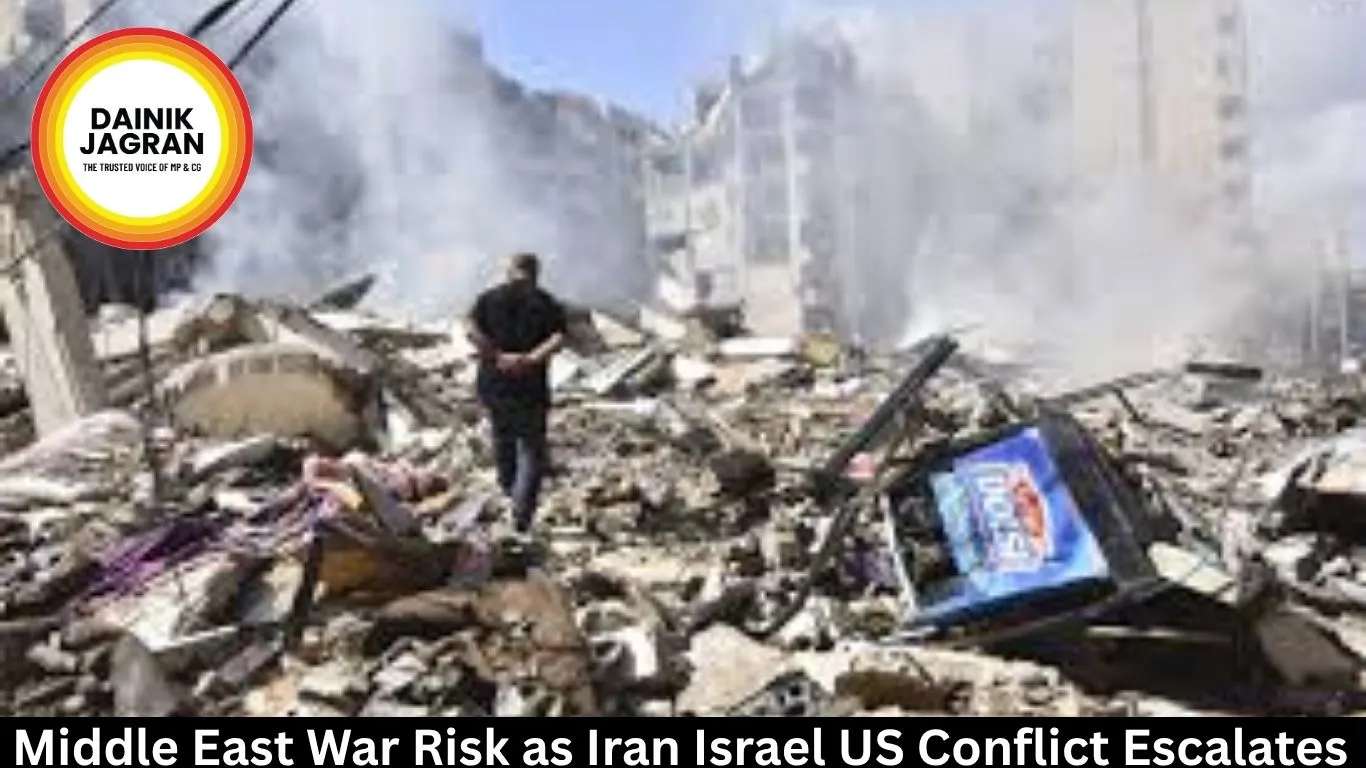
Middle East War Risk as Iran Israel US Conflict Escalates

Digital Desk

 Middle East War Risk as Iran Israel US Conflict Escalates

 Middle East faces major war risk as Iran, Israel and the United States exchange air strikes and missile attacks in 2026, reviving fears of a regional conflict like the 1967 Six‑Day War.


Trump Slams ‘Cowardly’ NATO Over Iran War Support; Calls Alliance a ‘Paper Tiger’

President Trump triggers a fresh trans-Atlantic crisis by attacking NATO allies for their refusal to join naval operations in the strategic Strait of Hormuz.


Trump Labels Allies Cowards

In a late-night social media escalation, US President Donald Trump has launched a scathing attack on NATO allies, labeling them "cowards" for failing to support American military efforts against Iran. The President’s remarks on Truth Social have sent shockwaves through Western capitals, as he claimed that without the United States, the North Atlantic Treaty Organization is nothing more than a "paper tiger." The outburst follows weeks of friction over the escalating conflict and the resulting global energy crisis.

Crisis at State of Hormuz

The primary flashpoint for the President’s frustration is the ongoing blockade in the Strait of Hormuz. Following US and Israeli strikes on Iranian nuclear and military facilities, Tehran has severely restricted maritime traffic through the vital waterway, which handles 20% of the world’s oil supply. While some vessels continue to pass, the resulting bottleneck has caused global crude prices to skyrocket, recently crossing the $110 per barrel mark—nearly double the price seen before the outbreak of hostilities.

Lack of Joint Action

Washington has repeatedly called on its European partners to deploy warships to escort oil tankers and ensure "freedom of navigation." However, key NATO members including France and Germany have resisted direct combat involvement. These nations have opted for defensive positioning in the Gulf of Oman rather than entering the high-risk Hormuz zone. Trump argued that the burden of securing global energy markets should be shared, rather than resting solely on the shoulders of the American military.

NATO Cites Unilateral Moves

European diplomats have pushed back against the "coward" label, pointing to a fundamental lack of prior consultation. Sources indicate that many NATO allies were blindsided by the initial US-led strikes on Iran and are wary of being dragged into a regional war they did not help plan. There is a deep-seated fear in Brussels and Paris that further escalation could draw Russia and China into a direct confrontation, potentially triggering a third world conflict that the alliance is desperate to avoid.

Diplomatic Strain at White House

The internal rift became painfully visible during a recent visit by the Japanese Prime Minister to the White House. When questioned about his lack of consultation with allies, President Trump drew a controversial analogy to the 1941 attack on Pearl Harbor, asking if Japan had consulted the US beforehand. The remark reportedly created a highly awkward atmosphere, underscoring the President’s growing isolation from traditional security partners as he pushes for a "regime change" agenda in Tehran.

Global Economic Impact Severe

The impact of this diplomatic and military deadlock is being felt most acutely at the fuel pumps. With the US Congress being asked to authorize an additional $200 billion for war efforts, the domestic and international pressure is mounting. Citizens across Europe and North America are facing an unprecedented surge in inflation driven by energy costs, fueling anti-war sentiments and making it politically difficult for European leaders to commit more resources to the Middle East.

Future of the Alliance

The current friction raises existential questions about the future of NATO. While the alliance has survived disagreements during the 2003 Iraq War and the withdrawal from Afghanistan, the sheer scale of the current vitriol is unprecedented. Analysts suggest that while a total collapse is unlikely due to the shared threat posed by Russia, the era of unquestioned US leadership within the bloc may be over, leading to a more fragmented and selective security cooperation in the years ahead.


english.dainikjagranmpcg.com
22 Mar 2026 By Abhishek Joshi

Middle East War Risk as Iran Israel US Conflict Escalates

Digital Desk

Trump Slams ‘Cowardly’ NATO Over Iran War Support; Calls Alliance a ‘Paper Tiger’

President Trump triggers a fresh trans-Atlantic crisis by attacking NATO allies for their refusal to join naval operations in the strategic Strait of Hormuz.


Trump Labels Allies Cowards

In a late-night social media escalation, US President Donald Trump has launched a scathing attack on NATO allies, labeling them "cowards" for failing to support American military efforts against Iran. The President’s remarks on Truth Social have sent shockwaves through Western capitals, as he claimed that without the United States, the North Atlantic Treaty Organization is nothing more than a "paper tiger." The outburst follows weeks of friction over the escalating conflict and the resulting global energy crisis.

Crisis at State of Hormuz

The primary flashpoint for the President’s frustration is the ongoing blockade in the Strait of Hormuz. Following US and Israeli strikes on Iranian nuclear and military facilities, Tehran has severely restricted maritime traffic through the vital waterway, which handles 20% of the world’s oil supply. While some vessels continue to pass, the resulting bottleneck has caused global crude prices to skyrocket, recently crossing the $110 per barrel mark—nearly double the price seen before the outbreak of hostilities.

Lack of Joint Action

Washington has repeatedly called on its European partners to deploy warships to escort oil tankers and ensure "freedom of navigation." However, key NATO members including France and Germany have resisted direct combat involvement. These nations have opted for defensive positioning in the Gulf of Oman rather than entering the high-risk Hormuz zone. Trump argued that the burden of securing global energy markets should be shared, rather than resting solely on the shoulders of the American military.

NATO Cites Unilateral Moves

European diplomats have pushed back against the "coward" label, pointing to a fundamental lack of prior consultation. Sources indicate that many NATO allies were blindsided by the initial US-led strikes on Iran and are wary of being dragged into a regional war they did not help plan. There is a deep-seated fear in Brussels and Paris that further escalation could draw Russia and China into a direct confrontation, potentially triggering a third world conflict that the alliance is desperate to avoid.

Diplomatic Strain at White House

The internal rift became painfully visible during a recent visit by the Japanese Prime Minister to the White House. When questioned about his lack of consultation with allies, President Trump drew a controversial analogy to the 1941 attack on Pearl Harbor, asking if Japan had consulted the US beforehand. The remark reportedly created a highly awkward atmosphere, underscoring the President’s growing isolation from traditional security partners as he pushes for a "regime change" agenda in Tehran.

Global Economic Impact Severe

The impact of this diplomatic and military deadlock is being felt most acutely at the fuel pumps. With the US Congress being asked to authorize an additional $200 billion for war efforts, the domestic and international pressure is mounting. Citizens across Europe and North America are facing an unprecedented surge in inflation driven by energy costs, fueling anti-war sentiments and making it politically difficult for European leaders to commit more resources to the Middle East.

Future of the Alliance

The current friction raises existential questions about the future of NATO. While the alliance has survived disagreements during the 2003 Iraq War and the withdrawal from Afghanistan, the sheer scale of the current vitriol is unprecedented. Analysts suggest that while a total collapse is unlikely due to the shared threat posed by Russia, the era of unquestioned US leadership within the bloc may be over, leading to a more fragmented and selective security cooperation in the years ahead.


https://english.dainikjagranmpcg.com/opinion/-middle-east-war-risk-as-iran-israel-us-conflict/article-15772

Related Posts

Advertisement

Latest News


