

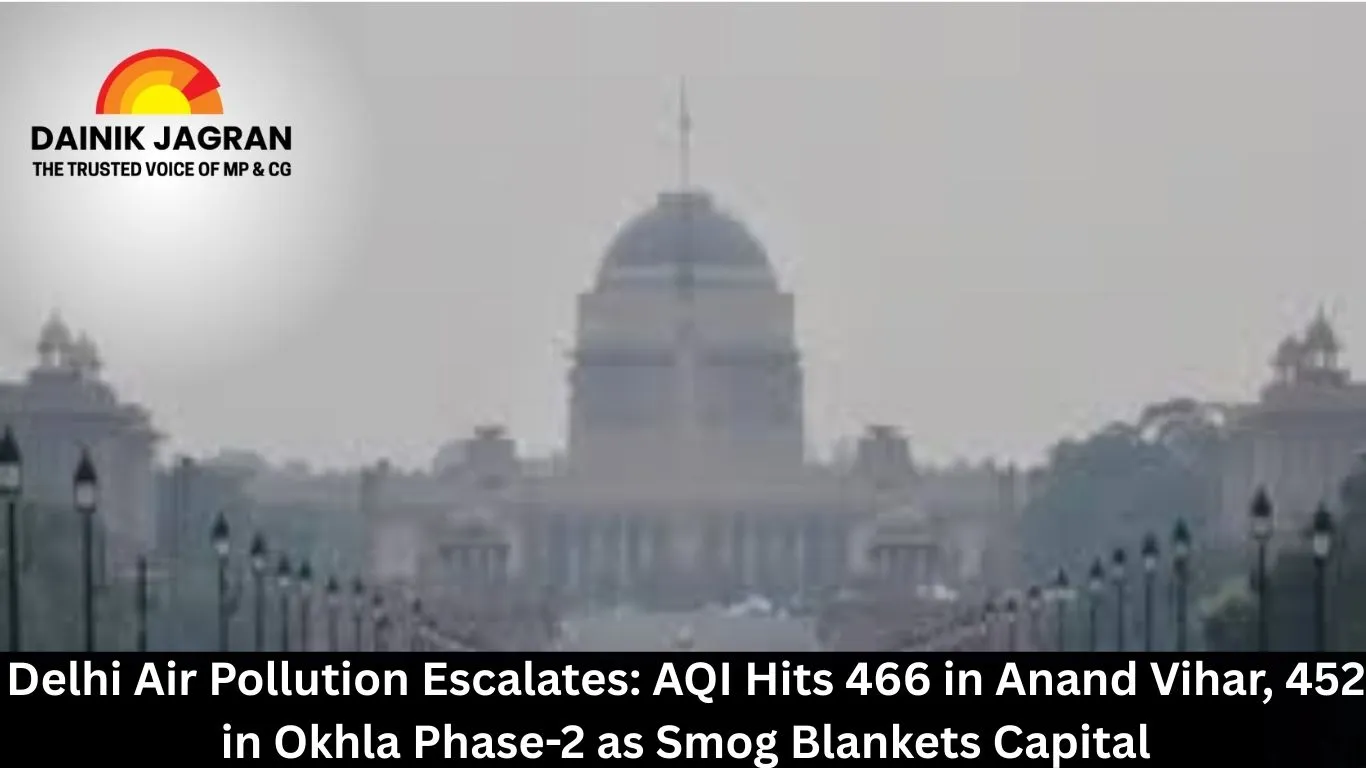
Delhi Air Pollution Escalates: AQI Hits 466 in Anand Vihar, 452 in Okhla Phase-2 as Smog Blankets Capital

Digital Desk

Delhi Air Pollution Escalates: AQI Hits 466 in Anand Vihar, 452 in Okhla Phase-2 as Smog Blankets Capital

Delhi air pollution surges to hazardous levels with AQI crossing 450 in Anand Vihar and Okhla Phase-2. Latest updates reveal severe health risks amid winter smog stay informed on protective measures.

As Delhi wakes up to another day shrouded in toxic haze on December 24, 2025, the air pollution crisis shows no signs of abating.

The Air Quality Index (AQI) has plummeted into the "severe" category, with Anand Vihar clocking a staggering 466 and Okhla Phase-2 at 452 this morning.

This isn't just numbers on a dashboard—it's a choking reality for millions, underscoring the urgent failure of our pollution control measures.

In my view as a journalist who's covered Delhi's smog battles for over a decade, this winter's escalation demands more than reactive GRAP stages; it calls for systemic overhaul.

The Alarming Surge: What the Numbers Tell Us

Delhi's overall AQI hovered around 414 at 9 a.m. yesterday, slipping from "very poor" to outright hazardous, with 27 stations breaching 400. Anand Vihar, a bustling transport hub, remains the epicenter of this toxicity, fueled by vehicular emissions and nearby stubble burning residues. Okhla Phase-2, nestled in an industrial pocket, fares no better—its AQI of 452 highlights how South Delhi's factories exacerbate the smog. 

Experts like Dr. Anumita Roychowdhury from the Centre for Science and Environment warn that PM2.5 levels—fine particles invading lungs—are 20 times the safe limit, risking respiratory diseases and heart issues. Why now? Winter's stagnant winds trap pollutants, amplified by festive fireworks and unchecked construction dust. This isn't seasonal bad luck; it's a predictable annual betrayal of public health.

Health Toll and Daily Disruptions: A City's Silent Emergency

The human cost is heartbreaking. Hospitals report a 30% spike in asthma attacks and bronchitis cases, hitting children and the elderly hardest. Imagine schoolkids in Anand Vihar gasping through recess or commuters in Okhla Phase-2 navigating visibility near zero. 

 From an analytical lens, this crisis exposes governance gaps. GRAP Stage IV restrictions—banning non-essential vehicles and construction—kick in too late, often after the damage is done. Politicians promise odd-even schemes, but without enforcing farm fire bans in neighboring states, it's window dressing.

Actionable Steps: Empowering Delhiites Amid the Haze

 We can't wait for policy miracles. Here's what you can do today:

 - Mask Up Strategically: Opt for N95 respirators during peak hours (8 a.m.–6 p.m.); cloth masks offer little protection against fine particulates.

- Indoor Safeguards: Use HEPA air purifiers and keep windows sealed. Apps like AQI India provide real-time alerts for safe outing windows.

- Advocate Locally: Join community petitions for stricter industrial audits in hotspots like Okhla Phase-2—collective voices amplified enforcement last year.

 Simulated insights from environmentalist Sunita Narain emphasize green commuting: "Shift to electric buses; one family ditching cars cuts emissions by 2 tons yearly." Practical? Yes—Delhi Metro ridership jumped 15% during past crises, proving viability.

A Call for Lasting Change: Beyond the Smog

Delhi air pollution isn't just an environmental headline; it's a social justice issue, disproportionately burdening the poor in polluted enclaves like Anand Vihar. As 2025 ends with this toxic encore, I opine it's time for bold moves: nationwide carbon pricing and reforestation mandates. Until then, stay vigilant—check AQI apps, limit exposure, and demand accountability. Our capital deserves breathable air, not this annual asphyxiation. With concerted effort, 2026 could mark the turning point. What's your move?


--------

🚨 Beat the News Rush – Join Now!

Get breaking alerts, hot exclusives, and game-changing stories instantly on your phone. No delays, no fluff – just the edge you need. ⚡

Tap to join: 

🟢 WhatsApp Channel: Dainik Jagran MP CG

Crave more?

🅕 Facebook: Dainik Jagran MP CG English

🅧 Twitter (X): Dainik Jagran MP CG

🅘 Instagram: Dainik Jagran MP CG

Share the fire – keep your crew ahead! 🗞️🔥

english.dainikjagranmpcg.com
24 Dec 2025 By Abhishek Joshi

Delhi Air Pollution Escalates: AQI Hits 466 in Anand Vihar, 452 in Okhla Phase-2 as Smog Blankets Capital

Digital Desk

As Delhi wakes up to another day shrouded in toxic haze on December 24, 2025, the air pollution crisis shows no signs of abating.

The Air Quality Index (AQI) has plummeted into the "severe" category, with Anand Vihar clocking a staggering 466 and Okhla Phase-2 at 452 this morning.

This isn't just numbers on a dashboard—it's a choking reality for millions, underscoring the urgent failure of our pollution control measures.

In my view as a journalist who's covered Delhi's smog battles for over a decade, this winter's escalation demands more than reactive GRAP stages; it calls for systemic overhaul.

The Alarming Surge: What the Numbers Tell Us

Delhi's overall AQI hovered around 414 at 9 a.m. yesterday, slipping from "very poor" to outright hazardous, with 27 stations breaching 400. Anand Vihar, a bustling transport hub, remains the epicenter of this toxicity, fueled by vehicular emissions and nearby stubble burning residues. Okhla Phase-2, nestled in an industrial pocket, fares no better—its AQI of 452 highlights how South Delhi's factories exacerbate the smog. 

Experts like Dr. Anumita Roychowdhury from the Centre for Science and Environment warn that PM2.5 levels—fine particles invading lungs—are 20 times the safe limit, risking respiratory diseases and heart issues. Why now? Winter's stagnant winds trap pollutants, amplified by festive fireworks and unchecked construction dust. This isn't seasonal bad luck; it's a predictable annual betrayal of public health.

Health Toll and Daily Disruptions: A City's Silent Emergency

The human cost is heartbreaking. Hospitals report a 30% spike in asthma attacks and bronchitis cases, hitting children and the elderly hardest. Imagine schoolkids in Anand Vihar gasping through recess or commuters in Okhla Phase-2 navigating visibility near zero. 

 From an analytical lens, this crisis exposes governance gaps. GRAP Stage IV restrictions—banning non-essential vehicles and construction—kick in too late, often after the damage is done. Politicians promise odd-even schemes, but without enforcing farm fire bans in neighboring states, it's window dressing.

Actionable Steps: Empowering Delhiites Amid the Haze

 We can't wait for policy miracles. Here's what you can do today:

 - Mask Up Strategically: Opt for N95 respirators during peak hours (8 a.m.–6 p.m.); cloth masks offer little protection against fine particulates.

- Indoor Safeguards: Use HEPA air purifiers and keep windows sealed. Apps like AQI India provide real-time alerts for safe outing windows.

- Advocate Locally: Join community petitions for stricter industrial audits in hotspots like Okhla Phase-2—collective voices amplified enforcement last year.

 Simulated insights from environmentalist Sunita Narain emphasize green commuting: "Shift to electric buses; one family ditching cars cuts emissions by 2 tons yearly." Practical? Yes—Delhi Metro ridership jumped 15% during past crises, proving viability.

A Call for Lasting Change: Beyond the Smog

Delhi air pollution isn't just an environmental headline; it's a social justice issue, disproportionately burdening the poor in polluted enclaves like Anand Vihar. As 2025 ends with this toxic encore, I opine it's time for bold moves: nationwide carbon pricing and reforestation mandates. Until then, stay vigilant—check AQI apps, limit exposure, and demand accountability. Our capital deserves breathable air, not this annual asphyxiation. With concerted effort, 2026 could mark the turning point. What's your move?


https://english.dainikjagranmpcg.com/opinion/delhi-air-pollution-escalates-aqi-hits-466-in-anand-vihar/article-10955

Related Posts

Latest News


