NEET Paper Leak Timeline: How the Crisis Unfolded

Saumya Gupta

NEET Paper Leak Timeline: How the Crisis Unfolded

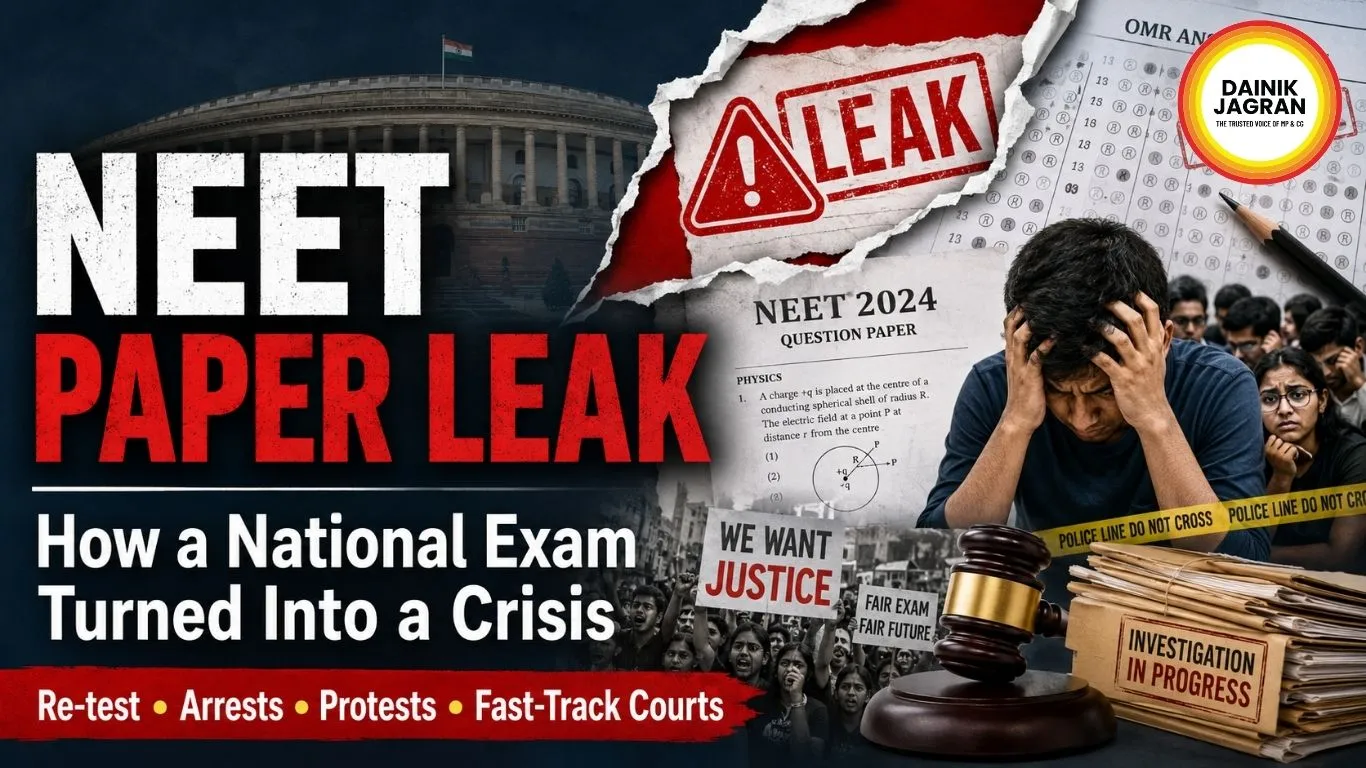
From the cancellation of the May examination to a nationwide re-test, arrests, protests and Parliament disruption, the NEET paper leak has become one of India’s biggest education controversies.

What began as another high-pressure medical entrance test soon turned into a nationwide credibility crisis.

The National Testing Agency conducted NEET-UG 2026 on May 3 for more than 20 lakh candidates. Within days, allegations surfaced that parts of the question paper had reached selected candidates before the examination.

The claims triggered panic among students and parents. For many aspirants, NEET represents years of preparation, coaching expenses and a single chance to enter medical college. Even a suspicion of unfair advantage was enough to shake confidence in the entire process.

Leak Claims Gain Ground

Investigating agencies began examining alleged links between intermediaries, examination insiders and candidates.

Officials suspected that parts of the paper or answers may have been circulated in exchange for money. The Central Bureau of Investigation later took up the case and arrested several people linked to the alleged network.

The government said 13 accused had been sent to jail. Investigators continued to examine digital communication, financial transactions and the possible role of people connected with the examination process.

Entire Exam Cancelled

The controversy reached a decisive point on May 12 when the NTA cancelled the May 3 examination.

Instead of conducting a limited test for candidates from suspicious centres, the agency ordered a fresh examination for all candidates. The move acknowledged the seriousness of the breach but also placed millions of students under fresh pressure.

Many candidates had already stopped preparing after completing the first examination. They suddenly had to return to books, coaching notes and mock tests, while medical admission schedules faced delays.

NEET 2026 At Glance

May 3: NTA conducts NEET-UG 2026
May 12: Examination cancelled after leak allegations
June 21: Fresh test held across India and overseas centres
July 16: Re-examination results declared
July 20: NTA rejects allegedly fabricated scorecards and OMR claims
July 23: Prime Minister announces fast-track courts for paper leak cases

The timeline shows how the NEET paper leak moved rapidly from an examination dispute to a national political and legal issue.

Re-Test Brings Relief

The NTA conducted the fresh NEET-UG examination on June 21 at thousands of centres in India and abroad.

More than 20 lakh candidates reportedly appeared for the re-test. Authorities increased surveillance, tightened examination-centre procedures and monitored the movement of question papers more closely.

The NTA declared the result on July 16 after releasing the provisional answer key, recorded responses and scanned OMR sheets.

For students, the result brought some clarity. However, it did not end the wider debate over accountability, examination security and the emotional cost imposed on candidates.

Fresh Claims Surface

Days after the results, social media posts alleged discrepancies in certain OMR sheets and scorecards.

On July 20, the NTA said some documents circulating online appeared fabricated, digitally altered or created with artificial intelligence tools. It warned of legal action against those spreading fake material while asking candidates with genuine concerns to use official grievance channels.

This created a second challenge for the agency. It had to investigate real complaints without allowing manipulated documents to deepen confusion among students.

The development became a major Public Interest Story and dominated Latest News Today, India News Update and Trending News India coverage.

Protests Enter Parliament

Student anger soon moved from examination centres to the streets.

The Cockroach Janta Party and other groups organised protests demanding responsibility for the leak, stronger examination reforms and the resignation of Union Education Minister Dharmendra Pradhan.

Opposition parties raised the issue during the Monsoon Session of Parliament. They demanded an immediate discussion and ministerial accountability.

The government said it was ready to debate the matter without pre-conditions. However, disagreements over the format and political demands led to repeated adjournments in the Lok Sabha and Rajya Sabha.

The NEET controversy had by then moved beyond education. It had become a test of how the government responds when a national examination loses public trust.

Fast-Track Trials Promised

Prime Minister Narendra Modi announced on July 23 that the government would create fast-track courts for paper leak cases.

He said those who played with the future of young people would not be spared. The proposed courts aim to prevent such cases from remaining stuck in the regular judicial system for years.

The announcement may speed up trials, but the larger challenge remains prevention.

Authorities must secure question-paper preparation, printing, transport and digital storage. They must also improve background checks, real-time monitoring and coordination between the NTA, police and cybercrime units.

Five Key Questions Answered

1. What exactly happened in the NEET-UG 2026 paper leak?

Investigators suspect that parts of the NEET-UG question paper reached selected people before the original examination. The alleged network reportedly involved intermediaries and individuals connected with the examination process. The CBI has examined digital records, financial transactions and handwritten material while investigating how the questions were accessed and circulated. The agency has also arrested people allegedly linked to the case.

2. Why was a nationwide re-examination necessary?

The authorities ordered a fresh test because doubts over the integrity of the original examination affected the credibility of the entire merit list. Restricting the re-test to a few centres could not have fully addressed concerns about how widely the material had circulated. The NTA conducted the NEET-UG 2026 re-examination on June 21 under tighter security and biometric-verification protocols.

3. Who is investigating the paper leak?

The Central Bureau of Investigation is leading the criminal investigation. Its probe has focused on the alleged source of the leaked questions, the role of examination experts and intermediaries, and possible payments made by beneficiaries. A Delhi court has also permitted the agency to collect additional handwriting samples from an arrested professor, showing that forensic comparison remains part of the investigation.

4. Were the viral OMR-sheet complaints genuine?

Not all of them. After the re-test results, several images circulated online claiming major differences between candidates’ OMR responses and official scores. The NTA said its examination of four widely shared cases found that the images had been forged or digitally manipulated. The agency warned against fake and AI-generated scorecards but said candidates with genuine grievances could approach it through official channels.

5. What happens next in the NEET paper leak case?

The investigation will move towards chargesheets and prosecution once the CBI completes evidence collection. Prime Minister Narendra Modi has announced fast-track courts for paper leak cases, which the government says will help prevent prolonged trials. Meanwhile, the NTA published the NEET-UG 2026 scorecards on July 16, allowing the medical admission process to move forward even as the criminal and political disputes continue.


 

--------

🚨 Beat the News Rush – Join Now!

Get breaking alerts, hot exclusives, and game-changing stories instantly on your phone. No delays, no fluff – just the edge you need. ⚡

Tap to join: 

🟢 WhatsApp Channel: Dainik Jagran MP CG

Crave more?

🅕 Facebook: Dainik Jagran MP CG English

🅧 Twitter (X): Dainik Jagran MP CG

🅘 Instagram: Dainik Jagran MP CG

Share the fire – keep your crew ahead! 🗞️🔥

english.dainikjagranmpcg.com
23 Jul 2026 By Danik Jagran English

NEET Paper Leak Timeline: How the Crisis Unfolded

Saumya Gupta

What began as another high-pressure medical entrance test soon turned into a nationwide credibility crisis.

The National Testing Agency conducted NEET-UG 2026 on May 3 for more than 20 lakh candidates. Within days, allegations surfaced that parts of the question paper had reached selected candidates before the examination.

The claims triggered panic among students and parents. For many aspirants, NEET represents years of preparation, coaching expenses and a single chance to enter medical college. Even a suspicion of unfair advantage was enough to shake confidence in the entire process.

Leak Claims Gain Ground

Investigating agencies began examining alleged links between intermediaries, examination insiders and candidates.

Officials suspected that parts of the paper or answers may have been circulated in exchange for money. The Central Bureau of Investigation later took up the case and arrested several people linked to the alleged network.

The government said 13 accused had been sent to jail. Investigators continued to examine digital communication, financial transactions and the possible role of people connected with the examination process.

Entire Exam Cancelled

The controversy reached a decisive point on May 12 when the NTA cancelled the May 3 examination.

Instead of conducting a limited test for candidates from suspicious centres, the agency ordered a fresh examination for all candidates. The move acknowledged the seriousness of the breach but also placed millions of students under fresh pressure.

Many candidates had already stopped preparing after completing the first examination. They suddenly had to return to books, coaching notes and mock tests, while medical admission schedules faced delays.

NEET 2026 At Glance

May 3: NTA conducts NEET-UG 2026
May 12: Examination cancelled after leak allegations
June 21: Fresh test held across India and overseas centres
July 16: Re-examination results declared
July 20: NTA rejects allegedly fabricated scorecards and OMR claims
July 23: Prime Minister announces fast-track courts for paper leak cases

The timeline shows how the NEET paper leak moved rapidly from an examination dispute to a national political and legal issue.

Re-Test Brings Relief

The NTA conducted the fresh NEET-UG examination on June 21 at thousands of centres in India and abroad.

More than 20 lakh candidates reportedly appeared for the re-test. Authorities increased surveillance, tightened examination-centre procedures and monitored the movement of question papers more closely.

The NTA declared the result on July 16 after releasing the provisional answer key, recorded responses and scanned OMR sheets.

For students, the result brought some clarity. However, it did not end the wider debate over accountability, examination security and the emotional cost imposed on candidates.

Fresh Claims Surface

Days after the results, social media posts alleged discrepancies in certain OMR sheets and scorecards.

On July 20, the NTA said some documents circulating online appeared fabricated, digitally altered or created with artificial intelligence tools. It warned of legal action against those spreading fake material while asking candidates with genuine concerns to use official grievance channels.

This created a second challenge for the agency. It had to investigate real complaints without allowing manipulated documents to deepen confusion among students.

The development became a major Public Interest Story and dominated Latest News Today, India News Update and Trending News India coverage.

Protests Enter Parliament

Student anger soon moved from examination centres to the streets.

The Cockroach Janta Party and other groups organised protests demanding responsibility for the leak, stronger examination reforms and the resignation of Union Education Minister Dharmendra Pradhan.

Opposition parties raised the issue during the Monsoon Session of Parliament. They demanded an immediate discussion and ministerial accountability.

The government said it was ready to debate the matter without pre-conditions. However, disagreements over the format and political demands led to repeated adjournments in the Lok Sabha and Rajya Sabha.

The NEET controversy had by then moved beyond education. It had become a test of how the government responds when a national examination loses public trust.

Fast-Track Trials Promised

Prime Minister Narendra Modi announced on July 23 that the government would create fast-track courts for paper leak cases.

He said those who played with the future of young people would not be spared. The proposed courts aim to prevent such cases from remaining stuck in the regular judicial system for years.

The announcement may speed up trials, but the larger challenge remains prevention.

Authorities must secure question-paper preparation, printing, transport and digital storage. They must also improve background checks, real-time monitoring and coordination between the NTA, police and cybercrime units.

Five Key Questions Answered

1. What exactly happened in the NEET-UG 2026 paper leak?

Investigators suspect that parts of the NEET-UG question paper reached selected people before the original examination. The alleged network reportedly involved intermediaries and individuals connected with the examination process. The CBI has examined digital records, financial transactions and handwritten material while investigating how the questions were accessed and circulated. The agency has also arrested people allegedly linked to the case.

2. Why was a nationwide re-examination necessary?

The authorities ordered a fresh test because doubts over the integrity of the original examination affected the credibility of the entire merit list. Restricting the re-test to a few centres could not have fully addressed concerns about how widely the material had circulated. The NTA conducted the NEET-UG 2026 re-examination on June 21 under tighter security and biometric-verification protocols.

3. Who is investigating the paper leak?

The Central Bureau of Investigation is leading the criminal investigation. Its probe has focused on the alleged source of the leaked questions, the role of examination experts and intermediaries, and possible payments made by beneficiaries. A Delhi court has also permitted the agency to collect additional handwriting samples from an arrested professor, showing that forensic comparison remains part of the investigation.

4. Were the viral OMR-sheet complaints genuine?

Not all of them. After the re-test results, several images circulated online claiming major differences between candidates’ OMR responses and official scores. The NTA said its examination of four widely shared cases found that the images had been forged or digitally manipulated. The agency warned against fake and AI-generated scorecards but said candidates with genuine grievances could approach it through official channels.

5. What happens next in the NEET paper leak case?

The investigation will move towards chargesheets and prosecution once the CBI completes evidence collection. Prime Minister Narendra Modi has announced fast-track courts for paper leak cases, which the government says will help prevent prolonged trials. Meanwhile, the NTA published the NEET-UG 2026 scorecards on July 16, allowing the medical admission process to move forward even as the criminal and political disputes continue.


https://english.dainikjagranmpcg.com/opinion/neet-paper-leak-five-key-questions-answered/article-23320

Trending News