


JNU Protests Erupt After SC Bail Denial: Slogans, FIR Request, and Campus Tensions Explained
Digital Desk
JNU Campus in Fresh Turmoil as Supreme Court Verdict Sparks Protests and FIR Call
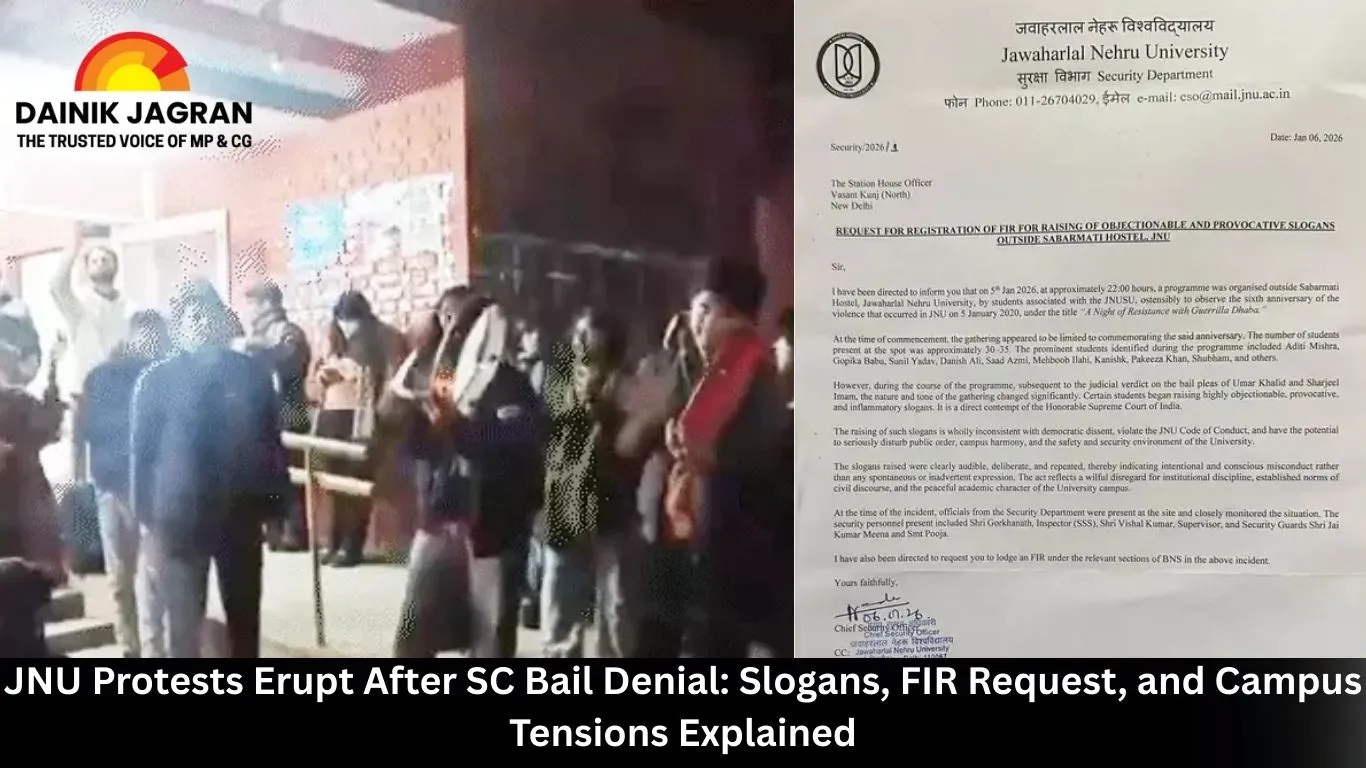
The campus of Jawaharlal Nehru University (JNU) became a fresh flashpoint on Tuesday after a video surfaced showing students raising strong slogans against Prime Minister Narendra Modi and Home Minister Amit Shah.
The incident, which has triggered a formal police complaint from the university administration, is directly linked to the Supreme Court’s recent rejection of bail to activists Umar Khalid and Sharjeel Imam in the 2020 Delhi riots conspiracy case.
The university’s Chief Security Officer has written to the Delhi Police, requesting the registration of an FIR concerning “objectionable and provocative slogans” raised outside a hostel. The 35-second viral clip captures chants of “Modi, Shah ki qabr khudegi, JNU ki dharti par” (The grave of Modi and Shah will be dug on JNU’s land).
A Protest Rooted in Legal and Historical Grievances
Student organizers present a different context. JNU Students’ Union President Aditi Mishra stated the gathering was to mark the anniversary of the January 5, 2020, campus violence, where masked attackers injured dozens. She claimed the slogans were “ideological” and not a personal attack.
However, the timing points squarely at the Supreme Court bail rejection a day earlier. The Court denied relief to Khalid and Imam while granting bail to five others, stating the two could not file a fresh bail plea for a year. The accused have been jailed for over five years under the Unlawful Activities (Prevention) Act (UAPA).
Congress leader Udit Raj amplified this view, calling the slogans an “expression of anger” against the verdict, which he termed “unfortunate” and suggested bias.
The Lingering Shadow of January 2020
The current friction is inextricably tied to the unresolved trauma of the 2020 JNU violence. Students recall the hours-long attack on hostels, which left then-JNUSU President Aishe Ghosh and others injured. Many on campus still perceive a lack of accountability for the perpetrators, fueling perennial anger that reignites around the anniversary.
Delhi Police’s Stance and Next Steps
As of now, a senior police officer has confirmed no formal complaint has been received regarding the slogans, despite the university’s letter. This puts the ball in the investigators’ court, deciding whether to act on the administration’s request and potentially open a new front of legal engagement with protesting students.
Why This Matters Now
This episode is more than a campus skirmish. It highlights the intense friction where campus activism, historical grievances, and high-stakes legal battles under stringent laws like UAPA intersect. The JNU protests serve as a barometer for national debates on free speech, dissent, and the long shadow of the Delhi riots cases.
With legal doors shut for a year for key accused, and a university seeking police action against its own students, these tensions show no sign of abating, ensuring JNU remains a potent symbol in India’s socio-political landscape.
.jpg)




