BJP’s Ground War & Polarisation Delivers Historic Bengal Win

Digital Desk

 BJP’s Ground War & Polarisation Delivers Historic Bengal Win

Recruited polling agents through tests and invested in ground workers; people chose ‘double engine’ over ‘Bengali identity’ as BJP scripts history in West Bengal.


West Bengal chose Prime Minister Narendra Modi’s “double-engine” promise over the Trinamool Congress (TMC) narrative of “Bengali identity” this election season. In a wave that swept across regions once considered TMC fortresses, the BJP not only gained vote share but also dismantled the ruling party’s organisational grip from the grassroots up.

The party had been preparing for this at the ground level for nearly six months. Even oral and written examinations were conducted to select polling agents—a departure from the usual informal appointments. Two clear objectives drove this exercise: counter the atmosphere of fear in rural Bengal, and ensure every identified voter actually reached the booth.

Organisational overhaul pays off

The results are stark on paper. In the previous election, the TMC’s vote share stood at 48.5%. That fell to 40.80% this time. Meanwhile, the BJP’s share climbed from 38.4% to 45.85%. Political analysts point to a clear polarisation of Hindu votes as one factor. But officials who tracked the campaign say unemployment, migration, industrial stagnation, and dissatisfaction with local TMC cadres proved equally decisive.

In the western industrial belt—Asansol, Durgapur, Barrackpore—the BJP ran sharp, issue-based campaigns. Closed mills, lack of logistics hubs, and alleged syndicate rule became talking points that resonated with younger voters.

Region-wise strategy, not one-size-fits-all

West Bengal’s political geography has been redrawn. In 2021, the BJP was largely confined to North Bengal, Junglemahal, and the Matua belt. This time, even the TMC’s traditional strongholds in South Bengal have turned saffron.

The BJP adopted a region-specific approach. In South Bengal, the party highlighted anti-incumbency and alleged lawlessness. In the Presidency division, it increased its seat count from 14 to 27. In North Bengal, the focus shifted to tea garden workers and the Rajbanshi community. In Junglemahal, issues like housing, water supply, and perceived disrespect towards the President helped push the TMC back significantly.

Minority belts show cracks

Around 115 seats have Muslim-majority populations. The TMC won 69 of these, while the BJP secured about 39 seats. The Muslim-secular vote has traditionally been seen as consolidated in favour of the TMC, but this time the picture appeared different.

In Malda, the BJP won 6 out of 12 seats. In North Dinajpur, it took 4 out of 9 seats. Both results indicated a weakening of what was once called the TMC’s “impenetrable minority belt.” However, the TMC still holds dominance in core Muslim districts like Murshidabad, where it won 9 out of 22 seats against the BJP’s 8.

Four regions that changed everything

The BJP’s major gains came from four key areas. In Junglemahal, the tribal belt, it won about 36 out of 40 seats—reversing the TMC’s 2021 comeback there. In North 24 Parganas, the BJP won 18 of 33 seats. In Hooghly, it took 16 of 18 seats, dealing a heavy blow to the TMC’s southern stronghold. And in Nadia, the BJP won 14 of 17 seats, where Matua, Namashudra, and border Hindu votes proved decisive.

In Matigara-Naxalbari, BJP’s Anandamay Barman defeated TMC’s Shankar Malakar by 1,04,265 votes—the largest victory margin in the state.

Local leaders, not just Delhi’s faces

The BJP did not rely only on the Delhi leadership model in Bengal. It gave importance to experienced, senior faces. Shamik Bhattacharya, associated with the Vajpayee-Advani era, was made state president. Suvendu Adhikari became a key face in rural Bengal politics, while Bhattacharya helped connect with Kolkata and suburban Bengal’s “bhadralok” class. Former state president Dilip Ghosh was also made active again. Rahul Sinha was appointed to the Rajya Sabha.

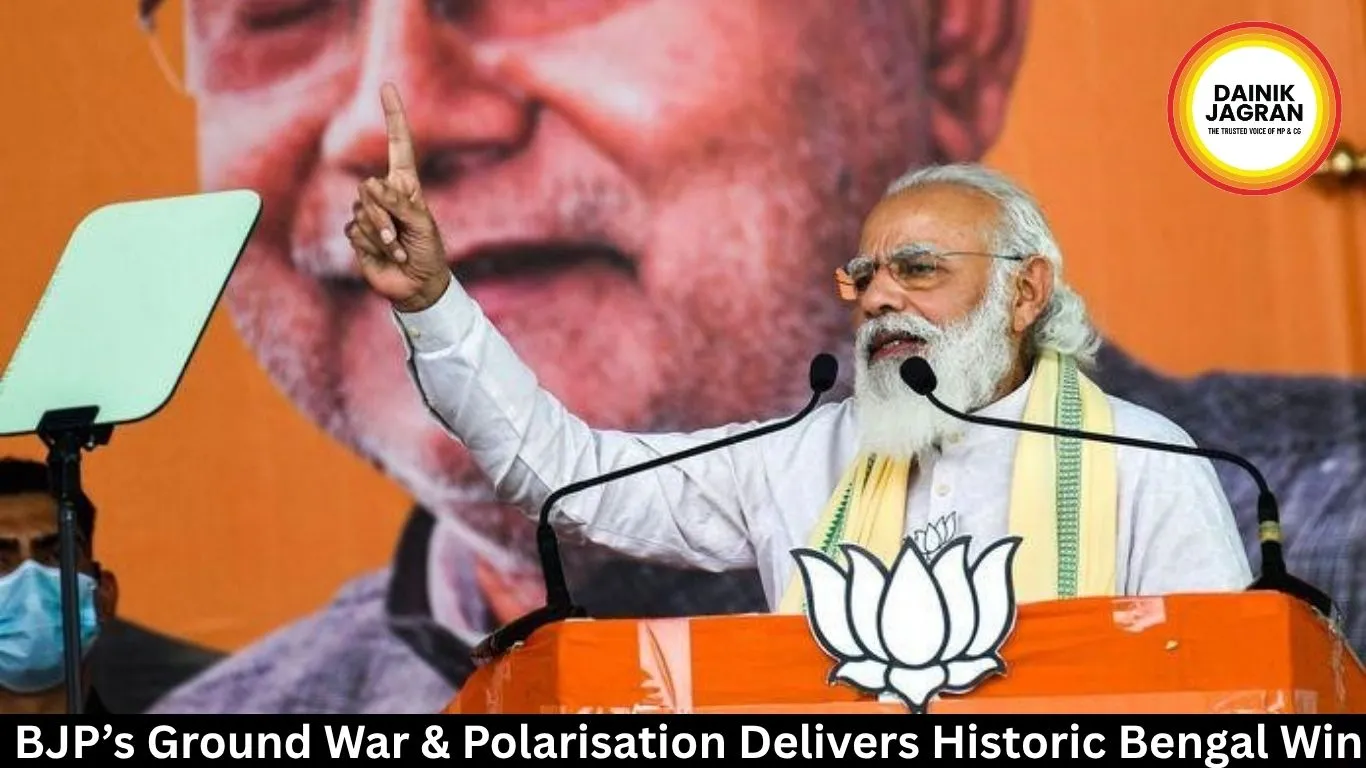
At a rally, Prime Minister Modi even brought senior Bengal leaders—from Ghosh to former governor Tathagata Roy—onto the stage for public recognition. That visual signal mattered.

What next? ED cases and state challenges

Investigations into corruption cases are expected to become a priority for the new government. At least seven cases—including teacher recruitment, municipal recruitment, the ration scam, coal smuggling, cattle smuggling, and the Sandeshkhali incident—are under investigation by the Enforcement Directorate (ED). Action in these cases may intensify.

Old files may also be reviewed. On the other hand, the state government faces challenges in implementing promises such as the Seventh Pay Commission, monthly assistance of ₹3,000, and dearness allowance payments. Officials familiar with the transition said the first 100 days will likely focus on administrative reviews rather than dramatic announcements.

For now, sweets are being distributed outside BJP offices in Kolkata and Delhi alike. But the real work—balancing polarisation-driven gains with governance—has only just begun.

 

--------

🚨 Beat the News Rush – Join Now!

Get breaking alerts, hot exclusives, and game-changing stories instantly on your phone. No delays, no fluff – just the edge you need. ⚡

Tap to join: 

🟢 WhatsApp Channel: Dainik Jagran MP CG

Crave more?

🅕 Facebook: Dainik Jagran MP CG English

🅧 Twitter (X): Dainik Jagran MP CG

🅘 Instagram: Dainik Jagran MP CG

Share the fire – keep your crew ahead! 🗞️🔥

english.dainikjagranmpcg.com
05 May 2026 By Abhishek Joshi

BJP’s Ground War & Polarisation Delivers Historic Bengal Win

Digital Desk

West Bengal chose Prime Minister Narendra Modi’s “double-engine” promise over the Trinamool Congress (TMC) narrative of “Bengali identity” this election season. In a wave that swept across regions once considered TMC fortresses, the BJP not only gained vote share but also dismantled the ruling party’s organisational grip from the grassroots up.

The party had been preparing for this at the ground level for nearly six months. Even oral and written examinations were conducted to select polling agents—a departure from the usual informal appointments. Two clear objectives drove this exercise: counter the atmosphere of fear in rural Bengal, and ensure every identified voter actually reached the booth.

Organisational overhaul pays off

The results are stark on paper. In the previous election, the TMC’s vote share stood at 48.5%. That fell to 40.80% this time. Meanwhile, the BJP’s share climbed from 38.4% to 45.85%. Political analysts point to a clear polarisation of Hindu votes as one factor. But officials who tracked the campaign say unemployment, migration, industrial stagnation, and dissatisfaction with local TMC cadres proved equally decisive.

In the western industrial belt—Asansol, Durgapur, Barrackpore—the BJP ran sharp, issue-based campaigns. Closed mills, lack of logistics hubs, and alleged syndicate rule became talking points that resonated with younger voters.

Region-wise strategy, not one-size-fits-all

West Bengal’s political geography has been redrawn. In 2021, the BJP was largely confined to North Bengal, Junglemahal, and the Matua belt. This time, even the TMC’s traditional strongholds in South Bengal have turned saffron.

The BJP adopted a region-specific approach. In South Bengal, the party highlighted anti-incumbency and alleged lawlessness. In the Presidency division, it increased its seat count from 14 to 27. In North Bengal, the focus shifted to tea garden workers and the Rajbanshi community. In Junglemahal, issues like housing, water supply, and perceived disrespect towards the President helped push the TMC back significantly.

Minority belts show cracks

Around 115 seats have Muslim-majority populations. The TMC won 69 of these, while the BJP secured about 39 seats. The Muslim-secular vote has traditionally been seen as consolidated in favour of the TMC, but this time the picture appeared different.

In Malda, the BJP won 6 out of 12 seats. In North Dinajpur, it took 4 out of 9 seats. Both results indicated a weakening of what was once called the TMC’s “impenetrable minority belt.” However, the TMC still holds dominance in core Muslim districts like Murshidabad, where it won 9 out of 22 seats against the BJP’s 8.

Four regions that changed everything

The BJP’s major gains came from four key areas. In Junglemahal, the tribal belt, it won about 36 out of 40 seats—reversing the TMC’s 2021 comeback there. In North 24 Parganas, the BJP won 18 of 33 seats. In Hooghly, it took 16 of 18 seats, dealing a heavy blow to the TMC’s southern stronghold. And in Nadia, the BJP won 14 of 17 seats, where Matua, Namashudra, and border Hindu votes proved decisive.

In Matigara-Naxalbari, BJP’s Anandamay Barman defeated TMC’s Shankar Malakar by 1,04,265 votes—the largest victory margin in the state.

Local leaders, not just Delhi’s faces

The BJP did not rely only on the Delhi leadership model in Bengal. It gave importance to experienced, senior faces. Shamik Bhattacharya, associated with the Vajpayee-Advani era, was made state president. Suvendu Adhikari became a key face in rural Bengal politics, while Bhattacharya helped connect with Kolkata and suburban Bengal’s “bhadralok” class. Former state president Dilip Ghosh was also made active again. Rahul Sinha was appointed to the Rajya Sabha.

At a rally, Prime Minister Modi even brought senior Bengal leaders—from Ghosh to former governor Tathagata Roy—onto the stage for public recognition. That visual signal mattered.

What next? ED cases and state challenges

Investigations into corruption cases are expected to become a priority for the new government. At least seven cases—including teacher recruitment, municipal recruitment, the ration scam, coal smuggling, cattle smuggling, and the Sandeshkhali incident—are under investigation by the Enforcement Directorate (ED). Action in these cases may intensify.

Old files may also be reviewed. On the other hand, the state government faces challenges in implementing promises such as the Seventh Pay Commission, monthly assistance of ₹3,000, and dearness allowance payments. Officials familiar with the transition said the first 100 days will likely focus on administrative reviews rather than dramatic announcements.

For now, sweets are being distributed outside BJP offices in Kolkata and Delhi alike. But the real work—balancing polarisation-driven gains with governance—has only just begun.


https://english.dainikjagranmpcg.com/politics/-bjp%E2%80%99s-ground-war-polarisation-delivers-historic-bengal-win/article-17788

Latest News

Suvendu Adhikari’s PA Murdered in West Bengal | Police Recover Bike Suvendu Adhikari’s PA Murdered in West Bengal | Police Recover Bike
Chandranath Rath, personal assistant to BJP leader Suvendu Adhikari, was killed in a suspected professional hit in West Bengal. Police...
Rain, Hail in North India; Rajkot Hottest at 42.9°C
Govt Schools Overhaul: Parents to Manage 15 Lakh Schools
J&K Bolsters Security with 1,500 New Village Defence Guards
Indian Railways AI Reservation System From August
Social Laws Need Public Buy-In, Says RSS Chief Bhagwat
Congress-DMK Clash in Mayiladuthurai as TN Govt Crisis Deepens