Karka Sankranti 2026: Date, Timings, Rituals, Significance and Dakshinayana Explained
Digital Desk
Karka Sankranti 2026 is being observed on July 16 as devotees mark the Sun's entry into Cancer, the beginning of Dakshinayana, with Vishnu worship, Surya prayers, charity and holy rituals.
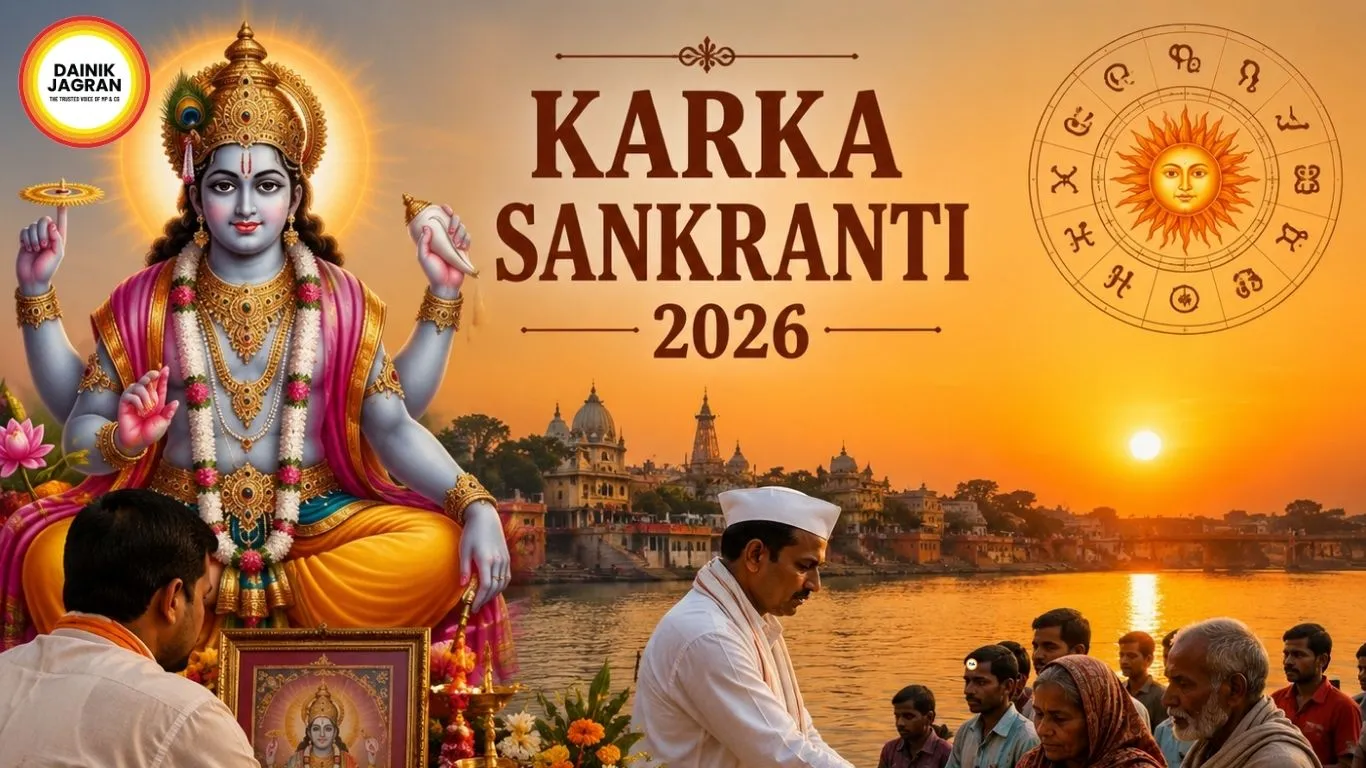
Devotees across India are observing Karka Sankranti on Thursday, July 16, 2026, marking the Sun's transition into the Cancer (Karka) zodiac sign and the beginning of Dakshinayana, the six-month southward journey of the Sun in Hindu tradition. The day is considered spiritually significant and is associated with prayers to Lord Vishnuand Surya (the Sun God), charitable activities, ritual bathing and the commencement of an important phase in the Hindu religious calendar.
According to traditional Panchang calculations, the Sankranti moment will occur at 11:35 PM IST on July 16. The Punya Kaal Muhurta, considered the most auspicious period for religious rituals and charitable acts, will be observed from 12:32 PM to 7:11 PM, while the Maha Punya Kaal Muhurta falls between 4:59 PM and 7:11 PM. The timings are based on Ujjain, a prominent astronomical reference point in Hindu calendrical calculations.
Beginning of Dakshinayana
Karka Sankranti holds special importance because it marks the beginning of Dakshinayana, the southern course of the Sun, which continues until Makar Sankranti in January. Hindu scriptures describe this six-month period as a spiritually reflective phase, during which the gods are believed to enter a period of divine rest. It is also closely associated with Deva Shayani Ekadashi, when Lord Vishnu is believed to begin his celestial slumber.
Religious scholars note that Dakshinayana is regarded as a favourable period for devotion, introspection and spiritual discipline rather than for initiating major new ventures. Devotees spend the day offering prayers and seeking blessings for peace, prosperity and family well-being.
Rituals and Religious Observances
The festival traditionally begins with a holy bath at sunrise, symbolising purification and the removal of past sins. Devotees then visit Vishnu temples or perform prayers at home, reciting the Vishnu Sahasranama and offering flowers, incense and sacred food.
Alongside Lord Vishnu, Surya Dev is also worshipped for good health, prosperity and strength. Many devotees observe fasting during the day and conclude their prayers after performing charitable acts.
Religious texts also recommend donating food grains, clothes, oil and other essentials, particularly to the needy and to Brahmins, as acts of charity performed on Karka Sankranti are believed to bring lasting spiritual merit.
Another important aspect of the day is Pitru Tarpan, a ritual performed by many Hindus to pay homage to their departed ancestors and seek peace for their souls.
Connection with Monsoon and Agriculture
Beyond its religious significance, Karka Sankranti also has deep cultural and agricultural relevance. The Sun's entry into the Cancer zodiac traditionally coincides with the active phase of the southwest monsoon, a crucial period for India's agricultural economy.
The arrival of consistent rainfall during this season supports sowing operations across much of the country, making the festival symbolically important for farmers who pray for favourable weather and abundant harvests.
A Day of Devotion and Reflection
Unlike several other Hindu festivals associated with celebrations or new beginnings, Karka Sankranti is viewed as a day of devotion, charity and spiritual reflection. Astrological traditions generally advise against starting major business ventures, property purchases or other significant undertakings on the day, encouraging individuals instead to focus on religious observances and self-discipline.
Temples dedicated to Lord Vishnu witness large gatherings of devotees, while several regions also offer special prayers to Lord Varaha Swamy, another revered incarnation of Vishnu associated with the festival.
Continuing a Timeless Tradition
Observed annually on July 16, Karka Sankranti continues to hold a special place in the Hindu calendar as a festival that blends astronomy, spirituality and seasonal transition. Through rituals, fasting, prayers and acts of charity, devotees reaffirm their faith while welcoming the sacred journey of the Sun into Dakshinayana and seeking divine blessings for health, harmony and prosperity.

--------
๐จ Beat the News Rush โ Join Now!
Get breaking alerts, hot exclusives, and game-changing stories instantly on your phone. No delays, no fluff โ just the edge you need. โก
Tap to join:ย
๐ข WhatsApp Channel: Dainik Jagran MP CG
Crave more?
๐ Facebook: Dainik Jagran MP CG English
๐ ง Twitter (X): Dainik Jagran MP CG
๐ Instagram: Dainik Jagran MP CG
Share the fire โ keep your crew ahead! ๐๏ธ๐ฅ
Karka Sankranti 2026: Date, Timings, Rituals, Significance and Dakshinayana Explained
Digital Desk
Devotees across India are observing Karka Sankranti on Thursday, July 16, 2026, marking the Sun's transition into the Cancer (Karka) zodiac sign and the beginning of Dakshinayana, the six-month southward journey of the Sun in Hindu tradition. The day is considered spiritually significant and is associated with prayers to Lord Vishnuand Surya (the Sun God), charitable activities, ritual bathing and the commencement of an important phase in the Hindu religious calendar.
According to traditional Panchang calculations, the Sankranti moment will occur at 11:35 PM IST on July 16. The Punya Kaal Muhurta, considered the most auspicious period for religious rituals and charitable acts, will be observed from 12:32 PM to 7:11 PM, while the Maha Punya Kaal Muhurta falls between 4:59 PM and 7:11 PM. The timings are based on Ujjain, a prominent astronomical reference point in Hindu calendrical calculations.
Beginning of Dakshinayana
Karka Sankranti holds special importance because it marks the beginning of Dakshinayana, the southern course of the Sun, which continues until Makar Sankranti in January. Hindu scriptures describe this six-month period as a spiritually reflective phase, during which the gods are believed to enter a period of divine rest. It is also closely associated with Deva Shayani Ekadashi, when Lord Vishnu is believed to begin his celestial slumber.
Religious scholars note that Dakshinayana is regarded as a favourable period for devotion, introspection and spiritual discipline rather than for initiating major new ventures. Devotees spend the day offering prayers and seeking blessings for peace, prosperity and family well-being.
Rituals and Religious Observances
The festival traditionally begins with a holy bath at sunrise, symbolising purification and the removal of past sins. Devotees then visit Vishnu temples or perform prayers at home, reciting the Vishnu Sahasranama and offering flowers, incense and sacred food.
Alongside Lord Vishnu, Surya Dev is also worshipped for good health, prosperity and strength. Many devotees observe fasting during the day and conclude their prayers after performing charitable acts.
Religious texts also recommend donating food grains, clothes, oil and other essentials, particularly to the needy and to Brahmins, as acts of charity performed on Karka Sankranti are believed to bring lasting spiritual merit.
Another important aspect of the day is Pitru Tarpan, a ritual performed by many Hindus to pay homage to their departed ancestors and seek peace for their souls.
Connection with Monsoon and Agriculture
Beyond its religious significance, Karka Sankranti also has deep cultural and agricultural relevance. The Sun's entry into the Cancer zodiac traditionally coincides with the active phase of the southwest monsoon, a crucial period for India's agricultural economy.
The arrival of consistent rainfall during this season supports sowing operations across much of the country, making the festival symbolically important for farmers who pray for favourable weather and abundant harvests.
A Day of Devotion and Reflection
Unlike several other Hindu festivals associated with celebrations or new beginnings, Karka Sankranti is viewed as a day of devotion, charity and spiritual reflection. Astrological traditions generally advise against starting major business ventures, property purchases or other significant undertakings on the day, encouraging individuals instead to focus on religious observances and self-discipline.
Temples dedicated to Lord Vishnu witness large gatherings of devotees, while several regions also offer special prayers to Lord Varaha Swamy, another revered incarnation of Vishnu associated with the festival.
Continuing a Timeless Tradition
Observed annually on July 16, Karka Sankranti continues to hold a special place in the Hindu calendar as a festival that blends astronomy, spirituality and seasonal transition. Through rituals, fasting, prayers and acts of charity, devotees reaffirm their faith while welcoming the sacred journey of the Sun into Dakshinayana and seeking divine blessings for health, harmony and prosperity.