PM Modi Condemns Iran Attack on UAE Injuring 3 Indians | Hormuz Tensions
Digital Desk
PM Modi condemned Iran's missile and drone attacks on UAE that injured three Indians in Fujairah. Iran warns it 'has not even started' in Strait of Hormuz standoff as international condemnation grows. Latest updates on Gulf crisis.
PM Modi Condemns Iran's Attack on UAE Injuring 3 Indians
Tensions escalate in Gulf as Iran warns it has 'not even started' amid Hormuz standoff, drawing strong international condemnation including from India.
Prime Minister Narendra Modi on Tuesday strongly condemned the Iranian missile and drone attacks on the United Arab Emirates that injured three Indian nationals in Fujairah, describing the strikes as “unacceptable.” The incident has heightened concerns over regional stability as the fragile ceasefire between Iran and the US shows fresh signs of strain in the Strait of Hormuz.
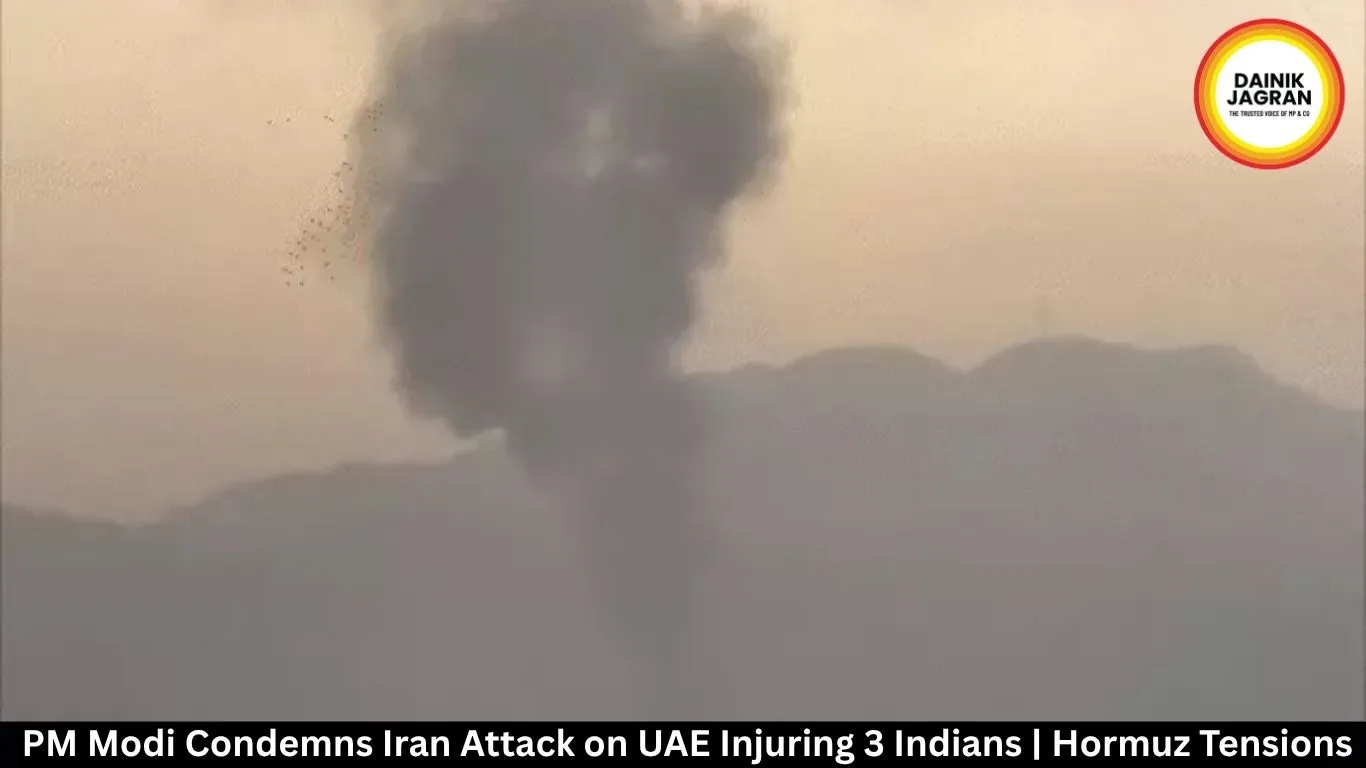
Air defences in the UAE intercepted multiple ballistic missiles, cruise missiles, and drones launched from Iran late on Monday. While most threats were neutralised, debris and impacts affected areas including Fujairah, where three Indians sustained injuries. The Indian Embassy in the UAE said it was coordinating with local authorities to provide medical care and support to the affected nationals.
Iran's Warning in Hormuz Standoff
In a sharp escalation of rhetoric, Iran’s Parliament Speaker Mohammad Bagher Ghalibaf stated that Tehran had “not even started yet” in the confrontation over the Strait of Hormuz. He accused the US and its allies of jeopardising shipping and energy transit through ceasefire violations and a blockade, claiming a “new equation” was emerging in the critical waterway.
Ghalibaf’s remarks came as US forces reported sinking seven small Iranian vessels and two US Navy destroyers — USS Truxtun and USS Mason — transited the Strait under sustained attack involving small boats, missiles, and drones. Neither warship was hit, according to American officials.
Iranian sources, however, denied targeting the UAE and rejected US claims about striking IRGC speedboats, alleging instead that American forces hit civilian boats, killing five people.
International Reactions Pour In
Pakistan Prime Minister Shehbaz Sharif expressed full solidarity with the UAE, urging adherence to the ceasefire for diplomatic progress. Several other nations, including Cyprus, New Zealand, Canada, and Germany, also condemned the attacks on the UAE and called for de-escalation.
UAE Presidential Advisor Anwar Gargash highlighted the global support as evidence that Iran was the aggressor, isolating itself through rogue actions. Saudi Arabia similarly called for calm and diplomatic solutions.
South Korea is reportedly examining participation in the US-led “Project Freedom” to secure shipping in the Hormuz, while Maersk confirmed one of its vessels safely transited the strait under American escort.
Impact on Shipping and Economy
The renewed tensions have kept oil prices above $100 per barrel, with Asian stock markets slipping. A South Korean-operated vessel, HMM NAMU, caught fire in the strait after an explosion; all crew members are safe, and the cause is under investigation. Fires were also reported on commercial ships at Iran’s Dayyer port.
Dubai has shifted private schools to online classes until May 8 as a safety measure. The US Embassy in the UAE issued alerts about potential aerial threats.
Background and Diplomatic Efforts
The latest flare-up comes despite ongoing diplomatic efforts, including talks facilitated by Pakistan. Iran’s Foreign Minister Abbas Araghchi emphasised that there is “no military solution” to the political crisis and warned against being drawn into a quagmire. He dismissed the US “Project Freedom” initiative as “Project Deadlock.”
An Iranian lawmaker separately claimed the country possesses missiles capable of splitting into 80 warheads, suggesting the ability to overwhelm air defence systems.
PM Modi’s strong condemnation reflects India’s deep stakes in the region, with a large Indian expatriate community in the UAE and significant energy and trade interests. New Delhi has consistently called for peace and stability in the Gulf.
As the situation remains fluid, observers are watching whether the fragile ceasefire can hold or if further incidents in the Strait of Hormuz will push the region closer to wider conflict. Diplomatic channels, including efforts involving Pakistan, are expected to remain active in the coming days.
--------
🚨 Beat the News Rush – Join Now!
Get breaking alerts, hot exclusives, and game-changing stories instantly on your phone. No delays, no fluff – just the edge you need. ⚡
Tap to join:
🟢 WhatsApp Channel: Dainik Jagran MP CG
Crave more?
🅕 Facebook: Dainik Jagran MP CG English
🅧 Twitter (X): Dainik Jagran MP CG
🅘 Instagram: Dainik Jagran MP CG
Share the fire – keep your crew ahead! 🗞️🔥
PM Modi Condemns Iran Attack on UAE Injuring 3 Indians | Hormuz Tensions
Digital Desk
PM Modi Condemns Iran's Attack on UAE Injuring 3 Indians
Tensions escalate in Gulf as Iran warns it has 'not even started' amid Hormuz standoff, drawing strong international condemnation including from India.
Prime Minister Narendra Modi on Tuesday strongly condemned the Iranian missile and drone attacks on the United Arab Emirates that injured three Indian nationals in Fujairah, describing the strikes as “unacceptable.” The incident has heightened concerns over regional stability as the fragile ceasefire between Iran and the US shows fresh signs of strain in the Strait of Hormuz.
Air defences in the UAE intercepted multiple ballistic missiles, cruise missiles, and drones launched from Iran late on Monday. While most threats were neutralised, debris and impacts affected areas including Fujairah, where three Indians sustained injuries. The Indian Embassy in the UAE said it was coordinating with local authorities to provide medical care and support to the affected nationals.
Iran's Warning in Hormuz Standoff
In a sharp escalation of rhetoric, Iran’s Parliament Speaker Mohammad Bagher Ghalibaf stated that Tehran had “not even started yet” in the confrontation over the Strait of Hormuz. He accused the US and its allies of jeopardising shipping and energy transit through ceasefire violations and a blockade, claiming a “new equation” was emerging in the critical waterway.
Ghalibaf’s remarks came as US forces reported sinking seven small Iranian vessels and two US Navy destroyers — USS Truxtun and USS Mason — transited the Strait under sustained attack involving small boats, missiles, and drones. Neither warship was hit, according to American officials.
Iranian sources, however, denied targeting the UAE and rejected US claims about striking IRGC speedboats, alleging instead that American forces hit civilian boats, killing five people.
International Reactions Pour In
Pakistan Prime Minister Shehbaz Sharif expressed full solidarity with the UAE, urging adherence to the ceasefire for diplomatic progress. Several other nations, including Cyprus, New Zealand, Canada, and Germany, also condemned the attacks on the UAE and called for de-escalation.
UAE Presidential Advisor Anwar Gargash highlighted the global support as evidence that Iran was the aggressor, isolating itself through rogue actions. Saudi Arabia similarly called for calm and diplomatic solutions.
South Korea is reportedly examining participation in the US-led “Project Freedom” to secure shipping in the Hormuz, while Maersk confirmed one of its vessels safely transited the strait under American escort.
Impact on Shipping and Economy
The renewed tensions have kept oil prices above $100 per barrel, with Asian stock markets slipping. A South Korean-operated vessel, HMM NAMU, caught fire in the strait after an explosion; all crew members are safe, and the cause is under investigation. Fires were also reported on commercial ships at Iran’s Dayyer port.
Dubai has shifted private schools to online classes until May 8 as a safety measure. The US Embassy in the UAE issued alerts about potential aerial threats.
Background and Diplomatic Efforts
The latest flare-up comes despite ongoing diplomatic efforts, including talks facilitated by Pakistan. Iran’s Foreign Minister Abbas Araghchi emphasised that there is “no military solution” to the political crisis and warned against being drawn into a quagmire. He dismissed the US “Project Freedom” initiative as “Project Deadlock.”
An Iranian lawmaker separately claimed the country possesses missiles capable of splitting into 80 warheads, suggesting the ability to overwhelm air defence systems.
PM Modi’s strong condemnation reflects India’s deep stakes in the region, with a large Indian expatriate community in the UAE and significant energy and trade interests. New Delhi has consistently called for peace and stability in the Gulf.
As the situation remains fluid, observers are watching whether the fragile ceasefire can hold or if further incidents in the Strait of Hormuz will push the region closer to wider conflict. Diplomatic channels, including efforts involving Pakistan, are expected to remain active in the coming days.