Hormuz Clashes: US Strikes Iran, Trump Says Ceasefire Holds
Digital Desk
Fresh US-Iran clashes light vessels ablaze near Strait of Hormuz, stranding 1,500 ships as oil hits $101. Trump calls ceasefire intact amid retaliatory strikes and stalled talks—global supply chains reel.
US-Iran Clashes Flare in Strait of Hormuz, Trump Insists Ceasefire Holds
Vessels ablaze, oil prices spike as attacks test fragile truce amid stranded ships and global fears
Multiple vessels caught fire near the Strait of Hormuz on Friday after fresh US-Iran clashes, even as President Donald Trump insisted the ceasefire remains "in effect." NASA's FIRMS satellite detected fire activity across several spots following missile and drone exchanges, with UAE air defences activated amid blasts off Abu Dhabi coast. The incidents, unfolding just hours apart, have stranded nearly 1,500 ships and pushed Brent crude above $101 a barrel.
Vessels Ablaze Off Hormuz
Reports emerged around 12:22 PM IST of vessels burning near the strategic waterway, a chokepoint for 20% of global oil. Initial satellite imagery showed flames at multiple locations, linked to overnight attacks between US warships and Iranian assets. US Central Command confirmed Thursday's retaliatory airstrikes hit Iranian missile sites, drone launch pads, and command centres after three American destroyers faced "provocative attacks" while transiting the strait.
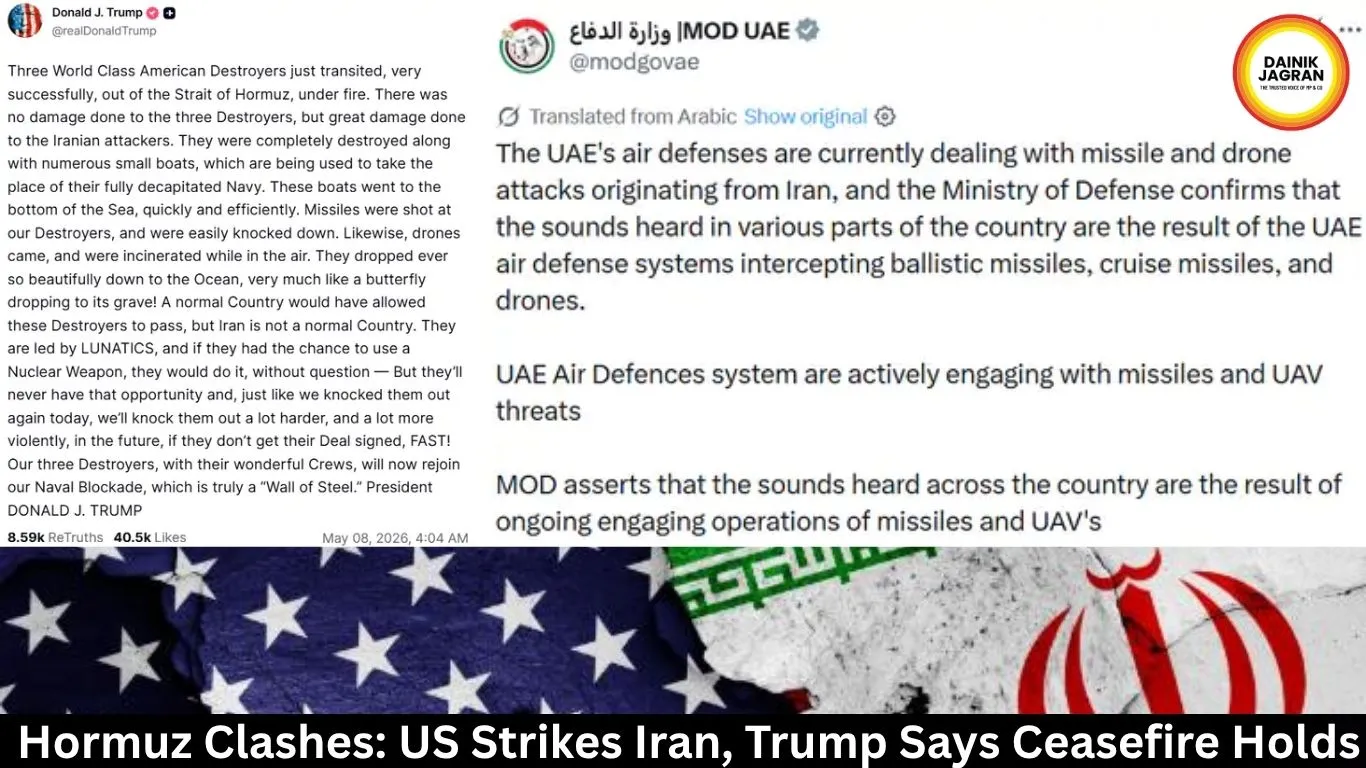
No casualties were reported from the US side. Trump, posting on Truth Social, described the destroyers as unscathed, with Iranian drones falling "like a butterfly dropping to its grave." He called the strikes a mere "love tap," but warned of "a lot more violent" responses if no deal comes fast.
UAE on High Alert
The UAE scrambled air defences Friday morning as explosions echoed off Abu Dhabi, where US assets are based. The defence ministry's Arabic statement on X noted "ongoing engaging operations of missiles and UAVs," with sounds ringing across the country. Authorities urged vigilance but reported no direct hits on mainland soil. Separately, UAE firm Gulf Marine Services logged a 24% Q1 profit drop to $19.5 million, blaming vessel evacuations from a GCC nation in March amid the war.
Local sources said the nation is compiling a record of Iranian attacks for future legal action, via a new national committee.
Trump: Ceasefire Intact, Deal Possible
Trump doubled down on the truce holding, despite Iran's top command accusing the US of violating it by hitting an oil tanker and civilian areas. "The ceasefire is going. It's in effect," he told US media, framing strikes as defensive. He dismissed talk of a "one-page offer" to Tehran, calling it broader—demanding no nuclear weapons and handover of "nuclear dust."
Sources familiar with the matter point to backchannel talks via Pakistan for a 30-day halt to hostilities, keeping Hormuz open while permanent negotiations run. Trump signalled willingness to negotiate, but only if Iran acts quickly.
Stranded Ships, Sailor Fears
The UN's IMO estimates 1,500 vessels stuck in the region, crippling oil and gas chains. Food shortages worsen in places like Somalia. Indian sailors aboard a cargo ship in Iran's Shatt al-Arab waterway spoke of terror to Al Jazeera: "We've seen war, missiles, everything. We're mentally exhausted." Stuck for 10 weeks over unpaid wages, they survive on potatoes, onions and bread; some escaped via Iran-Armenia border, but 20,000 sailors region-wide remain trapped.
Pakistan seeks repatriation of 11 Pakistani and 20 Iranian crew from US-seized vessels, coordinating with mediators.
Oil Surge, Wider Fallout
Brent crude jumped 7.5% Thursday to $103.70 before easing to $101.12 by Friday Asia open—up 40% since the war's oil shortfall hit 14.5 million barrels daily. One tanker reached South Korea after dodging the blockade, first since Iran shut the strait in late February.
Japan's MOL confirmed its ships crossed without Tehran's proposed fees, via stakeholder coordination; two India-flagged LPG carriers followed suit.
Regional Tensions Spill Over
Iran's VP Mohammad Reza Aref claimed a "great victory" soon, with sanctions lifted, per state media. Meanwhile, Israel-Hezbollah fighting reignited: IDF killed Hezbollah's Radwan unit commander in Beirut, ordered Lebanese evacuations, and shelled south Lebanon sites. A Lebanese civil defence member died in an airstrike.
UN drama brews too—Russia and China poised to veto a US-Bahrain resolution on Hormuz freedom; Iran slammed it as "one-sided."
Sanctions and Standoff
US hit new sanctions on Iraq's deputy oil minister and Iran-linked firms for oil trades aiding proxies. As ships idle and prices climb, eyes turn to talks. Will the 30-day proposal break the deadlock, or fuel more fire in Hormuz?
--------
🚨 Beat the News Rush – Join Now!
Get breaking alerts, hot exclusives, and game-changing stories instantly on your phone. No delays, no fluff – just the edge you need. ⚡
Tap to join:
🟢 WhatsApp Channel: Dainik Jagran MP CG
Crave more?
🅕 Facebook: Dainik Jagran MP CG English
🅧 Twitter (X): Dainik Jagran MP CG
🅘 Instagram: Dainik Jagran MP CG
Share the fire – keep your crew ahead! 🗞️🔥
Hormuz Clashes: US Strikes Iran, Trump Says Ceasefire Holds
Digital Desk
US-Iran Clashes Flare in Strait of Hormuz, Trump Insists Ceasefire Holds
Vessels ablaze, oil prices spike as attacks test fragile truce amid stranded ships and global fears
Multiple vessels caught fire near the Strait of Hormuz on Friday after fresh US-Iran clashes, even as President Donald Trump insisted the ceasefire remains "in effect." NASA's FIRMS satellite detected fire activity across several spots following missile and drone exchanges, with UAE air defences activated amid blasts off Abu Dhabi coast. The incidents, unfolding just hours apart, have stranded nearly 1,500 ships and pushed Brent crude above $101 a barrel.
Vessels Ablaze Off Hormuz
Reports emerged around 12:22 PM IST of vessels burning near the strategic waterway, a chokepoint for 20% of global oil. Initial satellite imagery showed flames at multiple locations, linked to overnight attacks between US warships and Iranian assets. US Central Command confirmed Thursday's retaliatory airstrikes hit Iranian missile sites, drone launch pads, and command centres after three American destroyers faced "provocative attacks" while transiting the strait.
No casualties were reported from the US side. Trump, posting on Truth Social, described the destroyers as unscathed, with Iranian drones falling "like a butterfly dropping to its grave." He called the strikes a mere "love tap," but warned of "a lot more violent" responses if no deal comes fast.
UAE on High Alert
The UAE scrambled air defences Friday morning as explosions echoed off Abu Dhabi, where US assets are based. The defence ministry's Arabic statement on X noted "ongoing engaging operations of missiles and UAVs," with sounds ringing across the country. Authorities urged vigilance but reported no direct hits on mainland soil. Separately, UAE firm Gulf Marine Services logged a 24% Q1 profit drop to $19.5 million, blaming vessel evacuations from a GCC nation in March amid the war.
Local sources said the nation is compiling a record of Iranian attacks for future legal action, via a new national committee.
Trump: Ceasefire Intact, Deal Possible
Trump doubled down on the truce holding, despite Iran's top command accusing the US of violating it by hitting an oil tanker and civilian areas. "The ceasefire is going. It's in effect," he told US media, framing strikes as defensive. He dismissed talk of a "one-page offer" to Tehran, calling it broader—demanding no nuclear weapons and handover of "nuclear dust."
Sources familiar with the matter point to backchannel talks via Pakistan for a 30-day halt to hostilities, keeping Hormuz open while permanent negotiations run. Trump signalled willingness to negotiate, but only if Iran acts quickly.
Stranded Ships, Sailor Fears
The UN's IMO estimates 1,500 vessels stuck in the region, crippling oil and gas chains. Food shortages worsen in places like Somalia. Indian sailors aboard a cargo ship in Iran's Shatt al-Arab waterway spoke of terror to Al Jazeera: "We've seen war, missiles, everything. We're mentally exhausted." Stuck for 10 weeks over unpaid wages, they survive on potatoes, onions and bread; some escaped via Iran-Armenia border, but 20,000 sailors region-wide remain trapped.
Pakistan seeks repatriation of 11 Pakistani and 20 Iranian crew from US-seized vessels, coordinating with mediators.
Oil Surge, Wider Fallout
Brent crude jumped 7.5% Thursday to $103.70 before easing to $101.12 by Friday Asia open—up 40% since the war's oil shortfall hit 14.5 million barrels daily. One tanker reached South Korea after dodging the blockade, first since Iran shut the strait in late February.
Japan's MOL confirmed its ships crossed without Tehran's proposed fees, via stakeholder coordination; two India-flagged LPG carriers followed suit.
Regional Tensions Spill Over
Iran's VP Mohammad Reza Aref claimed a "great victory" soon, with sanctions lifted, per state media. Meanwhile, Israel-Hezbollah fighting reignited: IDF killed Hezbollah's Radwan unit commander in Beirut, ordered Lebanese evacuations, and shelled south Lebanon sites. A Lebanese civil defence member died in an airstrike.
UN drama brews too—Russia and China poised to veto a US-Bahrain resolution on Hormuz freedom; Iran slammed it as "one-sided."
Sanctions and Standoff
US hit new sanctions on Iraq's deputy oil minister and Iran-linked firms for oil trades aiding proxies. As ships idle and prices climb, eyes turn to talks. Will the 30-day proposal break the deadlock, or fuel more fire in Hormuz?