


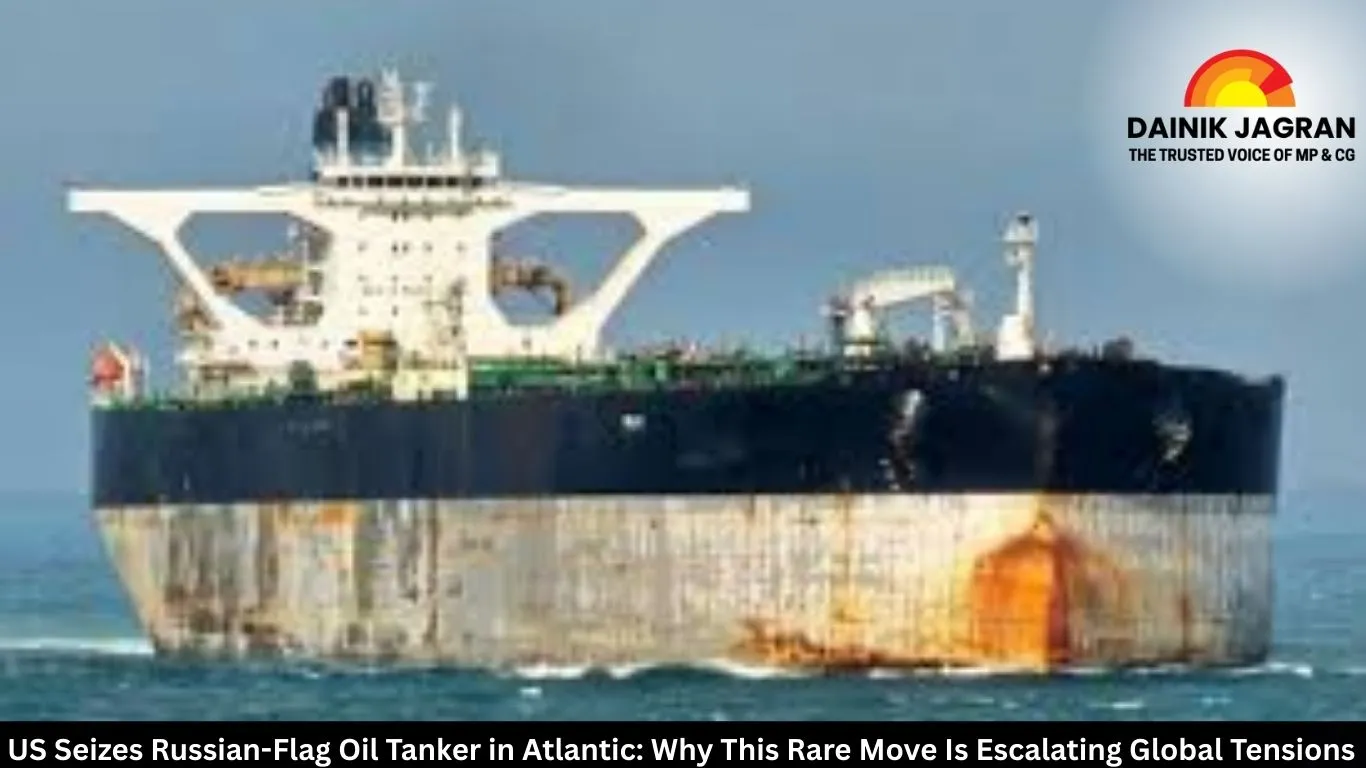
US Seizes Russian-Flag Oil Tanker in Atlantic: Why This Rare Move Is Escalating Global Tensions
Digital Desk
Introduction: A Rare and Risky Maritime Confrontation
The global geopolitical landscape witnessed a dramatic escalation after the US seized a Russian-flag oil tanker in international waters following a high-stakes chase across the Atlantic Ocean. Such actions are extremely rare and have triggered sharp reactions from Moscow, renewed debates on international maritime law, and concerns over global oil supply disruptions. The incident comes at a time when sanctions enforcement, shadow fleets, and energy geopolitics are already under intense scrutiny.
What Exactly Happened in the Atlantic?
According to US officials, the tanker—initially known as Bella One—had been under surveillance for weeks. The vessel allegedly transported sanctioned Venezuelan crude oil, violating US sanctions imposed on Caracas.
Key developments include:
The ship reportedly switched off its transponder near Venezuela on December 17
It later reappeared under a new name, Marinera, on January 1
The tanker declared itself Russian-flagged, raising geopolitical stakes
With intelligence support from the UK, the US Navy intercepted and seized the ship near Iceland on January 7
This marked one of the few instances where a Russian-linked vessel was seized outside any country’s Exclusive Economic Zone (EEZ).
Why Did the US Target This Tanker?
Washington argues that the tanker violated Venezuela oil sanctions, which aim to cut financial lifelines to President Nicolás Maduro’s regime.
US authorities justified the seizure on three legal grounds:
1. A federal court warrant approving the action
2. Clear violation of US sanctions law
3. The vessel was initially stateless, making it legally interceptable
Officials also claim the Russian flag was adopted fraudulently to avoid enforcement.
Russia’s Response and Rising Maritime Risks
Moscow strongly condemned the action, calling it “maritime piracy” and a violation of international law. Russian lawmakers warned of possible retaliatory measures, arguing that the move sets a dangerous global precedent.
Reports also suggest Russia may have briefly deployed naval assets earlier to shadow the tanker—raising fears that US and Russian forces could have faced a direct naval confrontation.
Impact on Global Oil Markets and Trade
This incident goes beyond diplomacy. Analysts warn of wider consequences:
Increased oil price volatility due to supply uncertainty
Rising insurance premiums for tankers
Higher risks for global shipping using shadow fleets
Venezuela holds the world’s largest proven oil reserves, and aggressive enforcement actions could further tighten global supply.
The Bigger Question: Can One Country Enforce Sanctions Globally?
The seizure has reopened a crucial debate—can unilateral US sanctions be enforced worldwide, especially in international waters? Critics argue that if such actions become normalized, other powers like China or Russia may adopt similar tactics, destabilizing global maritime order.
A Flashpoint with Global Consequences
The US seizure of a Russian-flag oil tanker in international waters is more than a sanctions enforcement move—it is a geopolitical flashpoint. As tensions rise and oil markets react, the world is watching closely. What happens next may redefine how power, law, and energy intersect on the high seas.

.jpg)




