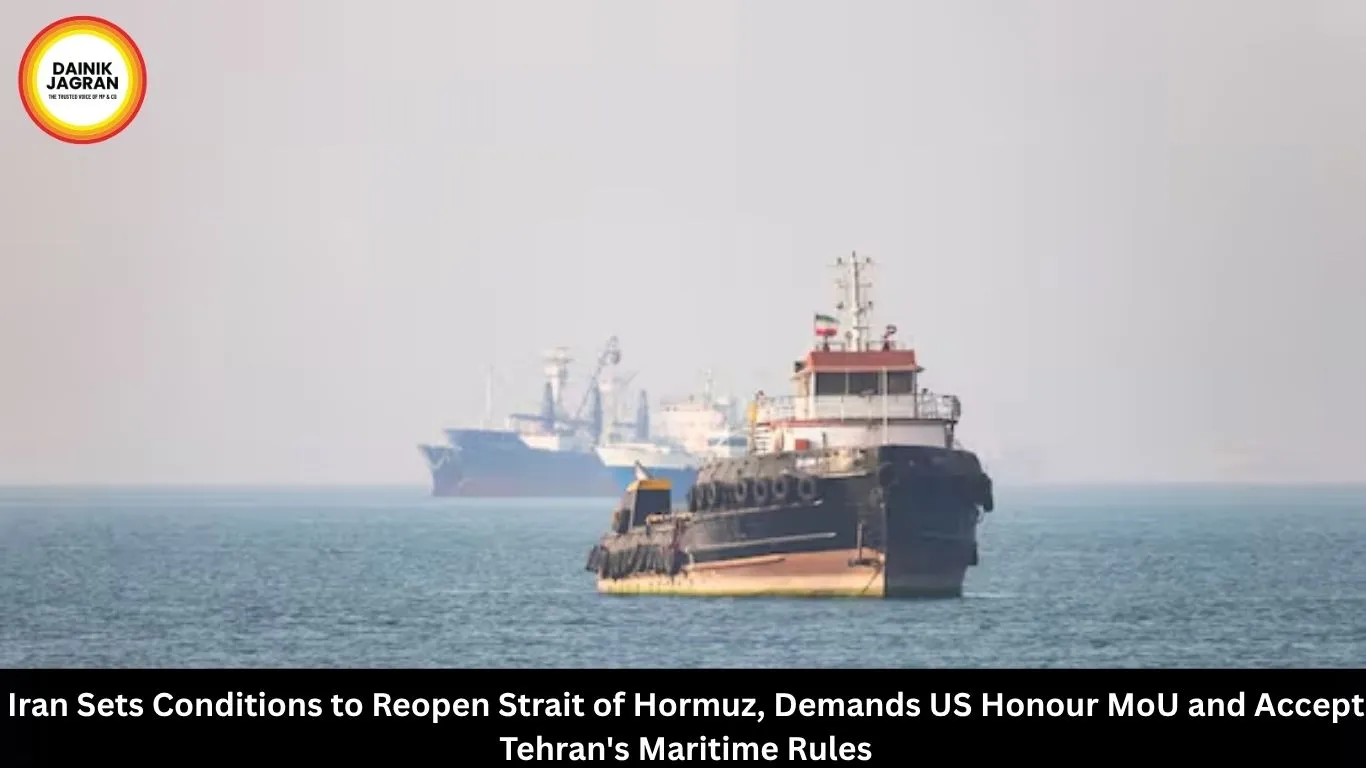
Iran Demands US Honour MoU Before Reopening Strait of Hormuz

Digital Desk

Iran Demands US Honour MoU Before Reopening Strait of Hormuz

Iran says the Strait of Hormuz will remain closed until the US complies with the MoU and accepts Tehran's maritime rules, even as diplomatic efforts continue alongside military escalation.

Iran has declared that the United States must comply with the Memorandum of Understanding (MoU) signed between the two countries and accept Iran's legal framework governing the Strait of Hormuz before the strategically vital waterway can be reopened, as the latest phase of the US-Iran conflict entered its sixth day.

The statement was issued on Thursday by Iranian Army spokesperson Brigadier General Mohammad Akraminia, who said the Strait would remain closed until Washington adhered to the terms of the agreement and ended what Tehran described as hostile actions.

"The only way to reopen the Strait is for the United States to comply with the provisions of the memorandum of understanding and allow Iranian laws to govern the waterway," Akraminia said.

Iran links reopening to MoU

According to Iranian officials, the MoU signed by US President Donald Trump and Iranian President Massoud Pezeshkian provides the legal basis for Iran to administer the Strait of Hormuz.

Tehran has repeatedly argued that Paragraph 5 of the agreement authorises Iran, in consultation with Oman and other Persian Gulf coastal states, to determine the future administration and maritime services in the Strait in accordance with international law and the sovereign rights of coastal states.

Iran maintains that this clause recognises its authority over the strategic shipping route and limits external interference in its management.

Strait remains strategically critical

The Strait of Hormuz is one of the world's most important maritime chokepoints, connecting the Persian Gulf with the Gulf of Oman and the Arabian Sea. Around one-fifth of global crude oil shipments pass through the narrow waterway, making any disruption a major concern for international energy markets and global trade.

The continued closure and uncertainty surrounding the Strait have already affected commercial shipping and increased volatility in global oil prices.

Tehran signals willingness for diplomacy

Despite its firm stance, Iran also indicated that diplomatic engagement remains possible.

Iran's chief negotiator Mohammad Bagher Ghalibaf said negotiations should continue if they help protect Iran's national interests, adding that diplomacy should not be viewed as surrender.

Foreign Minister Abbas Araghchi has also travelled to Qatar as part of ongoing regional diplomatic efforts aimed at reducing tensions.

Iranian officials suggested that adherence to the existing MoU could provide a framework for resolving the current crisis through dialogue rather than continued military confrontation.

Fighting continues despite diplomatic signals

Even as diplomatic contacts continue, military operations have intensified.

The US military said it carried out strikes targeting Iranian command centres, air defence systems, missile and drone facilities, and coastal surveillance infrastructure in an effort to reduce Tehran's ability to threaten commercial shipping in the Strait of Hormuz.

Iranian state media reported that areas including Semnan Airport, Khondab, Qeshm Island and Sirik in Hormozgan Province were among the locations targeted.

In response, Iran claimed to have launched retaliatory strikes against Al-Azraq Air Base in Jordan and Ali Al Salem Air Base in Kuwait, alleging damage to radar systems, communications equipment and fuel storage facilities used by US forces.

The latest exchange highlights the continuing escalation between Washington and Tehran, even as both sides leave open the possibility of a diplomatic solution.
 

--------

🚨 Beat the News Rush – Join Now!

Get breaking alerts, hot exclusives, and game-changing stories instantly on your phone. No delays, no fluff – just the edge you need. ⚡

Tap to join: 

🟢 WhatsApp Channel: Dainik Jagran MP CG

Crave more?

🅕 Facebook: Dainik Jagran MP CG English

🅧 Twitter (X): Dainik Jagran MP CG

🅘 Instagram: Dainik Jagran MP CG

Share the fire – keep your crew ahead! 🗞️🔥

english.dainikjagranmpcg.com
16 Jul 2026 By Abhishek Joshi

Iran Demands US Honour MoU Before Reopening Strait of Hormuz

Digital Desk

Iran has declared that the United States must comply with the Memorandum of Understanding (MoU) signed between the two countries and accept Iran's legal framework governing the Strait of Hormuz before the strategically vital waterway can be reopened, as the latest phase of the US-Iran conflict entered its sixth day.

The statement was issued on Thursday by Iranian Army spokesperson Brigadier General Mohammad Akraminia, who said the Strait would remain closed until Washington adhered to the terms of the agreement and ended what Tehran described as hostile actions.

"The only way to reopen the Strait is for the United States to comply with the provisions of the memorandum of understanding and allow Iranian laws to govern the waterway," Akraminia said.

Iran links reopening to MoU

According to Iranian officials, the MoU signed by US President Donald Trump and Iranian President Massoud Pezeshkian provides the legal basis for Iran to administer the Strait of Hormuz.

Tehran has repeatedly argued that Paragraph 5 of the agreement authorises Iran, in consultation with Oman and other Persian Gulf coastal states, to determine the future administration and maritime services in the Strait in accordance with international law and the sovereign rights of coastal states.

Iran maintains that this clause recognises its authority over the strategic shipping route and limits external interference in its management.

Strait remains strategically critical

The Strait of Hormuz is one of the world's most important maritime chokepoints, connecting the Persian Gulf with the Gulf of Oman and the Arabian Sea. Around one-fifth of global crude oil shipments pass through the narrow waterway, making any disruption a major concern for international energy markets and global trade.

The continued closure and uncertainty surrounding the Strait have already affected commercial shipping and increased volatility in global oil prices.

Tehran signals willingness for diplomacy

Despite its firm stance, Iran also indicated that diplomatic engagement remains possible.

Iran's chief negotiator Mohammad Bagher Ghalibaf said negotiations should continue if they help protect Iran's national interests, adding that diplomacy should not be viewed as surrender.

Foreign Minister Abbas Araghchi has also travelled to Qatar as part of ongoing regional diplomatic efforts aimed at reducing tensions.

Iranian officials suggested that adherence to the existing MoU could provide a framework for resolving the current crisis through dialogue rather than continued military confrontation.

Fighting continues despite diplomatic signals

Even as diplomatic contacts continue, military operations have intensified.

The US military said it carried out strikes targeting Iranian command centres, air defence systems, missile and drone facilities, and coastal surveillance infrastructure in an effort to reduce Tehran's ability to threaten commercial shipping in the Strait of Hormuz.

Iranian state media reported that areas including Semnan Airport, Khondab, Qeshm Island and Sirik in Hormozgan Province were among the locations targeted.

In response, Iran claimed to have launched retaliatory strikes against Al-Azraq Air Base in Jordan and Ali Al Salem Air Base in Kuwait, alleging damage to radar systems, communications equipment and fuel storage facilities used by US forces.

The latest exchange highlights the continuing escalation between Washington and Tehran, even as both sides leave open the possibility of a diplomatic solution.
 

https://english.dainikjagranmpcg.com/special-news/iran-demands-us-honour-mou-before-reopening-strait-of-hormuz/article-22495

Trending News