


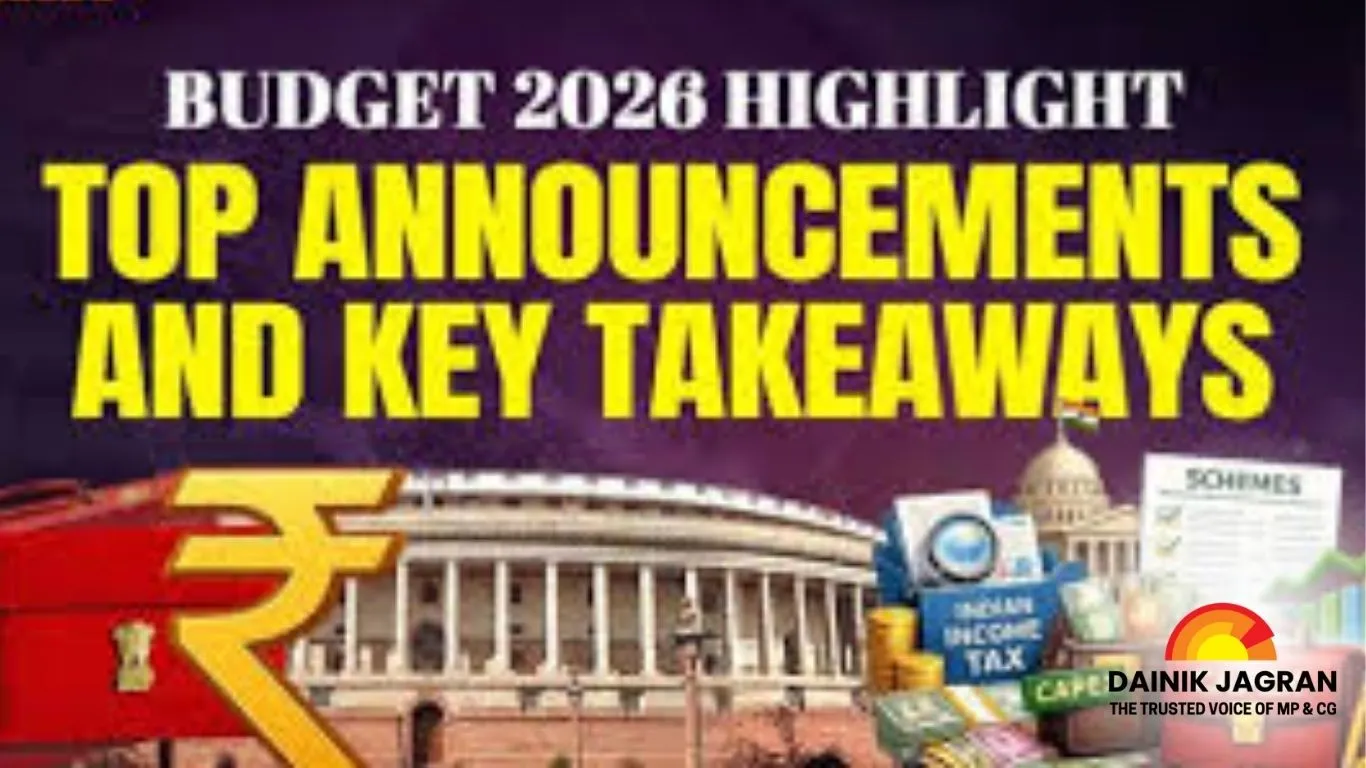
Union Budget 2026: No Changes in Income Tax Slabs, Focus on Inflation Control and Make in India Boost
Digital Desk
Finance Minister Nirmala Sitharaman unveiled the Union Budget 2026 today, emphasizing stability amid global challenges. With no changes in income tax slabs, the budget prioritizes inflation reduction and a robust roadmap for the Make in India program, as highlighted by Prime Minister Narendra Modi. This fiscal plan comes at a crucial time when India aims for 7% growth, reducing poverty and enhancing self-reliance.
Key Tax and Relief Measures
The Union Budget 2026 maintains existing income tax slabs, keeping the exemption limit at Rs 12 lakh. However, small reliefs offer some respite for the common man. Taxpayers now have until March 31 to file revised returns, extending from December 31. Other announcements include:
- Exemption of motor accident claims from income tax.
- Reduced TCS rate to 2% for education and medical purposes under LRS.
- Tax holiday till 2047 for foreign cloud service providers in India.
- NRIs get five-year income tax exemption on capital goods supplied to Indian firms.
These measures aim to simplify compliance and encourage foreign investment, with the new Income Tax Act effective from April 1, 2026. Expert Shripal Shah from Kotak Securities warns that the STT hike on futures and options (to 0.05%) may increase trading costs, potentially cooling market activity.
Infrastructure and Development Push
A massive Rs 12.2 lakh crore capex allocation underscores infrastructure focus, up from last year's Rs 11.2 lakh crore. Seven high-speed rail corridors were announced, connecting cities like Mumbai-Pune and Delhi-Varanasi to boost connectivity and reduce emissions.
In urban development, Rs 12.2 lakh crore targets Tier-2 and Tier-3 cities with over 5 lakh population. Hostels for girls in 800 districts and content creator labs in 15,000 schools and 500 colleges promote education and skills. For healthcare, import duties were removed on 17 cancer drugs and medicines for seven rare diseases, plus three new Ayurvedic AIIMS and five medical hubs for tourism.
PM Modi praised the budget as "historic and futuristic," noting its role in making India a data center hub through tax incentives.
Sector-Specific Boosts and Visions
The budget revives key sectors with Rs 10,000 crore for Bio-Pharma Shakti, launching three institutes, and ISM 2.0 for semiconductors. Rare earth corridors in Odisha, Kerala, Tamil Nadu, and Andhra Pradesh will enhance mineral security. Textile parks and incentives for the orange economy (animation, gaming) aim to create jobs.
The government's three visions—speed, capacity, and inclusivity—guide interventions in six areas: strategic manufacturing, MSMEs, infrastructure, security, and city development. Farmers benefit from support for high-value crops like nuts, while women entrepreneurs get new schemes.
Reactions and Market Impact
Reactions vary: BJP leaders like Kangana Ranaut called it "exemplary," while opposition figures like Shashi Tharoor criticized the lack of focus on states like Kerala. Stock markets crashed over 1,000 points during the speech, with Sensex below 81,280.
In conclusion, Union Budget 2026 lays a pragmatic foundation for Viksit Bharat, focusing on inflation control and Make in India without major tax overhauls. For citizens, practical takeaways include extended filing deadlines and cheaper cancer drugs—steps toward inclusive growth in uncertain times. As India navigates global trade issues, this budget signals resilience and long-term vision.




.jpg)




