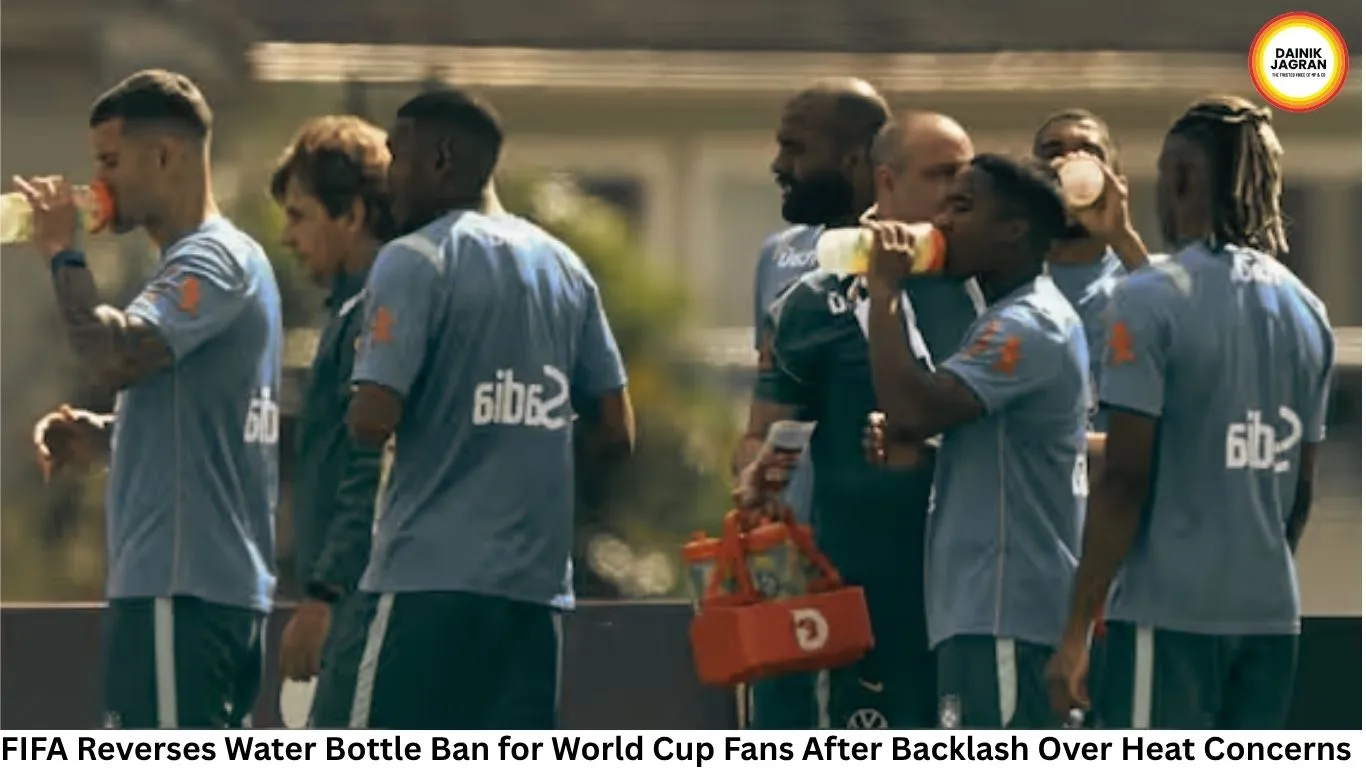
FIFA Reverses Water Bottle Ban for World Cup Fans After Backlash Over Heat Concerns
Digital Desk
Football’s governing body will now allow spectators to carry one factory-sealed disposable water bottle into World Cup venues in the United States and Canada after criticism over its earlier restrictions.
FIFA has revised its policy following widespread concerns from supporters and health experts.
The decision comes amid growing warnings about extreme heat conditions expected during the 2026 World Cup.
World football governing body FIFA has eased its controversial water bottle restrictions for the 2026 FIFA World Cup, allowing fans to bring one factory-sealed disposable plastic bottle into stadiums. The move comes just days after an earlier policy banning refillable bottles sparked criticism and concerns over fan safety in high temperatures.
World Cup chief operating officer Heimo Schirgi announced that spectators attending matches in the United States and Canada will be permitted to carry one soft, sealed disposable bottle containing up to 20 ounces (590 ml) of water.
The announcement was described by FIFA as a clarification of its water bottle policy after fans objected to rules that would have required them to purchase drinks inside stadiums.
Safety Concerns Remain
FIFA maintained that hard-sided reusable bottles will continue to be prohibited for security reasons. According to officials, such containers could pose risks to both spectators and players and are already banned at several venues hosting World Cup matches.
Schirgi reiterated that the restrictions on reusable bottles remain unchanged, while emphasizing that the updated rules seek to balance safety requirements with fan comfort.
The governing body also said bottled water sold inside stadiums would be priced in line with rates charged during other events at the respective venues.
Extreme Heat Raises Health Concerns
The revised policy comes against the backdrop of increasing concern over heat-related risks during the tournament, which will be jointly hosted by the United States, Canada and Mexico.
A recent study by the World Weather Attribution research group estimated that 26 of the 104 World Cup matches could be played under conditions where the Wet Bulb Globe Temperature (WBGT) exceeds 26 degrees, a threshold associated with heightened heat stress.
WBGT is a measure that factors in temperature, humidity, sunlight and wind to assess the impact of heat on the human body.
Lessons From Club World Cup
Heat-related concerns had already surfaced during the FIFA Club World Cup held in the United States last year. Fans attending matches complained about extreme temperatures and criticized restrictions that prevented them from bringing water bottles into venues.
In response, FIFA has highlighted several measures aimed at protecting supporters. These include hydration stations, misting areas, cooling tents and fans positioned around stadium premises to help spectators cope with high temperatures.
Balancing Fan Comfort and Security
The policy reversal reflects FIFA's effort to address fan concerns while maintaining security standards across venues. Supporters and public health experts had argued that limiting access to water could expose spectators to unnecessary risks during matches played in hot conditions.
As preparations intensify for the 2026 World Cup, organizers are expected to continue reviewing operational measures to ensure both safety and comfort for millions of fans expected to attend the tournament.

--------
🚨 Beat the News Rush – Join Now!
Get breaking alerts, hot exclusives, and game-changing stories instantly on your phone. No delays, no fluff – just the edge you need. ⚡
Tap to join:
🟢 WhatsApp Channel: Dainik Jagran MP CG
Crave more?
🅕 Facebook: Dainik Jagran MP CG English
🅧 Twitter (X): Dainik Jagran MP CG
🅘 Instagram: Dainik Jagran MP CG
Share the fire – keep your crew ahead! 🗞️🔥
FIFA Reverses Water Bottle Ban for World Cup Fans After Backlash Over Heat Concerns
Digital Desk
FIFA has revised its policy following widespread concerns from supporters and health experts.
The decision comes amid growing warnings about extreme heat conditions expected during the 2026 World Cup.
World football governing body FIFA has eased its controversial water bottle restrictions for the 2026 FIFA World Cup, allowing fans to bring one factory-sealed disposable plastic bottle into stadiums. The move comes just days after an earlier policy banning refillable bottles sparked criticism and concerns over fan safety in high temperatures.
World Cup chief operating officer Heimo Schirgi announced that spectators attending matches in the United States and Canada will be permitted to carry one soft, sealed disposable bottle containing up to 20 ounces (590 ml) of water.
The announcement was described by FIFA as a clarification of its water bottle policy after fans objected to rules that would have required them to purchase drinks inside stadiums.
Safety Concerns Remain
FIFA maintained that hard-sided reusable bottles will continue to be prohibited for security reasons. According to officials, such containers could pose risks to both spectators and players and are already banned at several venues hosting World Cup matches.
Schirgi reiterated that the restrictions on reusable bottles remain unchanged, while emphasizing that the updated rules seek to balance safety requirements with fan comfort.
The governing body also said bottled water sold inside stadiums would be priced in line with rates charged during other events at the respective venues.
Extreme Heat Raises Health Concerns
The revised policy comes against the backdrop of increasing concern over heat-related risks during the tournament, which will be jointly hosted by the United States, Canada and Mexico.
A recent study by the World Weather Attribution research group estimated that 26 of the 104 World Cup matches could be played under conditions where the Wet Bulb Globe Temperature (WBGT) exceeds 26 degrees, a threshold associated with heightened heat stress.
WBGT is a measure that factors in temperature, humidity, sunlight and wind to assess the impact of heat on the human body.
Lessons From Club World Cup
Heat-related concerns had already surfaced during the FIFA Club World Cup held in the United States last year. Fans attending matches complained about extreme temperatures and criticized restrictions that prevented them from bringing water bottles into venues.
In response, FIFA has highlighted several measures aimed at protecting supporters. These include hydration stations, misting areas, cooling tents and fans positioned around stadium premises to help spectators cope with high temperatures.
Balancing Fan Comfort and Security
The policy reversal reflects FIFA's effort to address fan concerns while maintaining security standards across venues. Supporters and public health experts had argued that limiting access to water could expose spectators to unnecessary risks during matches played in hot conditions.
As preparations intensify for the 2026 World Cup, organizers are expected to continue reviewing operational measures to ensure both safety and comfort for millions of fans expected to attend the tournament.