Chhattisgarh power tariff hikes: Domestic consumers to pay 30-50 paise more per unit from July 1
Digital Desk
The Chhattisgarh State Electricity Regulatory Commission (CSERC) has announced new power tariffs for the financial year 2026-27, with domestic consumers set to pay 30 to 50 paise more per unit. Commercial users will see an increase of 20 to 40 paise per unit.
The new rates will come into effect across the state from July 1, 2026.
The commission has approved an average hike of 6.23 percent, significantly lower than the 24 percent increase proposed by the power distribution company. Agricultural pump tariffs have been raised by 40 paise per unit, while non-subsidised farm pump connections will now get a 40 percent energy charge concession, up from 30 percent.
According to CSERC officials, the power company incurs an average cost of ₹7.13 per unit to deliver electricity to consumers, but current tariffs yield only ₹6.71 per unit in revenue. "The gap between cost and revenue necessitated a revision," an official explained.
200-unit waiver continues for eligible consumers
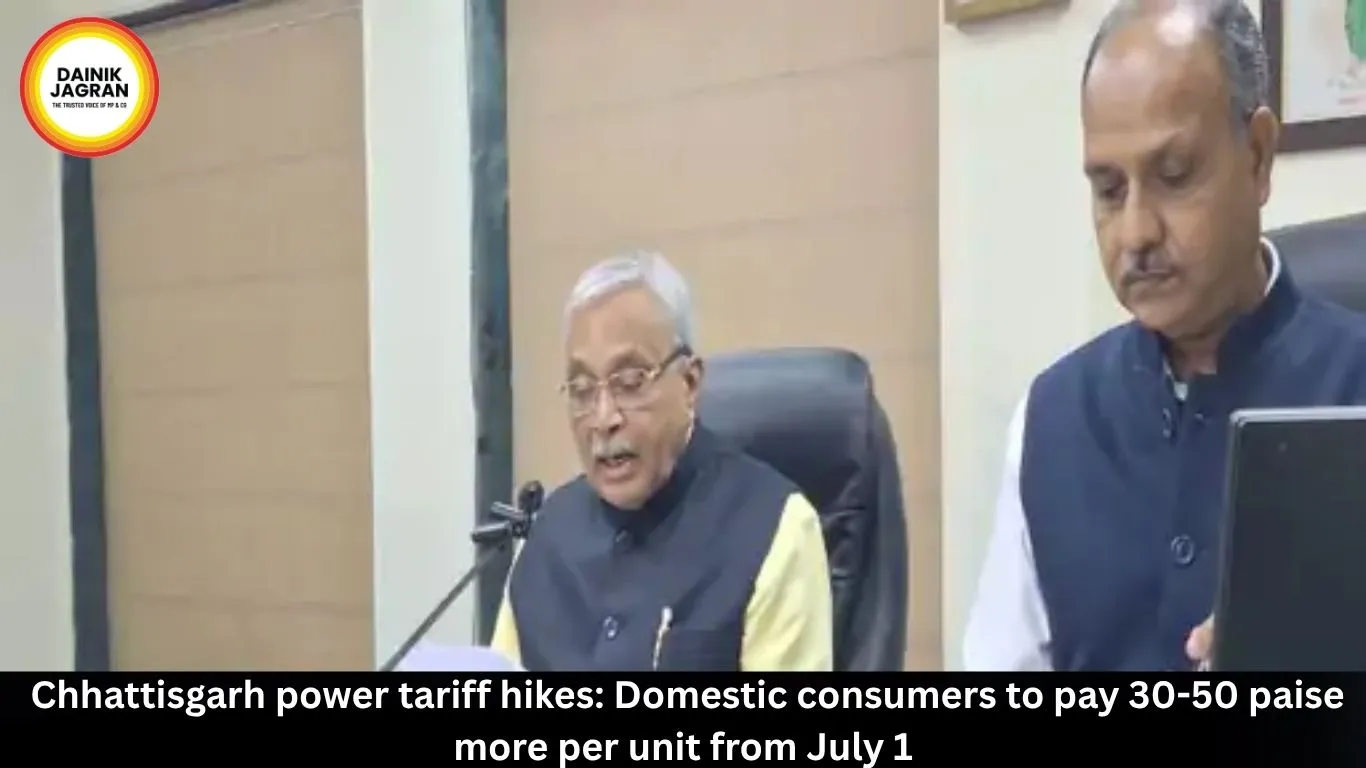
CSERC secretary Surya Prakash Shukla said the impact on common consumers will be limited. "The average increase across all categories is around 40-42 paise, but the hike is not uniform across all consumer classes," he said.
Domestic consumers in lower consumption slabs will see a 30 paise per unit increase, while those in higher slabs will face up to 50 paise per unit hike. However, the 200-unit free electricity benefit under the 'half bill' scheme remains intact for consumers using up to 400 units monthly.
Around 70 to 75 percent of domestic consumers in the state fall under this category and will remain largely shielded from the tariff revision, Shukla added.
Solar rooftop adoption offers relief
The CSERC secretary noted that several high-consumption users (above 400 units) have already installed rooftop solar plants under the state's solar energy scheme. This reduces their grid dependency and helps them qualify for lower consumption slabs and associated benefits.
For farmers, the 40 paise per unit hike applies only to those receiving subsidies. The government's existing subsidy mechanism will continue, significantly limiting the actual financial burden on cultivators. "The state government's subsidy support remains unchanged, so farmers will not feel the full impact of this revision," Shukla clarified.
The commission has also set a tariff of ₹6.42 per kVAh for high-voltage EV charging stations, aiming to encourage electric vehicle adoption in the state.
Industry observers said the revision, while moderate, reflects rising input costs and infrastructure maintenance expenses. The full impact on consumer bills will become clearer once the new rates are applied from next month.

--------
🚨 Beat the News Rush – Join Now!
Get breaking alerts, hot exclusives, and game-changing stories instantly on your phone. No delays, no fluff – just the edge you need. ⚡
Tap to join:
🟢 WhatsApp Channel: Dainik Jagran MP CG
Crave more?
🅕 Facebook: Dainik Jagran MP CG English
🅧 Twitter (X): Dainik Jagran MP CG
🅘 Instagram: Dainik Jagran MP CG
Share the fire – keep your crew ahead! 🗞️🔥
Chhattisgarh power tariff hikes: Domestic consumers to pay 30-50 paise more per unit from July 1
Digital Desk
The Chhattisgarh State Electricity Regulatory Commission (CSERC) has announced new power tariffs for the financial year 2026-27, with domestic consumers set to pay 30 to 50 paise more per unit. Commercial users will see an increase of 20 to 40 paise per unit.
The new rates will come into effect across the state from July 1, 2026.
The commission has approved an average hike of 6.23 percent, significantly lower than the 24 percent increase proposed by the power distribution company. Agricultural pump tariffs have been raised by 40 paise per unit, while non-subsidised farm pump connections will now get a 40 percent energy charge concession, up from 30 percent.
According to CSERC officials, the power company incurs an average cost of ₹7.13 per unit to deliver electricity to consumers, but current tariffs yield only ₹6.71 per unit in revenue. "The gap between cost and revenue necessitated a revision," an official explained.
200-unit waiver continues for eligible consumers
CSERC secretary Surya Prakash Shukla said the impact on common consumers will be limited. "The average increase across all categories is around 40-42 paise, but the hike is not uniform across all consumer classes," he said.
Domestic consumers in lower consumption slabs will see a 30 paise per unit increase, while those in higher slabs will face up to 50 paise per unit hike. However, the 200-unit free electricity benefit under the 'half bill' scheme remains intact for consumers using up to 400 units monthly.
Around 70 to 75 percent of domestic consumers in the state fall under this category and will remain largely shielded from the tariff revision, Shukla added.
Solar rooftop adoption offers relief
The CSERC secretary noted that several high-consumption users (above 400 units) have already installed rooftop solar plants under the state's solar energy scheme. This reduces their grid dependency and helps them qualify for lower consumption slabs and associated benefits.
For farmers, the 40 paise per unit hike applies only to those receiving subsidies. The government's existing subsidy mechanism will continue, significantly limiting the actual financial burden on cultivators. "The state government's subsidy support remains unchanged, so farmers will not feel the full impact of this revision," Shukla clarified.
The commission has also set a tariff of ₹6.42 per kVAh for high-voltage EV charging stations, aiming to encourage electric vehicle adoption in the state.
Industry observers said the revision, while moderate, reflects rising input costs and infrastructure maintenance expenses. The full impact on consumer bills will become clearer once the new rates are applied from next month.