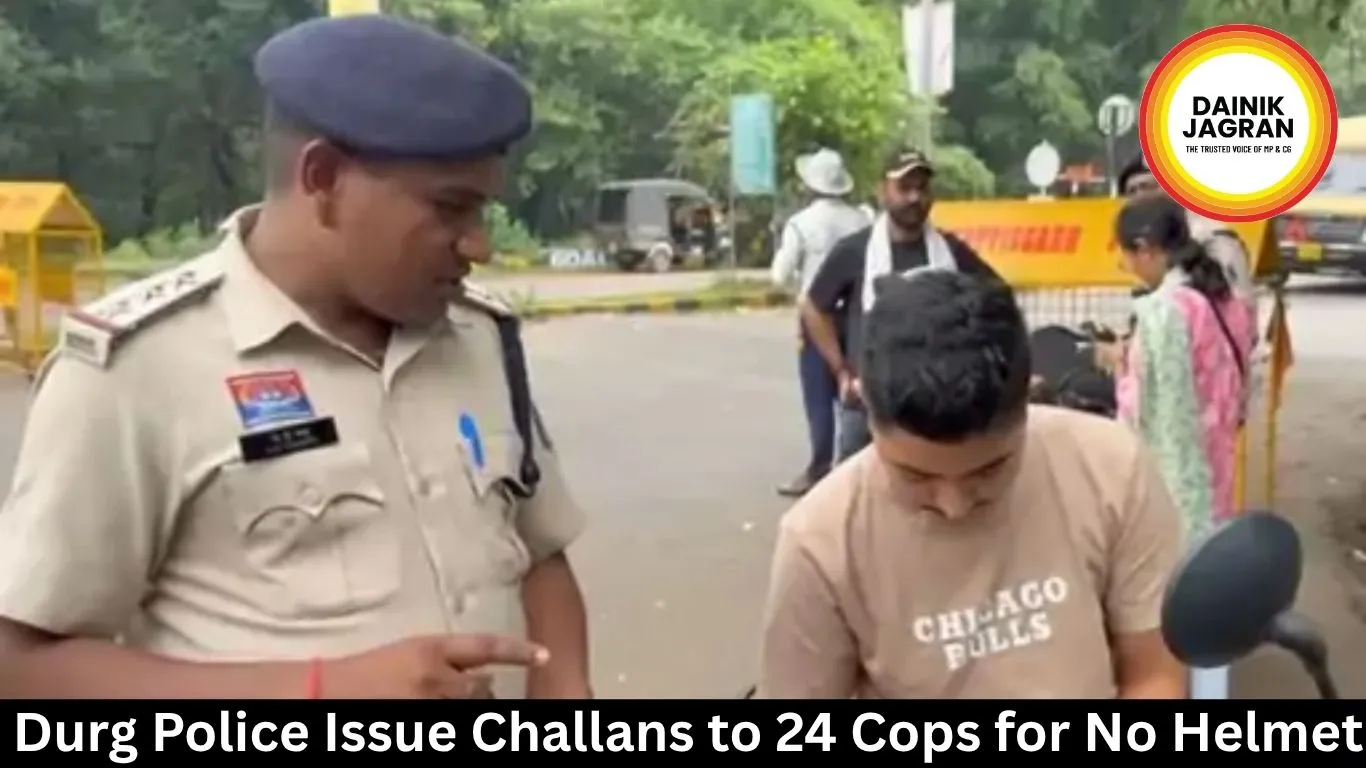
Durg Police Issue Challans to 24 Cops for No Helmet
Digital Desk
Durg traffic police challan 24 police personnel for riding without helmets, as ITMS cameras intensify surveillance across the city under strict road safety drive.
Durg Traffic Police Challan 24 Cops for Riding Without Helmets
ITMS surveillance cameras catch law enforcers flouting the very rules they are tasked to uphold; stern warning issued to all personnel
No One Above the Law
In a rare but significant show of institutional accountability, Durg traffic police have issued challans against 24 of their own colleagues for riding motorcycles without helmets. The action was taken under the Motor Vehicles Act after surveillance checks revealed that a section of police personnel were openly flouting road safety norms while on duty.
The development signals a firm stance from the traffic department — that uniform or rank will not shield anyone from the consequences of breaking traffic rules.
How the Violations Came to Light
The violations came to notice during routine inspection drives conducted by the traffic police across the city. Personnel found riding two-wheelers without protective headgear were immediately identified and served challans on the spot. Authorities also issued formal warnings, directing all police staff to strictly comply with traffic regulations going forward.
According to officials, the checks were part of a broader ongoing enforcement drive aimed at curbing road safety violations across Durg district.ITMS Cameras Tighten the Net
Adding teeth to the crackdown is the city's expanded Integrated Traffic Management System (ITMS). With ITMS, most challans are now generated automatically using AI cameras and sensors, removing the need for physical police presence at every violation point.
Strategically placed cameras across key intersections in Durg are capturing violations in real time and triggering e-challans directly — making it harder for offenders to escape notice, irrespective of their identity or profession.
Setting the Example
Traffic police officials stressed that road safety enforcement begins with those who enforce it. As per officials, if police personnel themselves are seen riding without helmets, it sends a contradictory message to the public and undermines the credibility of the entire enforcement machinery.
The department has now issued clear internal directives to all officers and constables to lead by example — wearing helmets at all times when riding two-wheelers and adhering to traffic regulations without exception.
The Case for Helmets
Authorities also took the opportunity to reiterate the life-saving importance of helmets to the general public. Under current traffic rules, not wearing a helmet while riding a motorcycle carries a fine of Rs 1,000 and can result in a three-month driving licence disqualification.
Beyond the penalty, officials emphasised that a helmet significantly reduces the risk of fatal or severe head injuries in accidents — a fact underscored by national road safety statistics year after year.
Public Advisory Issued
Alongside the internal action, Durg Police have put out a public advisory urging all two-wheeler riders to wear helmets without fail. Residents have been reminded that ITMS cameras are operational across the city and e-challans are being issued round the clock, without requiring a police officer to be physically present.
Sources in the traffic department indicated that the frequency of ITMS-based enforcement is only set to increase in the coming weeks as part of the district's sustained road safety calendar.
What Comes Next
The challan action against police personnel is likely to set a precedent for how traffic enforcement is perceived in Durg. Officials indicated that internal compliance checks will be conducted periodically to ensure the force upholds the standards it expects from civilians.
The Durg traffic police challan drive reflects a growing national trend where automated enforcement systems and AI-based surveillance are being adopted across Indian cities to reduce human error and increase transparency in challan generation. With road safety remaining a top public interest priority, Durg's zero-tolerance approach — sparing not even its own — may well become a model worth replicating.
--------
🚨 Beat the News Rush – Join Now!
Get breaking alerts, hot exclusives, and game-changing stories instantly on your phone. No delays, no fluff – just the edge you need. ⚡
Tap to join:
🟢 WhatsApp Channel: Dainik Jagran MP CG
Crave more?
🅕 Facebook: Dainik Jagran MP CG English
🅧 Twitter (X): Dainik Jagran MP CG
🅘 Instagram: Dainik Jagran MP CG
Share the fire – keep your crew ahead! 🗞️🔥
Durg Police Issue Challans to 24 Cops for No Helmet
Digital Desk
Durg Traffic Police Challan 24 Cops for Riding Without Helmets
ITMS surveillance cameras catch law enforcers flouting the very rules they are tasked to uphold; stern warning issued to all personnel
No One Above the Law
In a rare but significant show of institutional accountability, Durg traffic police have issued challans against 24 of their own colleagues for riding motorcycles without helmets. The action was taken under the Motor Vehicles Act after surveillance checks revealed that a section of police personnel were openly flouting road safety norms while on duty.
The development signals a firm stance from the traffic department — that uniform or rank will not shield anyone from the consequences of breaking traffic rules.
How the Violations Came to Light
The violations came to notice during routine inspection drives conducted by the traffic police across the city. Personnel found riding two-wheelers without protective headgear were immediately identified and served challans on the spot. Authorities also issued formal warnings, directing all police staff to strictly comply with traffic regulations going forward.
According to officials, the checks were part of a broader ongoing enforcement drive aimed at curbing road safety violations across Durg district.ITMS Cameras Tighten the Net
Adding teeth to the crackdown is the city's expanded Integrated Traffic Management System (ITMS). With ITMS, most challans are now generated automatically using AI cameras and sensors, removing the need for physical police presence at every violation point.
Strategically placed cameras across key intersections in Durg are capturing violations in real time and triggering e-challans directly — making it harder for offenders to escape notice, irrespective of their identity or profession.
Setting the Example
Traffic police officials stressed that road safety enforcement begins with those who enforce it. As per officials, if police personnel themselves are seen riding without helmets, it sends a contradictory message to the public and undermines the credibility of the entire enforcement machinery.
The department has now issued clear internal directives to all officers and constables to lead by example — wearing helmets at all times when riding two-wheelers and adhering to traffic regulations without exception.
The Case for Helmets
Authorities also took the opportunity to reiterate the life-saving importance of helmets to the general public. Under current traffic rules, not wearing a helmet while riding a motorcycle carries a fine of Rs 1,000 and can result in a three-month driving licence disqualification.
Beyond the penalty, officials emphasised that a helmet significantly reduces the risk of fatal or severe head injuries in accidents — a fact underscored by national road safety statistics year after year.
Public Advisory Issued
Alongside the internal action, Durg Police have put out a public advisory urging all two-wheeler riders to wear helmets without fail. Residents have been reminded that ITMS cameras are operational across the city and e-challans are being issued round the clock, without requiring a police officer to be physically present.
Sources in the traffic department indicated that the frequency of ITMS-based enforcement is only set to increase in the coming weeks as part of the district's sustained road safety calendar.
What Comes Next
The challan action against police personnel is likely to set a precedent for how traffic enforcement is perceived in Durg. Officials indicated that internal compliance checks will be conducted periodically to ensure the force upholds the standards it expects from civilians.
The Durg traffic police challan drive reflects a growing national trend where automated enforcement systems and AI-based surveillance are being adopted across Indian cities to reduce human error and increase transparency in challan generation. With road safety remaining a top public interest priority, Durg's zero-tolerance approach — sparing not even its own — may well become a model worth replicating.