

Raipur Advocate Anjum Khan Booked Under IPC for Objectionable Social Media Post on Hindu Deities — Hindu Groups Surround Rajatalab Police Station, Tension in Area
Digital Desk
Raipur lawyer Anjum Khan faces FIR after posting an allegedly offensive comment about Hindu deities on social media during Ramzan. Hindu groups stormed Rajatalab police station demanding arrest.
A social media post has triggered a major communal flashpoint in Raipur, with a local advocate booked under criminal law after allegedly posting derogatory remarks about Hindu deities alongside Ramzan greetings on his social media status. The accused, identified as advocate Anjum Khan of the Rajatalab area in Raipur, is alleged to have posted a controversial comment about Hindu gods and goddesses along with Ramzan greetings on his social media status. Prokerala The post went viral almost immediately, triggering localised tension and drawing an aggressive response from Hindu organisations who surrounded the police station demanding prompt action.
The Post That Sparked the Row
As soon as the post came to light, it spread rapidly and created an atmosphere of tension in the area. Prokerala According to local reports, Anjum Khan — a practising advocate — posted what witnesses and complainants described as derogatory references to Hindu deities alongside Ramzan well-wishes. The exact content of the post has not been independently verified, and Khan's own version of events has not been made public.
Within hours, the post had been widely screenshotted and circulated across WhatsApp groups and social media platforms, accelerating the spread of tension in Rajatalab and surrounding neighbourhoods.
Hindu Organisations Surround Police Station
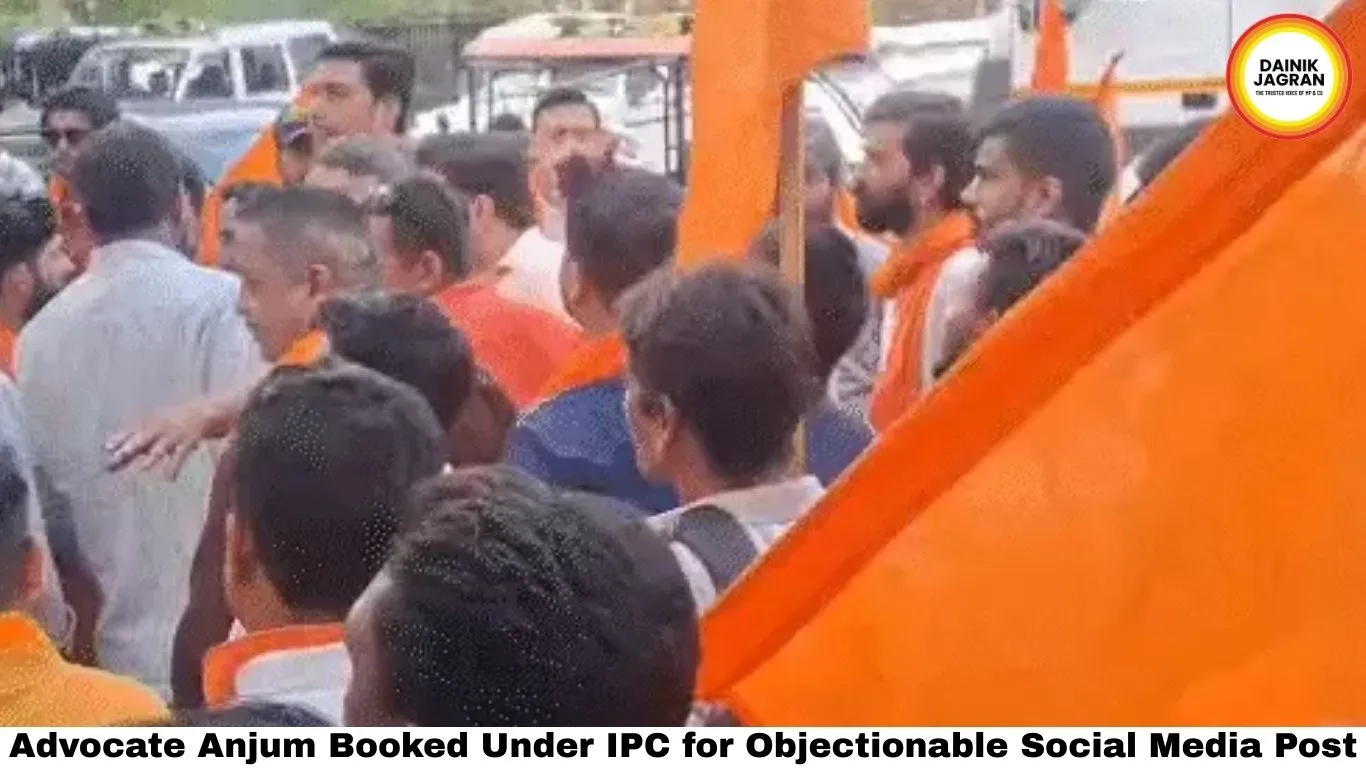
Upon learning of the matter, members of Hindu organisations descended on the local police station and staged a gherao — surrounding the station and refusing to leave — demanding that an FIR be immediately registered against the advocate and that he be arrested without delay. Prokerala
The protest drew a large crowd, with activists demanding action under laws protecting religious sentiments. Police deployed additional personnel to manage the situation and prevent the standoff from escalating into violence.
FIR Registered, Investigation Underway
Following the protest and the filing of a formal complaint, police registered an FIR against Anjum Khan under the relevant provisions of law. In India, cases of this nature are typically booked under Section 295A of the Indian Penal Code — now re-enacted as Section 302 of the Bharatiya Nyaya Sanhita (BNS) 2023 — which deals with deliberate and malicious acts intended to outrage religious feelings of any class by insulting its religion or religious beliefs. Conviction under this section can carry imprisonment of up to three years, a fine, or both.
The police have launched a formal investigation into the matter. As of filing, it is not confirmed whether Anjum Khan has been arrested or has sought anticipatory bail.
The Legal Framework: What the Law Says
India's legal architecture on speech relating to religion is among the most stringent in the world. Beyond Section 295A, social media posts that allegedly defame or mock deities or religious symbols can also attract charges under the Information Technology Act, 2000 — specifically Section 66A's successor provisions — as well as under state-level laws governing public order.
The Supreme Court of India has consistently held that freedom of speech under Article 19(1)(a) is subject to reasonable restrictions, including those imposed to maintain public order and protect religious sentiments. At the same time, courts have also cautioned against misuse of these provisions to chill legitimate expression or target minority communities.
Context: Communal Sensitivity During Ramzan
The timing of the post — during Ramzan, a period of heightened religious observance — added a layer of sensitivity to an already volatile situation. Chhattisgarh has seen a series of religion-related controversies in recent months, including the passage of the Freedom of Religion (Anti-Conversion) Bill 2026 through the state cabinet, protests over alleged forced conversions, and multiple FIRs filed in both directions over social media content.
The state government's decision to introduce the Dharma Swatantraya Vidheyak during the ongoing assembly budget session has itself been a flashpoint for communal tensions, with both Hindu groups and minority communities watching the legislative process closely.
What Needs to Happen Now
Legal experts caution that while hurt religious sentiment is a legitimate legal concept in Indian law, the threshold for criminality must be established through due investigation — not through mob pressure or public protest at a police station. The police's responsibility in a case like this is twofold: to investigate whether the post constituted a deliberate and malicious act within the meaning of the law, and to ensure that the investigation proceeds free from the pressure of street politics on either side.
Raipur's administration has a responsibility to ensure that law and order is maintained, that the accused receives due process, and that the communal temperature in Rajatalab is brought down before the situation spirals further.
Raipur Advocate Anjum Khan Booked Under IPC for Objectionable Social Media Post on Hindu Deities — Hindu Groups Surround Rajatalab Police Station, Tension in Area
Digital Desk
A social media post has triggered a major communal flashpoint in Raipur, with a local advocate booked under criminal law after allegedly posting derogatory remarks about Hindu deities alongside Ramzan greetings on his social media status. The accused, identified as advocate Anjum Khan of the Rajatalab area in Raipur, is alleged to have posted a controversial comment about Hindu gods and goddesses along with Ramzan greetings on his social media status. Prokerala The post went viral almost immediately, triggering localised tension and drawing an aggressive response from Hindu organisations who surrounded the police station demanding prompt action.
The Post That Sparked the Row
As soon as the post came to light, it spread rapidly and created an atmosphere of tension in the area. Prokerala According to local reports, Anjum Khan — a practising advocate — posted what witnesses and complainants described as derogatory references to Hindu deities alongside Ramzan well-wishes. The exact content of the post has not been independently verified, and Khan's own version of events has not been made public.
Within hours, the post had been widely screenshotted and circulated across WhatsApp groups and social media platforms, accelerating the spread of tension in Rajatalab and surrounding neighbourhoods.
Hindu Organisations Surround Police Station
Upon learning of the matter, members of Hindu organisations descended on the local police station and staged a gherao — surrounding the station and refusing to leave — demanding that an FIR be immediately registered against the advocate and that he be arrested without delay. Prokerala
The protest drew a large crowd, with activists demanding action under laws protecting religious sentiments. Police deployed additional personnel to manage the situation and prevent the standoff from escalating into violence.
FIR Registered, Investigation Underway
Following the protest and the filing of a formal complaint, police registered an FIR against Anjum Khan under the relevant provisions of law. In India, cases of this nature are typically booked under Section 295A of the Indian Penal Code — now re-enacted as Section 302 of the Bharatiya Nyaya Sanhita (BNS) 2023 — which deals with deliberate and malicious acts intended to outrage religious feelings of any class by insulting its religion or religious beliefs. Conviction under this section can carry imprisonment of up to three years, a fine, or both.
The police have launched a formal investigation into the matter. As of filing, it is not confirmed whether Anjum Khan has been arrested or has sought anticipatory bail.
The Legal Framework: What the Law Says
India's legal architecture on speech relating to religion is among the most stringent in the world. Beyond Section 295A, social media posts that allegedly defame or mock deities or religious symbols can also attract charges under the Information Technology Act, 2000 — specifically Section 66A's successor provisions — as well as under state-level laws governing public order.
The Supreme Court of India has consistently held that freedom of speech under Article 19(1)(a) is subject to reasonable restrictions, including those imposed to maintain public order and protect religious sentiments. At the same time, courts have also cautioned against misuse of these provisions to chill legitimate expression or target minority communities.
Context: Communal Sensitivity During Ramzan
The timing of the post — during Ramzan, a period of heightened religious observance — added a layer of sensitivity to an already volatile situation. Chhattisgarh has seen a series of religion-related controversies in recent months, including the passage of the Freedom of Religion (Anti-Conversion) Bill 2026 through the state cabinet, protests over alleged forced conversions, and multiple FIRs filed in both directions over social media content.
The state government's decision to introduce the Dharma Swatantraya Vidheyak during the ongoing assembly budget session has itself been a flashpoint for communal tensions, with both Hindu groups and minority communities watching the legislative process closely.
What Needs to Happen Now
Legal experts caution that while hurt religious sentiment is a legitimate legal concept in Indian law, the threshold for criminality must be established through due investigation — not through mob pressure or public protest at a police station. The police's responsibility in a case like this is twofold: to investigate whether the post constituted a deliberate and malicious act within the meaning of the law, and to ensure that the investigation proceeds free from the pressure of street politics on either side.
Raipur's administration has a responsibility to ensure that law and order is maintained, that the accused receives due process, and that the communal temperature in Rajatalab is brought down before the situation spirals further.


