Petrol Reaches Rs 103.58 in Raipur Amid Panic Buying Rush
Digital Desk
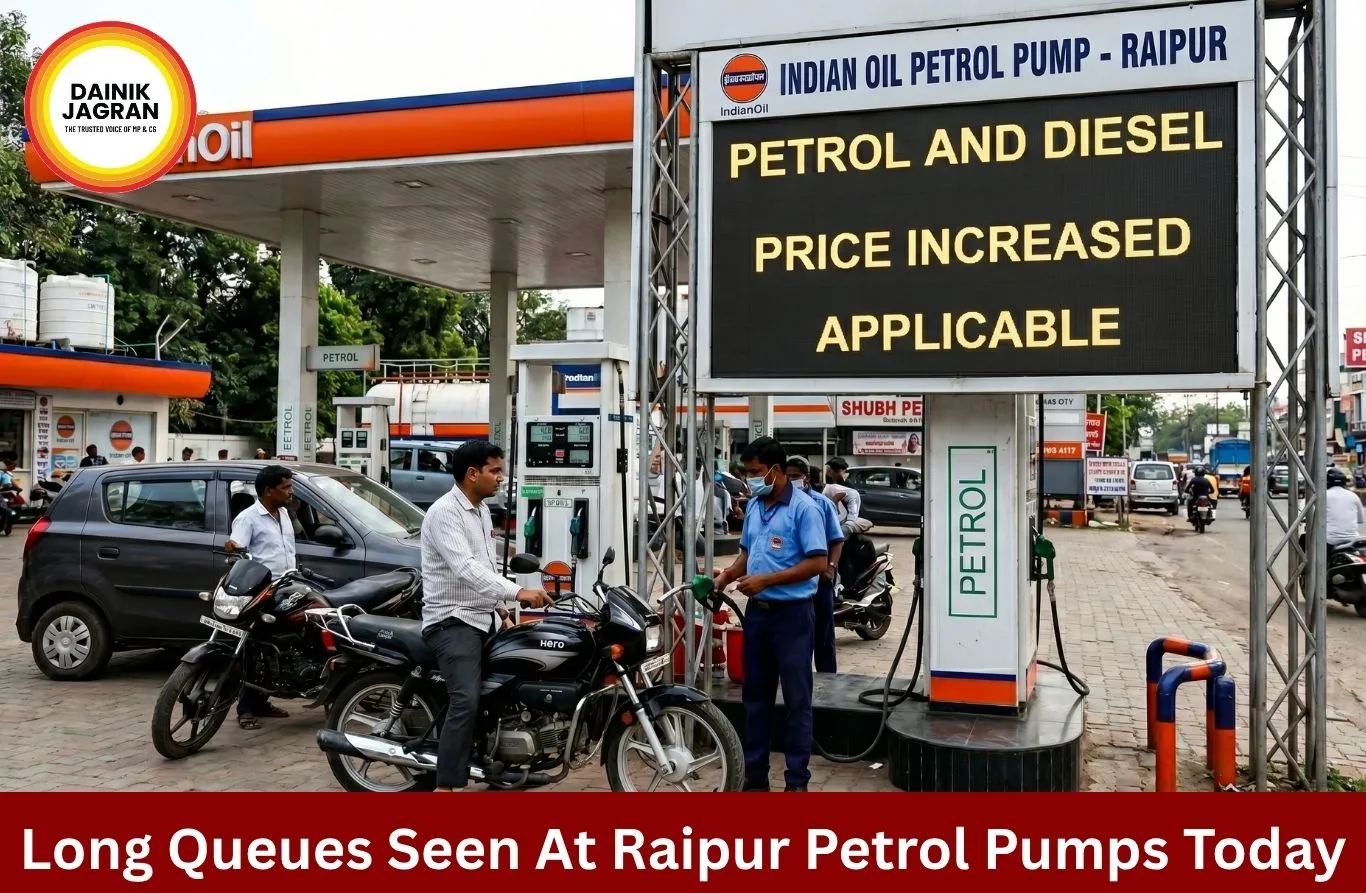
Long queues were seen outside fuel stations in Raipur after petrol and diesel prices increased by Rs 3 per litre across the country.
Petrol and diesel prices have increased sharply across the country, triggering panic buying at fuel stations in Chhattisgarh’s capital Raipur. Petrol in the city is now being sold at Rs 103.58 per litre, while diesel prices have climbed to Rs 96.57 per litre after the latest revision announced by oil companies.
Following the price hike, several fuel stations in Raipur witnessed unusually large crowds from early morning. Long lines of vehicles stretching nearly 100 metres were seen outside multiple petrol pumps as people rushed to refill their tanks. The development has become a major India News Update amid rising concerns over fuel inflation and the impact of global crude oil prices on domestic markets.
According to district administration officials, the sudden rush at fuel stations is largely being driven by panic buying and rumours regarding possible fuel shortages. Authorities said there is no shortage of petrol or diesel in the city and adequate stock is available at all depots and filling stations. Officials claimed that many residents are opting to refill their vehicles completely instead of purchasing fuel according to regular daily requirements. This sudden increase in demand has led to congestion and long waiting times at several fuel outlets.
In response to the situation, Raipur Collector held a meeting on Thursday with representatives of petrol pump associations and oil marketing companies to review supply arrangements and prevent disruptions. During the meeting, officials assured that sufficient fuel reserves are available and there is no reason for public concern. The administration appealed to residents not to believe rumours or engage in unnecessary panic buying.
To ensure uninterrupted supply and reduce pressure on petrol pumps, the district administration has directed oil depots to continue fuel supply operations for 24 hours. Earlier, fuel tankers were reportedly allowed entry only between 12 pm and 4 pm. However, authorities have now removed time restrictions to maintain continuous supply and avoid crowding at filling stations.
Despite the administration’s assurance, several residents claimed that some petrol pumps temporarily ran out of fuel due to the sudden increase in demand, forcing motorists to visit multiple stations or wait in long queues. The fuel price hike has also raised concerns about its impact on transportation and household expenses. Economists and traders believe higher diesel prices could directly affect the prices of vegetables, food grains and other essential commodities in the coming weeks.
Transport operators stated that increased diesel costs would raise freight charges for trucks and commercial vehicles transporting goods from other states. This could eventually result in higher retail prices for fruits, vegetables and grocery items. Farmers may also face additional financial pressure due to the increased operating costs of tractors, irrigation pumps and agricultural equipment dependent on diesel fuel.
Public transport services, including buses, auto-rickshaws and school transport vehicles, are also expected to become costlier if fuel prices continue to rise. Officials and market experts attributed the latest fuel price increase to rising crude oil prices in the international market. Before tensions escalated in West Asia involving Iran and the United States, global crude oil prices were reportedly around 70 dollars per barrel.
However, after the conflict intensified, crude oil prices surged past the 100-dollar mark, placing significant pressure on oil-importing countries, including India. Oil companies said the rise in international crude oil prices increased import costs substantially, forcing them to revise retail fuel rates after maintaining price stability for a long period.
Petrol and diesel prices in India had largely remained unchanged since March 2024. Before the Lok Sabha elections, the central government had reduced fuel prices by Rs 2 per litre to provide relief to consumers. Although fuel prices in India are technically deregulated and can be revised daily based on international crude oil averages, political and economic factors often influence the timing of such changes.
Government officials had earlier argued that despite rising global prices, Indian consumers had been shielded from the full impact of the international energy crisis for several months. Neighbouring countries including Pakistan, Nepal and Sri Lanka had already witnessed fuel price increases ranging from 15 to 20 percent due to global crude oil fluctuations.
The latest increase has now brought India in line with broader global fuel market trends. Experts warned that if geopolitical tensions continue and crude oil prices remain high, further fuel price hikes cannot be ruled out.
----------

--------
🚨 Beat the News Rush – Join Now!
Get breaking alerts, hot exclusives, and game-changing stories instantly on your phone. No delays, no fluff – just the edge you need. ⚡
Tap to join:
🟢 WhatsApp Channel: Dainik Jagran MP CG
Crave more?
🅕 Facebook: Dainik Jagran MP CG English
🅧 Twitter (X): Dainik Jagran MP CG
🅘 Instagram: Dainik Jagran MP CG
Share the fire – keep your crew ahead! 🗞️🔥
Petrol Reaches Rs 103.58 in Raipur Amid Panic Buying Rush
Digital Desk
Petrol and diesel prices have increased sharply across the country, triggering panic buying at fuel stations in Chhattisgarh’s capital Raipur. Petrol in the city is now being sold at Rs 103.58 per litre, while diesel prices have climbed to Rs 96.57 per litre after the latest revision announced by oil companies.
Following the price hike, several fuel stations in Raipur witnessed unusually large crowds from early morning. Long lines of vehicles stretching nearly 100 metres were seen outside multiple petrol pumps as people rushed to refill their tanks. The development has become a major India News Update amid rising concerns over fuel inflation and the impact of global crude oil prices on domestic markets.
According to district administration officials, the sudden rush at fuel stations is largely being driven by panic buying and rumours regarding possible fuel shortages. Authorities said there is no shortage of petrol or diesel in the city and adequate stock is available at all depots and filling stations. Officials claimed that many residents are opting to refill their vehicles completely instead of purchasing fuel according to regular daily requirements. This sudden increase in demand has led to congestion and long waiting times at several fuel outlets.
In response to the situation, Raipur Collector held a meeting on Thursday with representatives of petrol pump associations and oil marketing companies to review supply arrangements and prevent disruptions. During the meeting, officials assured that sufficient fuel reserves are available and there is no reason for public concern. The administration appealed to residents not to believe rumours or engage in unnecessary panic buying.
To ensure uninterrupted supply and reduce pressure on petrol pumps, the district administration has directed oil depots to continue fuel supply operations for 24 hours. Earlier, fuel tankers were reportedly allowed entry only between 12 pm and 4 pm. However, authorities have now removed time restrictions to maintain continuous supply and avoid crowding at filling stations.
Despite the administration’s assurance, several residents claimed that some petrol pumps temporarily ran out of fuel due to the sudden increase in demand, forcing motorists to visit multiple stations or wait in long queues. The fuel price hike has also raised concerns about its impact on transportation and household expenses. Economists and traders believe higher diesel prices could directly affect the prices of vegetables, food grains and other essential commodities in the coming weeks.
Transport operators stated that increased diesel costs would raise freight charges for trucks and commercial vehicles transporting goods from other states. This could eventually result in higher retail prices for fruits, vegetables and grocery items. Farmers may also face additional financial pressure due to the increased operating costs of tractors, irrigation pumps and agricultural equipment dependent on diesel fuel.
Public transport services, including buses, auto-rickshaws and school transport vehicles, are also expected to become costlier if fuel prices continue to rise. Officials and market experts attributed the latest fuel price increase to rising crude oil prices in the international market. Before tensions escalated in West Asia involving Iran and the United States, global crude oil prices were reportedly around 70 dollars per barrel.
However, after the conflict intensified, crude oil prices surged past the 100-dollar mark, placing significant pressure on oil-importing countries, including India. Oil companies said the rise in international crude oil prices increased import costs substantially, forcing them to revise retail fuel rates after maintaining price stability for a long period.
Petrol and diesel prices in India had largely remained unchanged since March 2024. Before the Lok Sabha elections, the central government had reduced fuel prices by Rs 2 per litre to provide relief to consumers. Although fuel prices in India are technically deregulated and can be revised daily based on international crude oil averages, political and economic factors often influence the timing of such changes.
Government officials had earlier argued that despite rising global prices, Indian consumers had been shielded from the full impact of the international energy crisis for several months. Neighbouring countries including Pakistan, Nepal and Sri Lanka had already witnessed fuel price increases ranging from 15 to 20 percent due to global crude oil fluctuations.
The latest increase has now brought India in line with broader global fuel market trends. Experts warned that if geopolitical tensions continue and crude oil prices remain high, further fuel price hikes cannot be ruled out.
----------