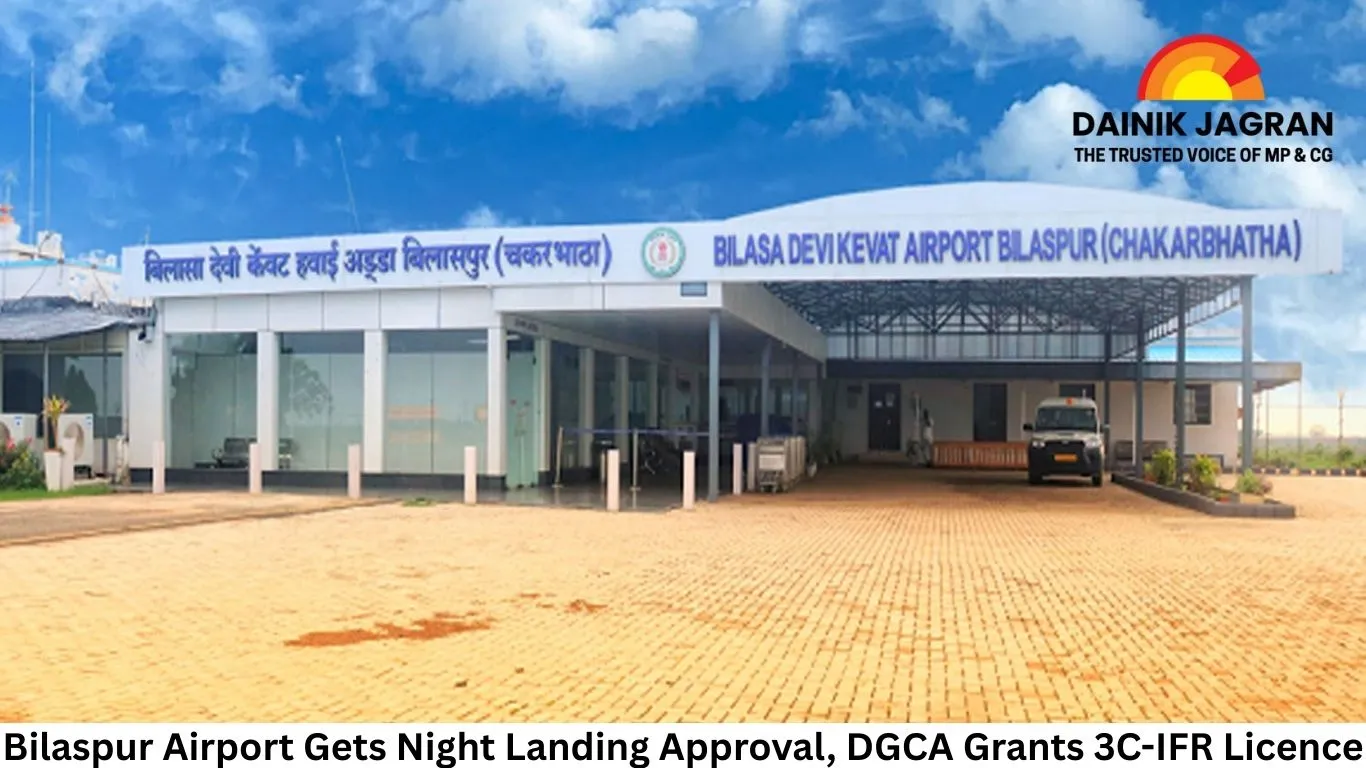
Bilaspur Airport Gets Night Landing Approval, DGCA Grants 3C-IFR Licence
Digital Desk
The licence, signed by DGCA Director Chandramani Pandey, upgrades the airport from 3C-VFR to 3C-IFR status. With this, flights can now land using instrument-based navigation systems, enabling operations even during low visibility, rain and fog. Until now, flights were permitted only during daytime under visual flight rules.
Officials said the approval will lead to changes in flight schedules from the upcoming summer timetable. For the first time, passengers are expected to get evening and night-time flight options from Bilaspur once the night landing system becomes fully operational, likely by the end of February.
Airport authorities confirmed that commissioning of night landing equipment has already been completed. A DGCA technical team is scheduled to visit Bilaspur by February 20 to carry out final inspections. Once night operations begin, airlines will be able to reschedule departures and arrivals, easing congestion and improving connectivity.
The licence also removes restrictions that earlier disrupted operations during bad weather. With IFR capability, aircraft can now land safely even when runway visibility is poor. Officials said this improvement is expected to increase flight frequency and attract more airlines to the airport.
Currently, only Alliance Air operates regular flights from Bilaspur. However, several private carriers, including IndiGo, have already conducted feasibility surveys. Aviation officials said airlines are now exploring new routes connecting Bilaspur to major cities such as Hyderabad, Kolkata and Indore. SpiceJet is reportedly assessing services to Prayagraj and Varanasi, while Akasa Air is also evaluating the airport as part of its regional expansion plans.
The airport began commercial operations in March 2021 and has handled over 250,000 passengers in the last four years, reflecting steady growth in demand. Officials believe night operations and expanded routes will significantly boost passenger traffic.
DGCA has attached mandatory conditions to the licence, including strict implementation of standard operating procedures, uninterrupted power supply, adequate visibility systems, trained manpower and regular updates of airport data on the global e-AIP India platform.
With night landings now approved, airport authorities are also planning night parking facilities, which would allow early morning departures. Officials said the next long-term goal is upgrading the airport to the 4C category, which would further enhance capacity, employment opportunities and regional investment.