

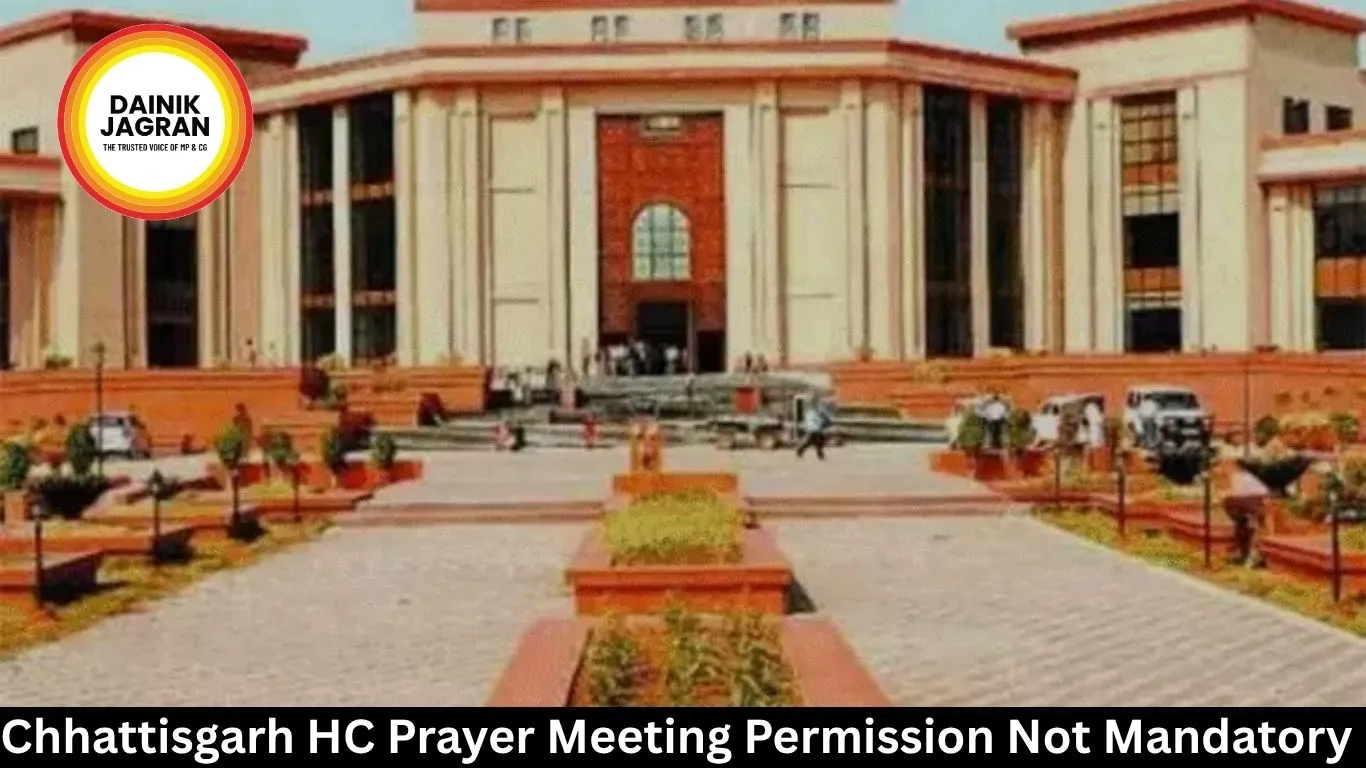
Chhattisgarh HC Prayer Meeting Permission Not Mandatory
Digital Desk
Chhattisgarh High Court rules private prayer meetings need no prior permission, cancels police notices in a key religious rights case.
Key Ruling Delivered
In a significant development amid ongoing debates around religious practices, the Chhattisgarh High Court has ruled that prior permission is not required to conduct prayer meetings within a private residence. The court also quashed multiple police notices issued to petitioners, terming them unnecessary interference.
The order was passed by a single bench of Justice Naresh Kumar Chandravanshi, who emphasised that peaceful religious gatherings in one’s home fall within constitutional rights.
Case Background
The matter pertains to a village in the Janjgir-Champa district, where petitioners had been organising Christian prayer meetings at their residence since 2016. According to submissions, these gatherings were held without any disturbance to public order.
Despite this, local police repeatedly issued notices under provisions of the Bharatiya Nagarik Suraksha Sanhita, 2023, directing the petitioners to stop conducting such meetings.
Police Notices Challenged
The petitioners approached the High Court under Article 226 of the Constitution, challenging the legality of the police action. They argued that the notices were arbitrary and violated their fundamental right to practice religion.
Court records indicate that notices dated October 18, 2025, November 22, 2025, and February 1, 2026, were issued by the station house officer of Nawagarh police station.
State Government Stand
During the hearing, the state government contended that the petitioners had not obtained prior permission from competent authorities for organising prayer meetings. It also informed the court that criminal cases had previously been registered against them.
The state sought additional time to file a detailed response, maintaining that police intervention was justified under existing legal provisions.
Court Observations
After hearing both sides, the High Court observed that conducting prayer meetings within a private residence does not require prior approval, provided there is no disturbance to law and order.
The bench noted that the petitioners had been holding such gatherings for several years without any reported violations. It held that mere apprehension or absence of permission cannot be grounds for police interference.
Religious Rights Emphasised
The court underscored that citizens have the right to practice their religion freely within their homes. It directed authorities not to harass individuals conducting peaceful prayer meetings.
However, the court clarified that if any gathering leads to noise pollution, public disorder, or violation of law, authorities are empowered to act as per legal provisions.
What Lies Ahead
With the cancellation of police notices, the ruling is expected to have wider implications on similar cases involving religious gatherings in private spaces across the state.
Legal experts believe the judgment reinforces constitutional protections while maintaining a balance with public order concerns. It also comes at a time when debates around religious conversions and related restrictions continue to surface in national and international news.
As per reports, authorities are likely to review existing practices to align with the court’s directive, ensuring that enforcement actions remain within legal boundaries.
--------
๐จ Beat the News Rush – Join Now!
Get breaking alerts, hot exclusives, and game-changing stories instantly on your phone. No delays, no fluff – just the edge you need. โก
Tap to join:
๐ข WhatsApp Channel: Dainik Jagran MP CG
Crave more?
๐ Facebook: Dainik Jagran MP CG English
๐ ง Twitter (X): Dainik Jagran MP CG
๐ Instagram: Dainik Jagran MP CG
Share the fire – keep your crew ahead! ๐๏ธ๐ฅ
Chhattisgarh HC Prayer Meeting Permission Not Mandatory
Digital Desk
Key Ruling Delivered
In a significant development amid ongoing debates around religious practices, the Chhattisgarh High Court has ruled that prior permission is not required to conduct prayer meetings within a private residence. The court also quashed multiple police notices issued to petitioners, terming them unnecessary interference.
The order was passed by a single bench of Justice Naresh Kumar Chandravanshi, who emphasised that peaceful religious gatherings in one’s home fall within constitutional rights.
Case Background
The matter pertains to a village in the Janjgir-Champa district, where petitioners had been organising Christian prayer meetings at their residence since 2016. According to submissions, these gatherings were held without any disturbance to public order.
Despite this, local police repeatedly issued notices under provisions of the Bharatiya Nagarik Suraksha Sanhita, 2023, directing the petitioners to stop conducting such meetings.
Police Notices Challenged
The petitioners approached the High Court under Article 226 of the Constitution, challenging the legality of the police action. They argued that the notices were arbitrary and violated their fundamental right to practice religion.
Court records indicate that notices dated October 18, 2025, November 22, 2025, and February 1, 2026, were issued by the station house officer of Nawagarh police station.
State Government Stand
During the hearing, the state government contended that the petitioners had not obtained prior permission from competent authorities for organising prayer meetings. It also informed the court that criminal cases had previously been registered against them.
The state sought additional time to file a detailed response, maintaining that police intervention was justified under existing legal provisions.
Court Observations
After hearing both sides, the High Court observed that conducting prayer meetings within a private residence does not require prior approval, provided there is no disturbance to law and order.
The bench noted that the petitioners had been holding such gatherings for several years without any reported violations. It held that mere apprehension or absence of permission cannot be grounds for police interference.
Religious Rights Emphasised
The court underscored that citizens have the right to practice their religion freely within their homes. It directed authorities not to harass individuals conducting peaceful prayer meetings.
However, the court clarified that if any gathering leads to noise pollution, public disorder, or violation of law, authorities are empowered to act as per legal provisions.
What Lies Ahead
With the cancellation of police notices, the ruling is expected to have wider implications on similar cases involving religious gatherings in private spaces across the state.
Legal experts believe the judgment reinforces constitutional protections while maintaining a balance with public order concerns. It also comes at a time when debates around religious conversions and related restrictions continue to surface in national and international news.
As per reports, authorities are likely to review existing practices to align with the court’s directive, ensuring that enforcement actions remain within legal boundaries.


