

Raipur GST Raid: Fake Billing Racket Busted at Annapurna Complex, Laxmi Commercial and SRS Traders Under Scanner
Digital Desk
Raipur GST raid exposes suspected fake billing at Annapurna Complex. Laxmi Commercial & SRS Traders face scrutiny over fraudulent ITC claims. Investigation ongoing.
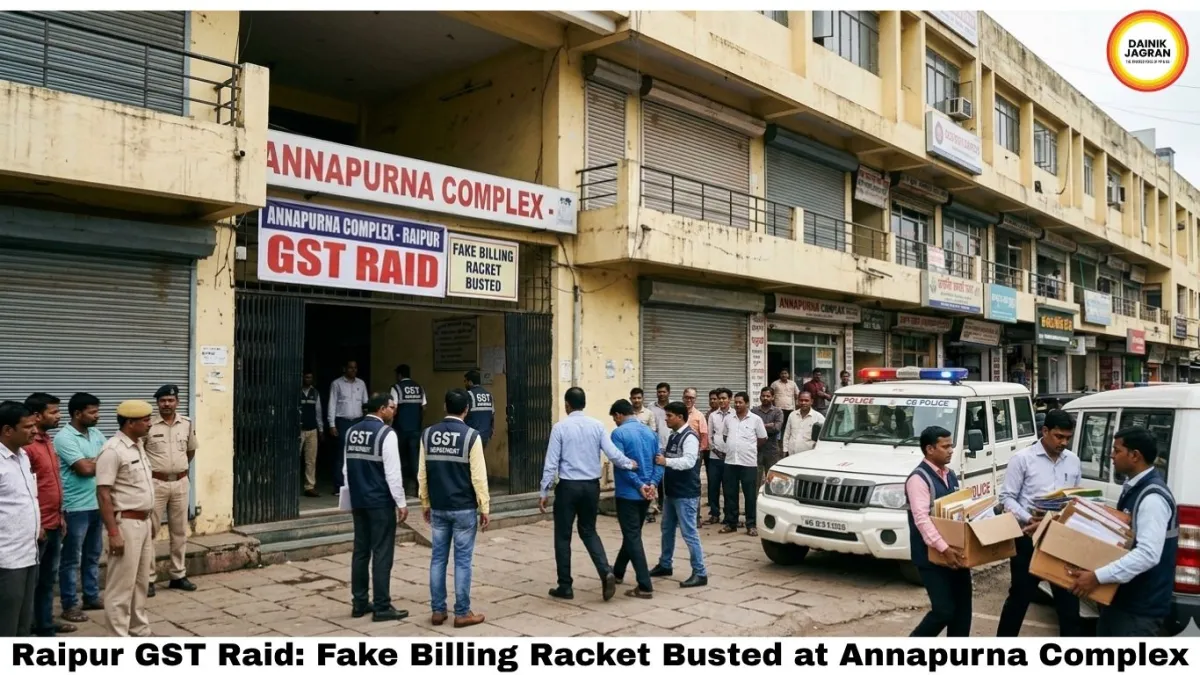
In a significant crackdown on tax evasion in the state capital, the Chhattisgarh State GST Department has conducted a major raid at Annapurna Complex, located in the Bhaisthan area of Raipur. The enforcement action targeted two trading firms — Laxmi Commercial and SRS Traders — both of which are now under the scanner for allegedly running a fake billing and fraudulent Input Tax Credit (ITC) scheme.
The raid is part of a wider statewide offensive against GST fraud, with investigators acting on credible intelligence inputs and data analytics flagging suspicious transaction patterns linked to these firms.
What Did the Raid Uncover?
Officials from the State GST Department descended on the Annapurna Complex premises and began scrutinizing financial records, GST returns, e-way bills, and bank statements. Initial findings have raised serious red flags.
Key observations from the raid include:
- No physical proof of goods movement — transport records, logistics receipts, and delivery documents were either missing or inconsistent.
- The supplier firms from whom purchases were claimed appear to be shell entities with little to no verifiable business activity.
- Both firms are suspected of generating fake invoices to unlawfully claim ITC, thereby reducing their tax liability without genuine commercial transactions.
- Notices have been issued to the proprietors of both firms, seeking explanations and supporting documentation.
Investigators are now conducting cross-verification of linked firms, associated bank accounts, and the chain of ITC beneficiaries to determine the full scale of the alleged fraud.
Chhattisgarh's Growing War on GST Fraud
This raid is not an isolated event — it reflects a broader and accelerating enforcement trend across Chhattisgarh. In recent high-profile cases, GST officials have uncovered iron traders running fictitious transaction networks worth hundreds of crores, with wrongful ITC claims running into tens of crores. Businessmen have been found registering firms in family members' names that exist primarily on paper, serving as conduits for routing bogus transactions.
These cases illustrate just how sophisticated and widespread fake billing networks have become — and why the Annapurna Complex raid matters beyond Raipur alone.
How Fake Billing Frauds Work
Fake billing — commonly known as "bill trading" — is now one of the most prevalent forms of GST evasion in India. Fraudsters typically follow a well-established playbook:
- Acquire fictitious or inactive firms and update GST registrations.
- Have operators generate fake purchase-sale records and invoices.
- Produce forged e-way bills to simulate shipment of goods.
- Pass ITC on to purchasing firms while rotating small amounts through bank channels to simulate real transactions.
- Ensure no actual goods ever move — the entire chain exists only on paper.
The result is a direct and deliberate loss to government revenue, while businesses fraudulently reduce their tax liabilities.
Technology Is Catching Up With Fraudsters
The days of hiding behind paperwork are increasingly numbered. Tax authorities are now leveraging AI-powered data analytics to detect anomalies in GST filings, e-way bill mismatches, and suspicious ITC patterns — well before a physical raid is even needed.
By analyzing bank statements, GST return data, and e-way bill records simultaneously, enforcement agencies can now identify fraudulent networks with remarkable precision and speed. This tech-driven approach is making it increasingly difficult for fake billing operations to function undetected for long.
What Happens Next?
The investigation into Laxmi Commercial and SRS Traders is actively ongoing. Depending on the findings, the firms and their proprietors could face:
- Full recovery of wrongfully claimed ITC along with applicable interest and penalties.
- Cancellation of GST registrations.
- Criminal prosecution — under Indian GST law, tax evasion exceeding ₹5 crore attracts up to 5 years of imprisonment.
- Extended scrutiny of all linked firms and beneficiaries within the wider supply chain.
A Warning for Businesses
Expert Advisory: GST professionals caution that every ITC claim must be backed by genuine transactions, verifiable supplier existence, and actual movement of goods. Participation in fake billing networks — even unknowingly — can expose businesses to serious legal liability, financial penalties, and irreparable reputational damage.
Raipur GST Raid: Fake Billing Racket Busted at Annapurna Complex, Laxmi Commercial and SRS Traders Under Scanner
Digital Desk
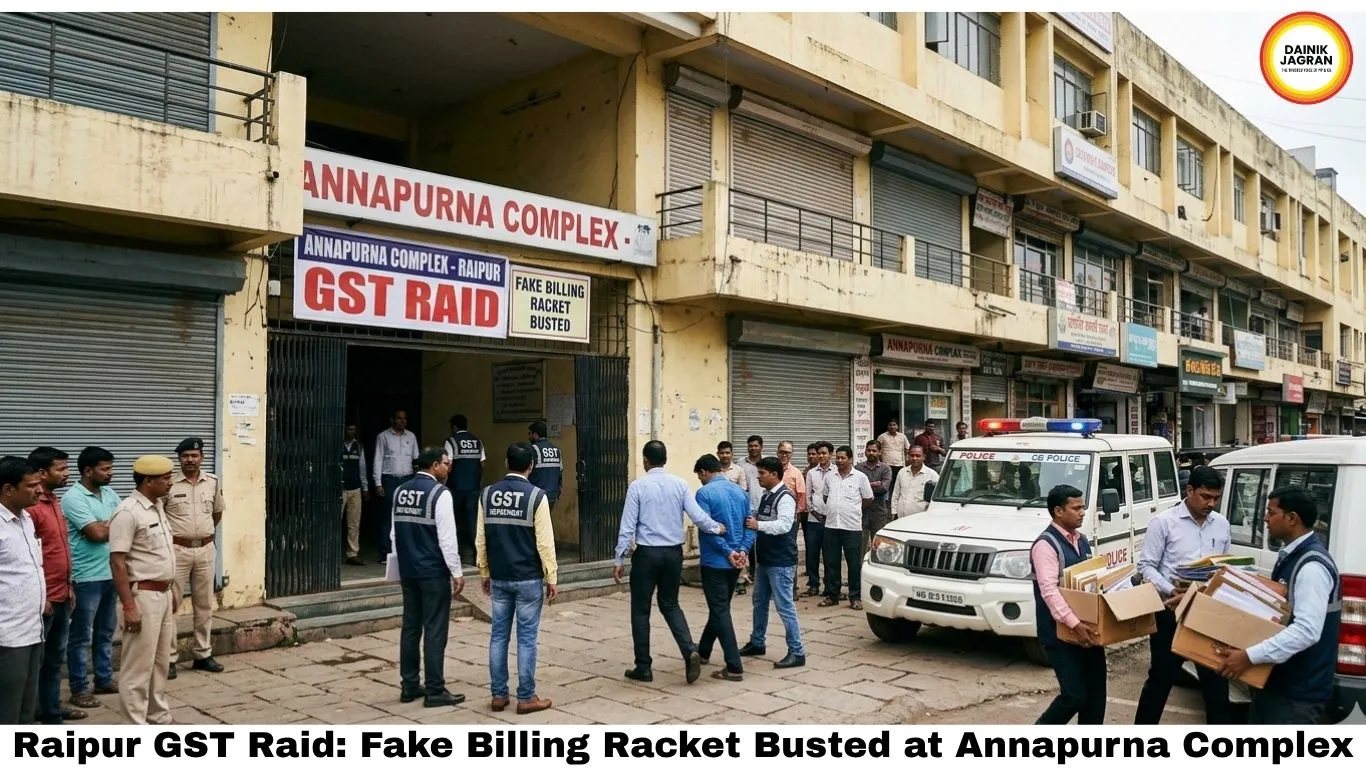
In a significant crackdown on tax evasion in the state capital, the Chhattisgarh State GST Department has conducted a major raid at Annapurna Complex, located in the Bhaisthan area of Raipur. The enforcement action targeted two trading firms — Laxmi Commercial and SRS Traders — both of which are now under the scanner for allegedly running a fake billing and fraudulent Input Tax Credit (ITC) scheme.
The raid is part of a wider statewide offensive against GST fraud, with investigators acting on credible intelligence inputs and data analytics flagging suspicious transaction patterns linked to these firms.
What Did the Raid Uncover?
Officials from the State GST Department descended on the Annapurna Complex premises and began scrutinizing financial records, GST returns, e-way bills, and bank statements. Initial findings have raised serious red flags.
Key observations from the raid include:
- No physical proof of goods movement — transport records, logistics receipts, and delivery documents were either missing or inconsistent.
- The supplier firms from whom purchases were claimed appear to be shell entities with little to no verifiable business activity.
- Both firms are suspected of generating fake invoices to unlawfully claim ITC, thereby reducing their tax liability without genuine commercial transactions.
- Notices have been issued to the proprietors of both firms, seeking explanations and supporting documentation.
Investigators are now conducting cross-verification of linked firms, associated bank accounts, and the chain of ITC beneficiaries to determine the full scale of the alleged fraud.
Chhattisgarh's Growing War on GST Fraud
This raid is not an isolated event — it reflects a broader and accelerating enforcement trend across Chhattisgarh. In recent high-profile cases, GST officials have uncovered iron traders running fictitious transaction networks worth hundreds of crores, with wrongful ITC claims running into tens of crores. Businessmen have been found registering firms in family members' names that exist primarily on paper, serving as conduits for routing bogus transactions.
These cases illustrate just how sophisticated and widespread fake billing networks have become — and why the Annapurna Complex raid matters beyond Raipur alone.
How Fake Billing Frauds Work
Fake billing — commonly known as "bill trading" — is now one of the most prevalent forms of GST evasion in India. Fraudsters typically follow a well-established playbook:
- Acquire fictitious or inactive firms and update GST registrations.
- Have operators generate fake purchase-sale records and invoices.
- Produce forged e-way bills to simulate shipment of goods.
- Pass ITC on to purchasing firms while rotating small amounts through bank channels to simulate real transactions.
- Ensure no actual goods ever move — the entire chain exists only on paper.
The result is a direct and deliberate loss to government revenue, while businesses fraudulently reduce their tax liabilities.
Technology Is Catching Up With Fraudsters
The days of hiding behind paperwork are increasingly numbered. Tax authorities are now leveraging AI-powered data analytics to detect anomalies in GST filings, e-way bill mismatches, and suspicious ITC patterns — well before a physical raid is even needed.
By analyzing bank statements, GST return data, and e-way bill records simultaneously, enforcement agencies can now identify fraudulent networks with remarkable precision and speed. This tech-driven approach is making it increasingly difficult for fake billing operations to function undetected for long.
What Happens Next?
The investigation into Laxmi Commercial and SRS Traders is actively ongoing. Depending on the findings, the firms and their proprietors could face:
- Full recovery of wrongfully claimed ITC along with applicable interest and penalties.
- Cancellation of GST registrations.
- Criminal prosecution — under Indian GST law, tax evasion exceeding ₹5 crore attracts up to 5 years of imprisonment.
- Extended scrutiny of all linked firms and beneficiaries within the wider supply chain.
A Warning for Businesses
Expert Advisory: GST professionals caution that every ITC claim must be backed by genuine transactions, verifiable supplier existence, and actual movement of goods. Participation in fake billing networks — even unknowingly — can expose businesses to serious legal liability, financial penalties, and irreparable reputational damage.


