

RTE Admissions Crisis: 387 Schools Zero Applications—HC Seeks Answers
Digital Desk
Chhattisgarh High Court questions why 387 schools received zero RTE applications. Court demands state accountability on poor children's education access by July 10.
RTE Admissions Crisis: 387 Schools Draw Zero Applications as HC Questions State's Intent
High Court seeks explanation on mass rejection of eligible poor students
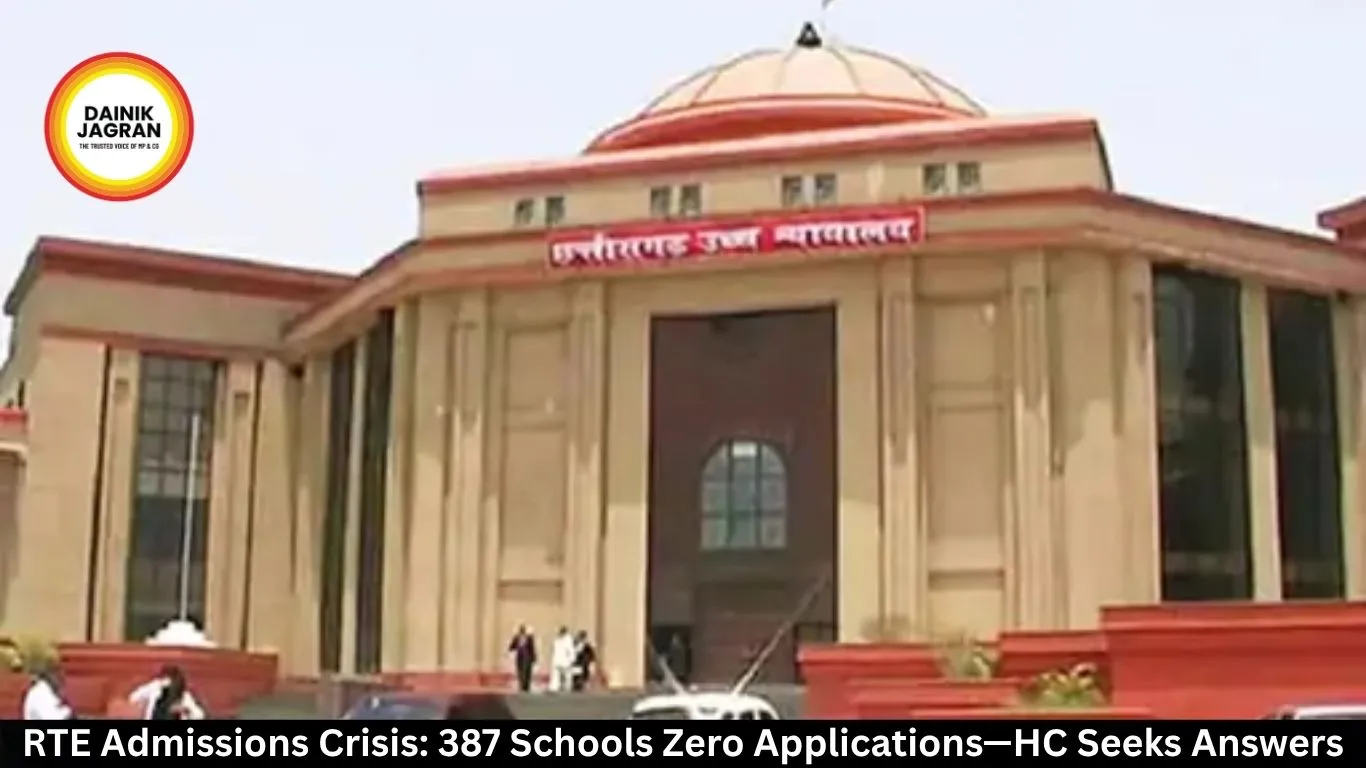
The Chhattisgarh High Court has flagged a troubling pattern in this year's RTE admissions process, expressing sharp concern over data suggesting systemic failure in enrolling underprivileged children in premium institutions across the state.
During Thursday's hearing on a public interest petition, Chief Justice Ramesh Sinha's division bench was informed that 387 schools—mostly large, well-established institutions—received zero applications under the Right to Education Act's mandatory 25 percent quota for economically weaker sections.
The revelation prompted an unusually blunt question from the bench: "Do poor children not want to study in big schools, or is the government hiding something?"
Alarming Ground Reality Emerges
The state's affidavit presented to the court painted an even wider picture of failure. Beyond the 387 schools with zero takers, another 366 institutions reported application numbers significantly below their allocated RTE seats. Several large schools, despite having multiple vacancies, recorded only one or two admissions under the quota.
Government counsel presented these numbers as routine, but the court saw it differently. Justice Sinha questioned the logic: "If a school has admitted only one child under RTE, how many total students are studying there? Are schools genuinely filling seats, or are the numbers merely cosmetic compliance?"
The inconsistency pointed to deeper issues—either a breakdown in the application dissemination system, deliberate obfuscation of seat information, or deliberate mechanisms to discourage poor families from applying to premium institutions.
Transparency and Accountability Questioned
The bench issued stern directions, asking the state education secretary to file a sworn affidavit by July 10 containing full school-level data: the exact number of RTE seats allocated in each institution, actual applications received, and final admissions made.
Additionally, the court mandated that all RTE seat information be made publicly available online—a measure suggesting the bench believes information asymmetry itself may be responsible for the low applications.
"We want clarity on whether procedural lapses are preventing eligible children from accessing these schools, or whether there's institutional resistance to RTE compliance," the bench noted.
Academic Year at Risk
A parallel concern dominated the hearing: timing. With the new academic session already underway, thousands of eligible children remain unadmitted. If the process drags into July and August, Justice Sinha observed, the school year would be effectively lost for these students.
The bench questioned administrative sluggishness, asking whether systemic negligence by authorities would be permitted to undermine the constitutional guarantee of free education to poor children.
Broader Pattern of RTE Dysfunction
This hearing is part of an ongoing series of RTE-related petitions the court has been examining. Previous orders have also expressed frustration with admission delays and alleged resistance from schools to honor their RTE obligations.
The central tension remains unresolved: RTE law mandates that 25 percent of first-grade seats must go to disadvantaged groups. Yet across Chhattisgarh, large schools consistently report inability to attract such applications—a claim the high court now views with skepticism.
What Comes Next
The state government faces mounting pressure to demonstrate genuine compliance rather than paper compliance. The court has effectively put the education department on notice: vague assurances or incomplete data won't suffice.
By July 10, officials must explain the zero-application phenomenon, detail their outreach efforts to poor families, and justify why premium schools remain largely inaccessible to the very population RTE was designed to serve.
If answers remain unsatisfactory, the bench signaled it may consider contempt proceedings against administrative officials responsible for the breakdown.
--------
🚨 Beat the News Rush – Join Now!
Get breaking alerts, hot exclusives, and game-changing stories instantly on your phone. No delays, no fluff – just the edge you need. ⚡
Tap to join:
🟢 WhatsApp Channel: Dainik Jagran MP CG
Crave more?
🅕 Facebook: Dainik Jagran MP CG English
🅧 Twitter (X): Dainik Jagran MP CG
🅘 Instagram: Dainik Jagran MP CG
Share the fire – keep your crew ahead! 🗞️🔥
RTE Admissions Crisis: 387 Schools Zero Applications—HC Seeks Answers
Digital Desk
RTE Admissions Crisis: 387 Schools Draw Zero Applications as HC Questions State's Intent
High Court seeks explanation on mass rejection of eligible poor students
The Chhattisgarh High Court has flagged a troubling pattern in this year's RTE admissions process, expressing sharp concern over data suggesting systemic failure in enrolling underprivileged children in premium institutions across the state.
During Thursday's hearing on a public interest petition, Chief Justice Ramesh Sinha's division bench was informed that 387 schools—mostly large, well-established institutions—received zero applications under the Right to Education Act's mandatory 25 percent quota for economically weaker sections.
The revelation prompted an unusually blunt question from the bench: "Do poor children not want to study in big schools, or is the government hiding something?"
Alarming Ground Reality Emerges
The state's affidavit presented to the court painted an even wider picture of failure. Beyond the 387 schools with zero takers, another 366 institutions reported application numbers significantly below their allocated RTE seats. Several large schools, despite having multiple vacancies, recorded only one or two admissions under the quota.
Government counsel presented these numbers as routine, but the court saw it differently. Justice Sinha questioned the logic: "If a school has admitted only one child under RTE, how many total students are studying there? Are schools genuinely filling seats, or are the numbers merely cosmetic compliance?"
The inconsistency pointed to deeper issues—either a breakdown in the application dissemination system, deliberate obfuscation of seat information, or deliberate mechanisms to discourage poor families from applying to premium institutions.
Transparency and Accountability Questioned
The bench issued stern directions, asking the state education secretary to file a sworn affidavit by July 10 containing full school-level data: the exact number of RTE seats allocated in each institution, actual applications received, and final admissions made.
Additionally, the court mandated that all RTE seat information be made publicly available online—a measure suggesting the bench believes information asymmetry itself may be responsible for the low applications.
"We want clarity on whether procedural lapses are preventing eligible children from accessing these schools, or whether there's institutional resistance to RTE compliance," the bench noted.
Academic Year at Risk
A parallel concern dominated the hearing: timing. With the new academic session already underway, thousands of eligible children remain unadmitted. If the process drags into July and August, Justice Sinha observed, the school year would be effectively lost for these students.
The bench questioned administrative sluggishness, asking whether systemic negligence by authorities would be permitted to undermine the constitutional guarantee of free education to poor children.
Broader Pattern of RTE Dysfunction
This hearing is part of an ongoing series of RTE-related petitions the court has been examining. Previous orders have also expressed frustration with admission delays and alleged resistance from schools to honor their RTE obligations.
The central tension remains unresolved: RTE law mandates that 25 percent of first-grade seats must go to disadvantaged groups. Yet across Chhattisgarh, large schools consistently report inability to attract such applications—a claim the high court now views with skepticism.
What Comes Next
The state government faces mounting pressure to demonstrate genuine compliance rather than paper compliance. The court has effectively put the education department on notice: vague assurances or incomplete data won't suffice.
By July 10, officials must explain the zero-application phenomenon, detail their outreach efforts to poor families, and justify why premium schools remain largely inaccessible to the very population RTE was designed to serve.
If answers remain unsatisfactory, the bench signaled it may consider contempt proceedings against administrative officials responsible for the breakdown.


