


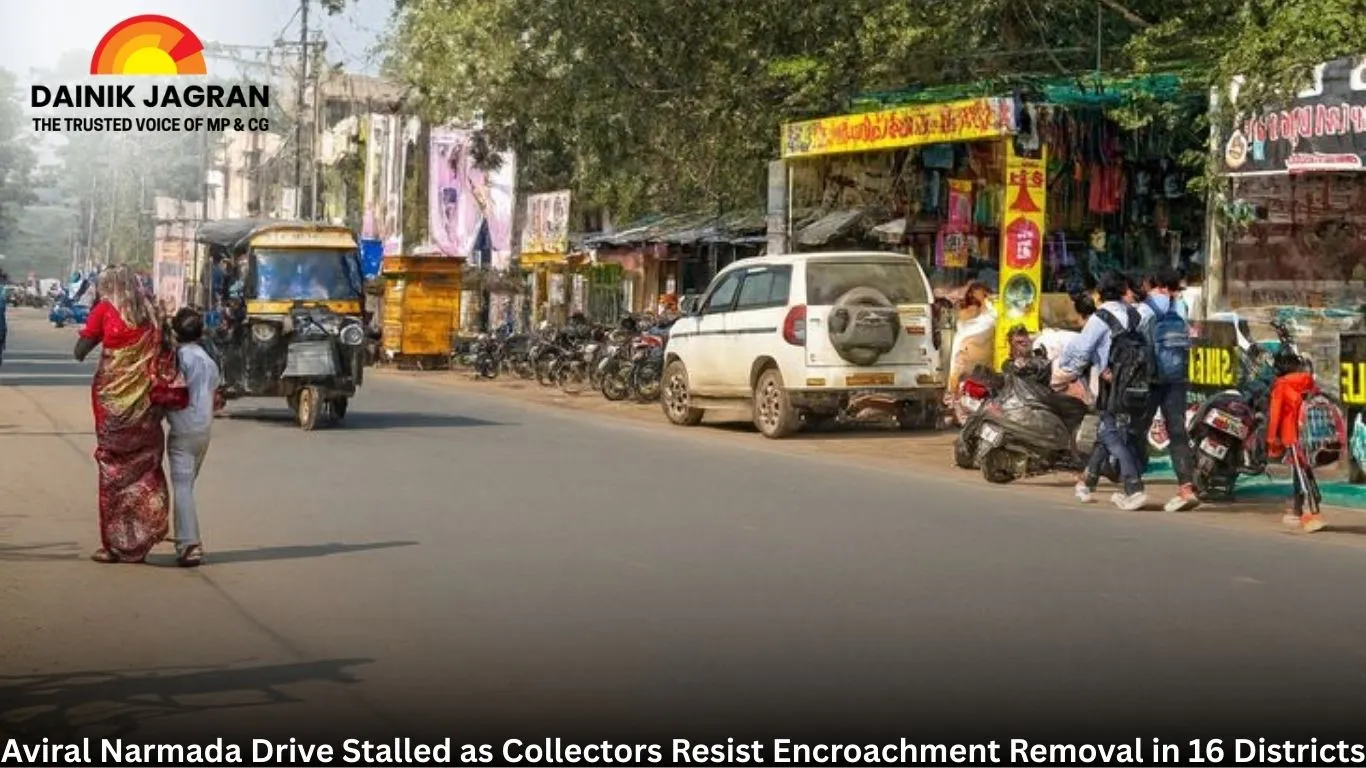
Aviral Narmada Drive Stalled as Collectors Resist Encroachment Removal in 16 Districts
Digital Desk
The Forest Department, tasked with executing the clearance, had asked Collectors to convene district-level task force meetings and initiate surveys. However, most districts failed to respond, with several Collectors questioning the legal basis for applying a fixed five-kilometre boundary. Others claimed they were unaware of the instructions. When contacted, 14 Collectors declined to comment, while two said they had no information on the matter.
In the absence of district support, some DFOs have directed field staff to begin preliminary listing of encroachments independently. “We did not issue orders; we merely requested coordination,” officials said, adding that the Forest Department cannot proceed without administrative backing and police deployment.
The resistance is sharper in tribal-dominated districts such as Alirajpur, where many villages fall inside the designated zone. Government norms protect occupants settled before December 31, 2005, but officials say the primary challenge lies with newer occupants lacking legal titles and unwilling to vacate. Satellite imagery and technical surveys have already identified hundreds of post-2005 encroachments.
Under the state’s September order, district task forces—headed by Collectors and SPs and including DFOs—were expected to jointly plan the eviction drive. Officials privately acknowledge tension over protocol, with some Collectors objecting to direct communication from DFOs.
The campaign’s urgency stems from ecological concerns. Unlike glacier-fed rivers, the Narmada depends on its surrounding forest belt for water recharge. Rapid encroachment, officials warn, is degrading the catchment and threatening long-term river flow. The rejuvenation plan includes large-scale afforestation and restoration work, which cannot begin without clearing illegal occupations.
The targeted districts include Alirajpur, Dhar, Dewas, Khandwa, Khargone, Barwani, Anuppur, Dindori, Mandla, Jabalpur, Narsinghpur, Seoni, Narmadapuram, Raisen, Sehore and Harda.




.jpg)




