


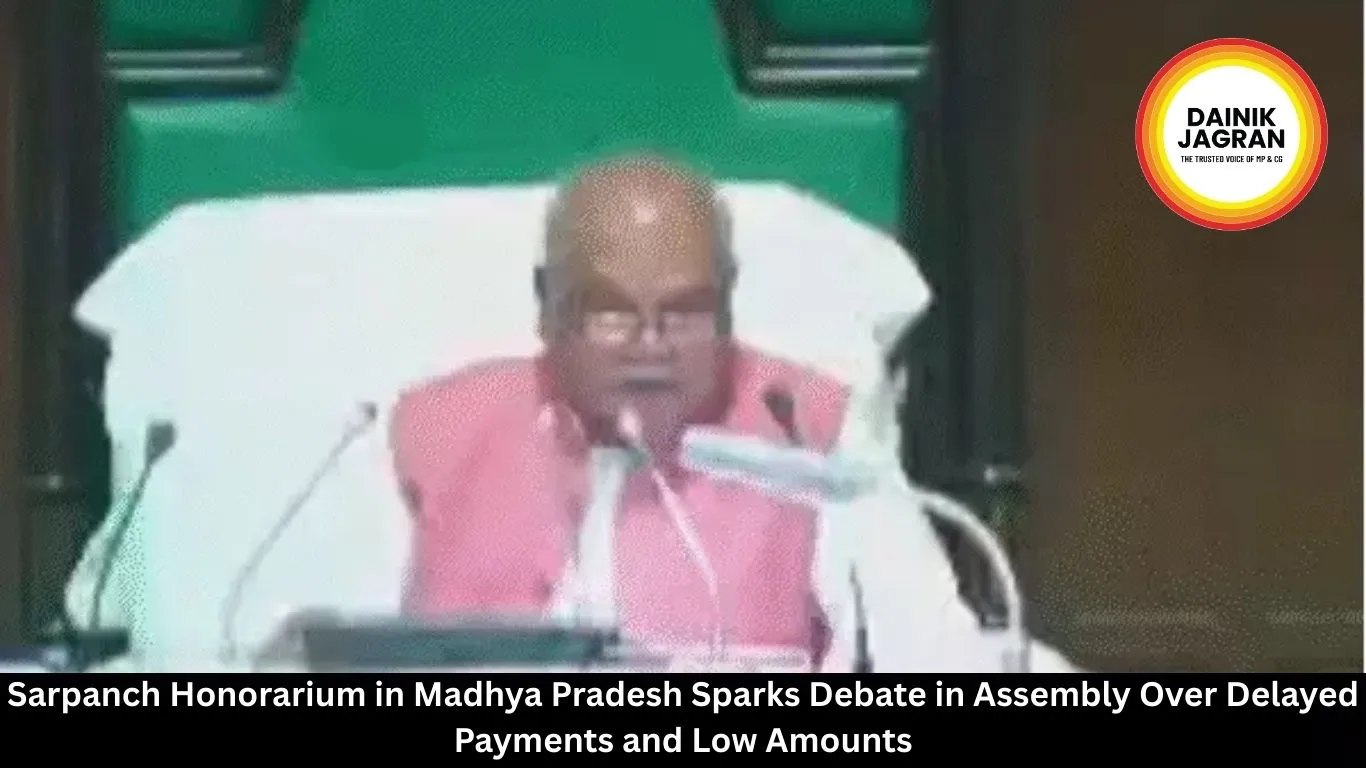
Sarpanch Honorarium in Madhya Pradesh Sparks Debate in Assembly Over Delayed Payments and Low Amounts
Digital Desk
In a heated exchange during the ongoing Budget Session of the Madhya Pradesh Assembly, Congress MLA Mukesh Malhotra raised concerns over the low and delayed Sarpanch honorarium in Madhya Pradesh. Highlighting the ₹4,250 monthly payout for Sarpanchs, he questioned its adequacy for survival, while Panchayat Minister Prahlad Singh Patel defended it as a role for social service, not a livelihood source. This discussion underscores ongoing challenges in grassroots governance amid rising living costs.
Honorarium Payment Issues Highlighted
The issue came to light when Malhotra, a former Sarpanch himself, alleged irregularities in disbursals. He claimed that Sarpanchs have only received payments for 14-15 months, and Ward Panchs none at all in the current term. "This is a grave injustice to elected representatives," Malhotra stated, drawing from his own experience where he received just four months' honorarium during his two-year tenure.
Minister Patel responded by promising an investigation into the delays. He asked for specific details, including Malhotra's Gram Panchayat name—Silpuri in the Karhal development block—to verify records. Patel suggested that small amounts might go unnoticed in bank accounts but assured action against officials if payments are pending beyond three months.
Minister's Stance on Social Service Roles
Patel emphasized that positions like Panch and Sarpanch are meant for community service, not financial sustenance. He outlined current rates: ₹4,250 per month for Sarpanchs and ₹300 per meeting for Panchs, capped at ₹1,800 annually. No proposals for increases are under consideration, he added, noting revisions in 2013 and 2023 with future reviews at the government's discretion.
This perspective aligns with broader rural policy views, where experts like political analyst Dr. Rajesh Sharma (simulated) argue that low honorariums prevent corruption but risk deterring capable leaders. "In today's economy, ₹4,250 barely covers basics," Sharma notes, urging a balance between idealism and practicality.
MLA's Counter and Calls for Reform
Malhotra challenged the minister's information as "completely false," reiterating statewide complaints from Sarpanchs. While acknowledging the social service aspect, he stressed real-world needs: "Every social worker has families and necessities." He pushed for higher Sarpanch honorarium in Madhya Pradesh to attract dedicated representatives.
The debate reflects timeliness amid the budget session, where rural development funding is scrutinized. With inflation hitting rural areas hard, this could influence upcoming policy tweaks.
Practical Takeaways for Readers
- Check Local Payments: Sarpanchs and Panchs should verify bank accounts regularly for small honorarium deposits.
- Advocate for Change: Contact local MLAs to support honorarium hikes, citing examples from other states like Rajasthan, where rates are higher.
- Understand Roles: Aspiring grassroots leaders should view these positions as voluntary service, supplemented by other income sources.
This assembly showdown on Sarpanch honorarium in Madhya Pradesh highlights a tension between service ideals and economic realities. As records are scrutinized, it may prompt reforms to strengthen rural democracy. With no immediate increases planned, the focus shifts to ensuring timely payments—vital for sustaining local governance in the state.


.jpg)




