


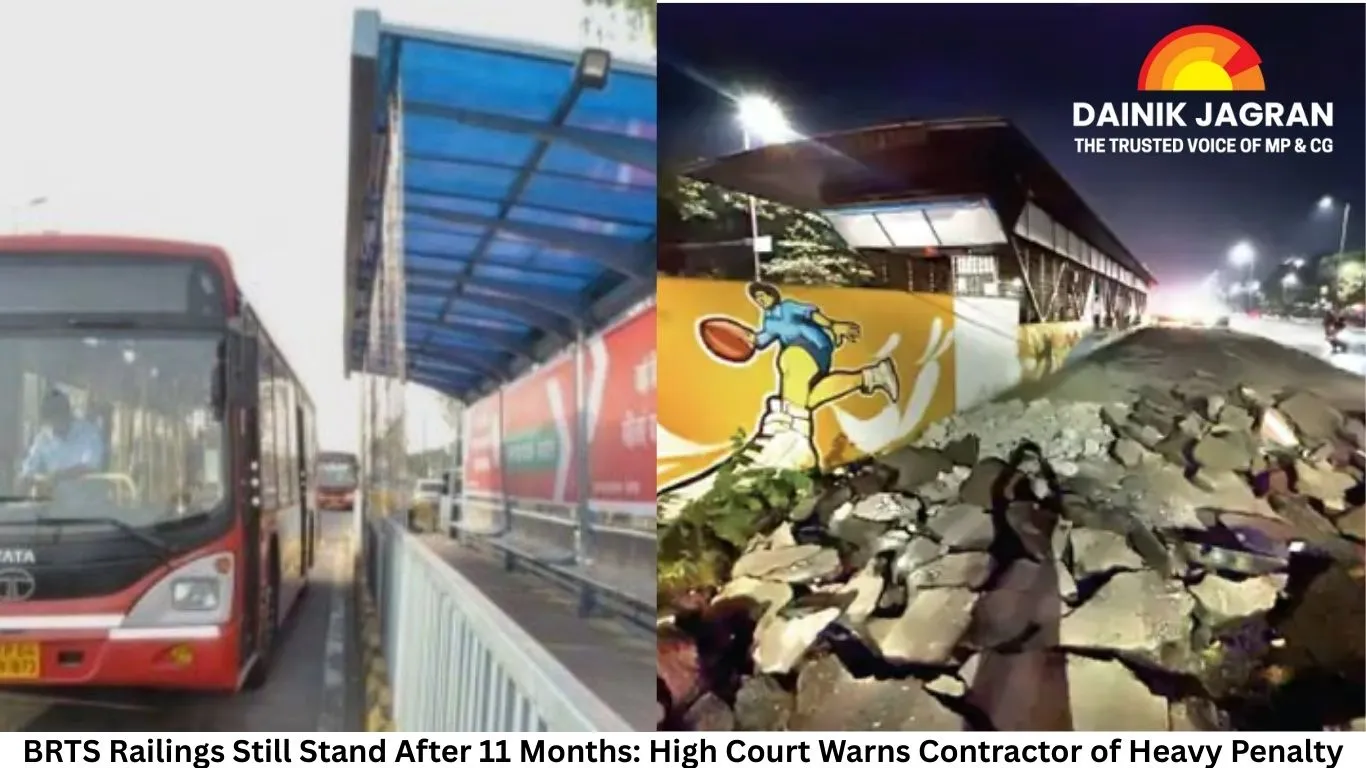
BRTS Railings Still Stand After 11 Months: High Court Warns Contractor of Heavy Penalty
Digital Desk
The PIL, filed by Rajlakshmi Foundation, highlights that despite court directions issued nearly 11 months ago, the BRTS infrastructure has not been fully dismantled, causing persistent traffic congestion and safety concerns across key stretches of the city.
A division bench comprising Justice Vijay Kumar Shukla and Justice Alok Awasthi summoned contractor Dinesh Yadav to appear in person. During the hearing, Yadav submitted that he was incurring losses as the amount of scrap iron recovered was far lower than projected. He claimed the original estimate was ₹3.5 crore, but recoveries had not even reached ₹2.5 crore, forcing him to spend from his own pocket.
The bench firmly rejected the argument, orally remarking that financial viability should have been assessed before accepting the contract. “Public interest is paramount. We will not entertain excuses,” the court observed, adding that mere blacklisting would be insufficient if the contractor continued to defy timelines.
Collector Shivam Verma and Municipal Commissioner Kshitij Singhal were also present during the proceedings. The court questioned officials on why the railings had not been fully removed and why a permanent median had not been constructed to restore smooth traffic flow.
During the hearing, the Indore Municipal Corporation informed the court that an elevated corridor is proposed between LIG and Naulakha, with the Public Works Department overseeing the project. The petitioner objected, stating that introducing new infrastructure plans would only prolong public hardship for the next two to three years, and urged immediate construction of a road divider to resume normal traffic movement.
The contractor further alleged a lack of cooperation from the civic body, citing debris lying at former bus stations and issues with material storage. The court, however, declined to consider these submissions and directed officials to ensure coordination so that the work is completed promptly.
Calling the issue one of significant public concern, the High Court made it clear that non-compliance would invite coercive action, including forfeiture of the bank guarantee and imposition of a substantial monetary penalty. The matter has been listed for further hearing on January 28.
.jpg)




