


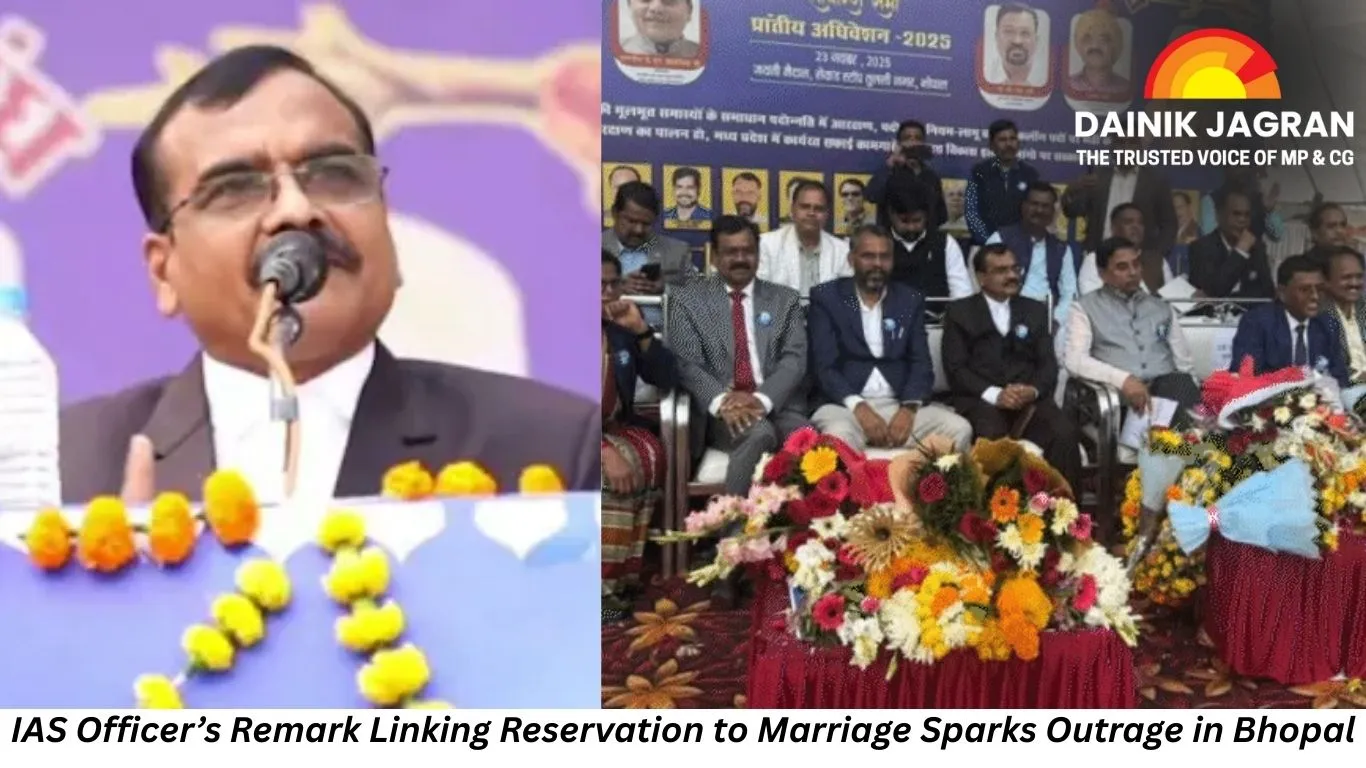
IAS Officer’s Remark Linking Reservation to Marriage Sparks Outrage in Bhopal
Digital Desk
The remark, widely circulated after a video surfaced, drew criticism from employee associations and social activists. Sudhir Nayak, president of the Ministry Service Officers-Employees Association, described the statement as “highly objectionable and an insult to the upper caste community.” He demanded that action be taken against Verma under IAS conduct rules.
Nayak argued that marriage is a personal decision and should not be linked to reservation policies. He cited examples of inter-caste and reserved-unreserved marriages in Indian society, including Dr. B.R. Ambedkar’s marriage to Savita Ambedkar and Ram Vilas Paswan’s marriage to Reena Sharma, to emphasize that such remarks are inappropriate and divisive.
The incident has sparked debate over the role of senior officers in representing employee organisations. Nayak stated, “Such statements by an officer holding a senior position deepen the divide between communities. A person making such comments should not hold the position of provincial president in AJAX, which is meant to discuss service-related issues.”
The controversy has prompted calls for stricter scrutiny of officers’ public conduct and renewed discussions on the sensitive intersection of caste, reservation, and social discourse in government and employee bodies. AJAX members are reportedly deliberating on how to address the matter internally while maintaining organisational focus on professional issues.
This incident underscores the potential impact of public remarks by senior officials on social harmony and organisational credibility, particularly in contexts involving caste and reservation debates.


.jpg)




