

MP Declares 1.20 Lakh Posts as Dying Cadre, Recruitment Stopped

Digital Desk

MP Declares 1.20 Lakh Posts as Dying Cadre, Recruitment Stopped

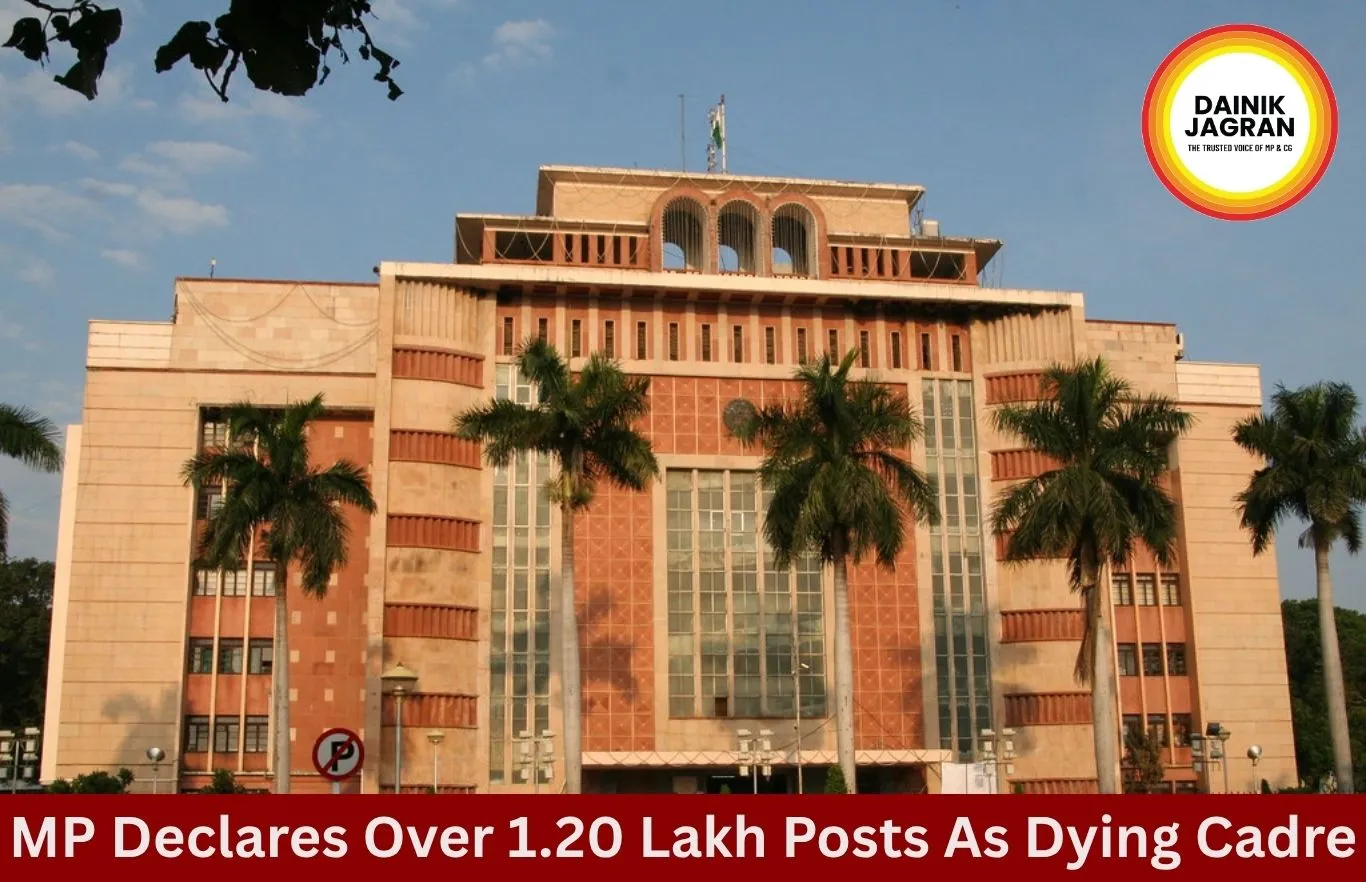
The Madhya Pradesh government has declared over 1.20 lakh posts as dying cadre, ending future recruitment in these categories to reduce financial burden.

The Madhya Pradesh government has declared nearly 1.20 lakh posts across various departments as “dying cadre”, effectively ending all future recruitment on these positions. The General Administration Department (GAD) has issued official instructions implementing the cabinet decision, making it clear that no new appointments will be made against these posts in the coming years.

According to the state government, the move has been taken to reduce administrative and financial burden on the exchequer and streamline the recruitment structure in government departments. The order covers work-charged, contingency fund, contractual category, and Kotwar cadre posts across the state.

The General Administration Department stated in its directive that strict action would be taken against any department, district collector, commissioner, or departmental head if appointments are made against these abolished posts in violation of the government order. Officials said the instructions have been issued to ensure complete compliance across all government offices and departments.

With this decision, the government has clarified that future recruitment in Madhya Pradesh will now take place only on regular and contractual sanctioned posts. All other categories identified under the abolished cadre system will gradually cease to exist as existing employees retire or leave service.

Officials said work-charged posts were earlier created temporarily for infrastructure and development projects such as roads, irrigation works, and building construction. Employees appointed under contingency fund categories received salaries from temporary expenditure allocations rather than permanent departmental budgets.

Similarly, contractual and Kotwar category appointments were generally made for fixed durations or local administrative requirements. The government has now decided to discontinue fresh appointments under these categories as part of broader administrative restructuring.

According to official figures released by the department, the abolished categories include 16,810 work-charged posts, 55,808 contingency fund posts, and 34,497 contractual and Kotwar category posts. Together, these account for more than 1.20 lakh positions declared under the dying cadre system.

The government has also directed departments to phase out outsourced employees currently working against regular sanctioned posts by March 2027. Departments have been instructed to complete regular recruitment processes in place of outsourcing arrangements within the stipulated timeline.

Officials said the decision is aimed at strengthening transparency and standardising recruitment systems across departments. The government believes that reducing multiple categories of employment will help improve administrative efficiency and create a more uniform workforce structure.

However, the move is expected to trigger debate among employee organisations and contractual workers’ associations, many of whom have been demanding regularisation and long-term job security for years. Employee representatives are likely to seek clarification from the government regarding the future of existing staff working under these categories.

the dying cadre system is generally used by governments when certain categories of posts are gradually phased out without immediately terminating existing employees. Under this arrangement, no fresh recruitment takes place, and the posts automatically cease to exist after current employees retire, resign, or complete their service tenure.

The latest order is also being viewed as part of broader efforts by the state government to control expenditure related to salaries and pensions while focusing recruitment on structured regular positions. Government officials maintain that the policy will help departments better manage staffing patterns and financial resources in the long term.

The decision assumes significance at a time when recruitment policies, contractual employment, and outsourcing practices continue to remain major political and administrative issues across several states. In Madhya Pradesh, opposition parties and employee groups have frequently raised concerns over vacancies, temporary appointments, and delays in regular recruitment processes.

the administration indicated that departments have been instructed to immediately review existing sanctioned strength and ensure that no fresh recruitment proposals are processed under abolished categories. Monitoring of compliance is also expected at the departmental and district administration levels.
 

--------

🚨 Beat the News Rush – Join Now!

Get breaking alerts, hot exclusives, and game-changing stories instantly on your phone. No delays, no fluff – just the edge you need. ⚡

Tap to join: 

🟢 WhatsApp Channel: Dainik Jagran MP CG

Crave more?

🅕 Facebook: Dainik Jagran MP CG English

🅧 Twitter (X): Dainik Jagran MP CG

🅘 Instagram: Dainik Jagran MP CG

Share the fire – keep your crew ahead! 🗞️🔥

english.dainikjagranmpcg.com
14 May 2026 By Vaishnavi

MP Declares 1.20 Lakh Posts as Dying Cadre, Recruitment Stopped

Digital Desk

The Madhya Pradesh government has declared nearly 1.20 lakh posts across various departments as “dying cadre”, effectively ending all future recruitment on these positions. The General Administration Department (GAD) has issued official instructions implementing the cabinet decision, making it clear that no new appointments will be made against these posts in the coming years.

According to the state government, the move has been taken to reduce administrative and financial burden on the exchequer and streamline the recruitment structure in government departments. The order covers work-charged, contingency fund, contractual category, and Kotwar cadre posts across the state.

The General Administration Department stated in its directive that strict action would be taken against any department, district collector, commissioner, or departmental head if appointments are made against these abolished posts in violation of the government order. Officials said the instructions have been issued to ensure complete compliance across all government offices and departments.

With this decision, the government has clarified that future recruitment in Madhya Pradesh will now take place only on regular and contractual sanctioned posts. All other categories identified under the abolished cadre system will gradually cease to exist as existing employees retire or leave service.

Officials said work-charged posts were earlier created temporarily for infrastructure and development projects such as roads, irrigation works, and building construction. Employees appointed under contingency fund categories received salaries from temporary expenditure allocations rather than permanent departmental budgets.

Similarly, contractual and Kotwar category appointments were generally made for fixed durations or local administrative requirements. The government has now decided to discontinue fresh appointments under these categories as part of broader administrative restructuring.

According to official figures released by the department, the abolished categories include 16,810 work-charged posts, 55,808 contingency fund posts, and 34,497 contractual and Kotwar category posts. Together, these account for more than 1.20 lakh positions declared under the dying cadre system.

The government has also directed departments to phase out outsourced employees currently working against regular sanctioned posts by March 2027. Departments have been instructed to complete regular recruitment processes in place of outsourcing arrangements within the stipulated timeline.

Officials said the decision is aimed at strengthening transparency and standardising recruitment systems across departments. The government believes that reducing multiple categories of employment will help improve administrative efficiency and create a more uniform workforce structure.

However, the move is expected to trigger debate among employee organisations and contractual workers’ associations, many of whom have been demanding regularisation and long-term job security for years. Employee representatives are likely to seek clarification from the government regarding the future of existing staff working under these categories.

the dying cadre system is generally used by governments when certain categories of posts are gradually phased out without immediately terminating existing employees. Under this arrangement, no fresh recruitment takes place, and the posts automatically cease to exist after current employees retire, resign, or complete their service tenure.

The latest order is also being viewed as part of broader efforts by the state government to control expenditure related to salaries and pensions while focusing recruitment on structured regular positions. Government officials maintain that the policy will help departments better manage staffing patterns and financial resources in the long term.

The decision assumes significance at a time when recruitment policies, contractual employment, and outsourcing practices continue to remain major political and administrative issues across several states. In Madhya Pradesh, opposition parties and employee groups have frequently raised concerns over vacancies, temporary appointments, and delays in regular recruitment processes.

the administration indicated that departments have been instructed to immediately review existing sanctioned strength and ensure that no fresh recruitment proposals are processed under abolished categories. Monitoring of compliance is also expected at the departmental and district administration levels.
 

https://english.dainikjagranmpcg.com/states/madhya-pradesh/mp-declares-120-lakh-posts-as-dying-cadre-recruitment-stopped/article-18229

Latest News


