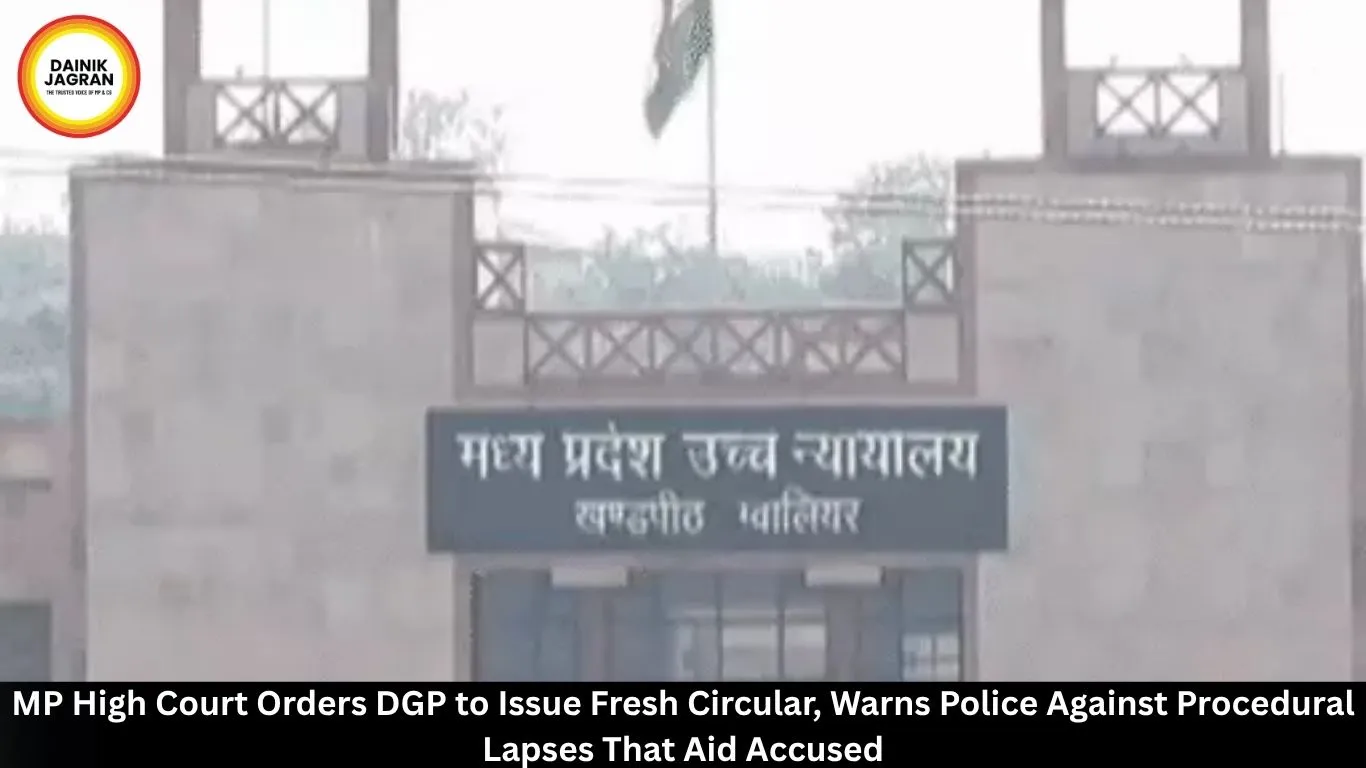
MP High Court Directs DGP to Issue Fresh Circular on Arrest Procedures

Digital Desk

MP High Court Directs DGP to Issue Fresh Circular on Arrest Procedures

The Madhya Pradesh High Court has directed the DGP to issue a fresh circular reminding police officers to provide written grounds of arrest, warning that procedural lapses can weaken criminal cases.

The Madhya Pradesh High Court has issued a strong warning to police officers over procedural lapses during arrests, observing that such negligence can allow accused persons to secure relief on technical grounds. In a significant order, the Gwalior Bench directed the state's Director General of Police (DGP) to issue a fresh circular within one month to all station house officers and investigating officers, reiterating mandatory legal procedures during arrests.

The Division Bench remarked that while some police personnel wear the uniform of law enforcement, their conduct appears to benefit criminals when mandatory legal procedures are ignored.

Court Stresses Compliance with Arrest Procedures

The bench observed that every person taken into custody must be provided with the written grounds of arrest, as required under law and judicial guidelines. It noted that failure to furnish these reasons could result in courts questioning the legality of an arrest and granting relief to accused persons on procedural grounds.

The court further observed that if investigating officers fail to provide written grounds of arrest, such conduct may be viewed as a deliberate act that benefits the accused rather than a mere procedural lapse.

Fresh Circular Ordered for Police Officials

Expressing concern over repeated violations despite existing instructions, the High Court directed the DGP to circulate fresh directions to all police stations and investigating officers across the state within a month.

The court said the circular should clearly instruct officers to strictly comply with legal requirements while making arrests to ensure that criminal cases are not weakened because of avoidable procedural errors.

Concern Over Non-Compliance Despite Earlier Instructions

During the hearing, the bench also expressed dissatisfaction with the implementation of an earlier circular reportedly issued by the Police Headquarters (PHQ), Bhopal, on February 13, 2026, following directions of the Supreme Court.

According to the court, despite those instructions, investigating officers at the field level continue to arrest accused persons without adequately communicating the written grounds of arrest, exposing criminal prosecutions to legal challenges.

The bench observed that such lapses undermine the criminal justice system and may enable offenders to obtain relief due to technical deficiencies in police procedure.

Case Related to NDPS Arrest

The observations came while the court was hearing a habeas corpus petition filed by Dharmendra Lodhi, who challenged the arrest of his brother in an NDPS case registered at Basai Police Station in Datia district.

The petitioner argued that the arrest was illegal because the police had allegedly failed to provide written grounds for taking the accused into custody.

However, after examining the case records, the Division Bench found that the police had served a written notice under Section 50 of the NDPS Act and recovered approximately 86.850 kilograms of cannabis from the accused.

Holding that the legal requirements applicable in the case had been complied with, the court dismissed the petition and refused to interfere with the arrest.

Strong Message to Law Enforcement

While rejecting the plea, the High Court used the opportunity to underline the importance of strict adherence to procedural safeguards during arrests.

The bench emphasised that the role of the police is to ensure effective prosecution of offenders while protecting the rights guaranteed under law. It cautioned that procedural negligence not only weakens investigations but also risks allowing accused persons to secure legal relief that could otherwise have been avoided through proper compliance.

The court's directions are expected to reinforce adherence to arrest procedures across Madhya Pradesh and strengthen accountability within the police force.


--------

🚨 Beat the News Rush – Join Now!

Get breaking alerts, hot exclusives, and game-changing stories instantly on your phone. No delays, no fluff – just the edge you need. ⚡

Tap to join: 

🟢 WhatsApp Channel: Dainik Jagran MP CG

Crave more?

🅕 Facebook: Dainik Jagran MP CG English

🅧 Twitter (X): Dainik Jagran MP CG

🅘 Instagram: Dainik Jagran MP CG

Share the fire – keep your crew ahead! 🗞️🔥

english.dainikjagranmpcg.com
08 Jul 2026 By Abhishek Joshi

MP High Court Directs DGP to Issue Fresh Circular on Arrest Procedures

Digital Desk

The Madhya Pradesh High Court has issued a strong warning to police officers over procedural lapses during arrests, observing that such negligence can allow accused persons to secure relief on technical grounds. In a significant order, the Gwalior Bench directed the state's Director General of Police (DGP) to issue a fresh circular within one month to all station house officers and investigating officers, reiterating mandatory legal procedures during arrests.

The Division Bench remarked that while some police personnel wear the uniform of law enforcement, their conduct appears to benefit criminals when mandatory legal procedures are ignored.

Court Stresses Compliance with Arrest Procedures

The bench observed that every person taken into custody must be provided with the written grounds of arrest, as required under law and judicial guidelines. It noted that failure to furnish these reasons could result in courts questioning the legality of an arrest and granting relief to accused persons on procedural grounds.

The court further observed that if investigating officers fail to provide written grounds of arrest, such conduct may be viewed as a deliberate act that benefits the accused rather than a mere procedural lapse.

Fresh Circular Ordered for Police Officials

Expressing concern over repeated violations despite existing instructions, the High Court directed the DGP to circulate fresh directions to all police stations and investigating officers across the state within a month.

The court said the circular should clearly instruct officers to strictly comply with legal requirements while making arrests to ensure that criminal cases are not weakened because of avoidable procedural errors.

Concern Over Non-Compliance Despite Earlier Instructions

During the hearing, the bench also expressed dissatisfaction with the implementation of an earlier circular reportedly issued by the Police Headquarters (PHQ), Bhopal, on February 13, 2026, following directions of the Supreme Court.

According to the court, despite those instructions, investigating officers at the field level continue to arrest accused persons without adequately communicating the written grounds of arrest, exposing criminal prosecutions to legal challenges.

The bench observed that such lapses undermine the criminal justice system and may enable offenders to obtain relief due to technical deficiencies in police procedure.

Case Related to NDPS Arrest

The observations came while the court was hearing a habeas corpus petition filed by Dharmendra Lodhi, who challenged the arrest of his brother in an NDPS case registered at Basai Police Station in Datia district.

The petitioner argued that the arrest was illegal because the police had allegedly failed to provide written grounds for taking the accused into custody.

However, after examining the case records, the Division Bench found that the police had served a written notice under Section 50 of the NDPS Act and recovered approximately 86.850 kilograms of cannabis from the accused.

Holding that the legal requirements applicable in the case had been complied with, the court dismissed the petition and refused to interfere with the arrest.

Strong Message to Law Enforcement

While rejecting the plea, the High Court used the opportunity to underline the importance of strict adherence to procedural safeguards during arrests.

The bench emphasised that the role of the police is to ensure effective prosecution of offenders while protecting the rights guaranteed under law. It cautioned that procedural negligence not only weakens investigations but also risks allowing accused persons to secure legal relief that could otherwise have been avoided through proper compliance.

The court's directions are expected to reinforce adherence to arrest procedures across Madhya Pradesh and strengthen accountability within the police force.


https://english.dainikjagranmpcg.com/states/madhya-pradesh/mp-high-court-directs-dgp-to-issue-fresh-circular-on/article-21338

Trending News