


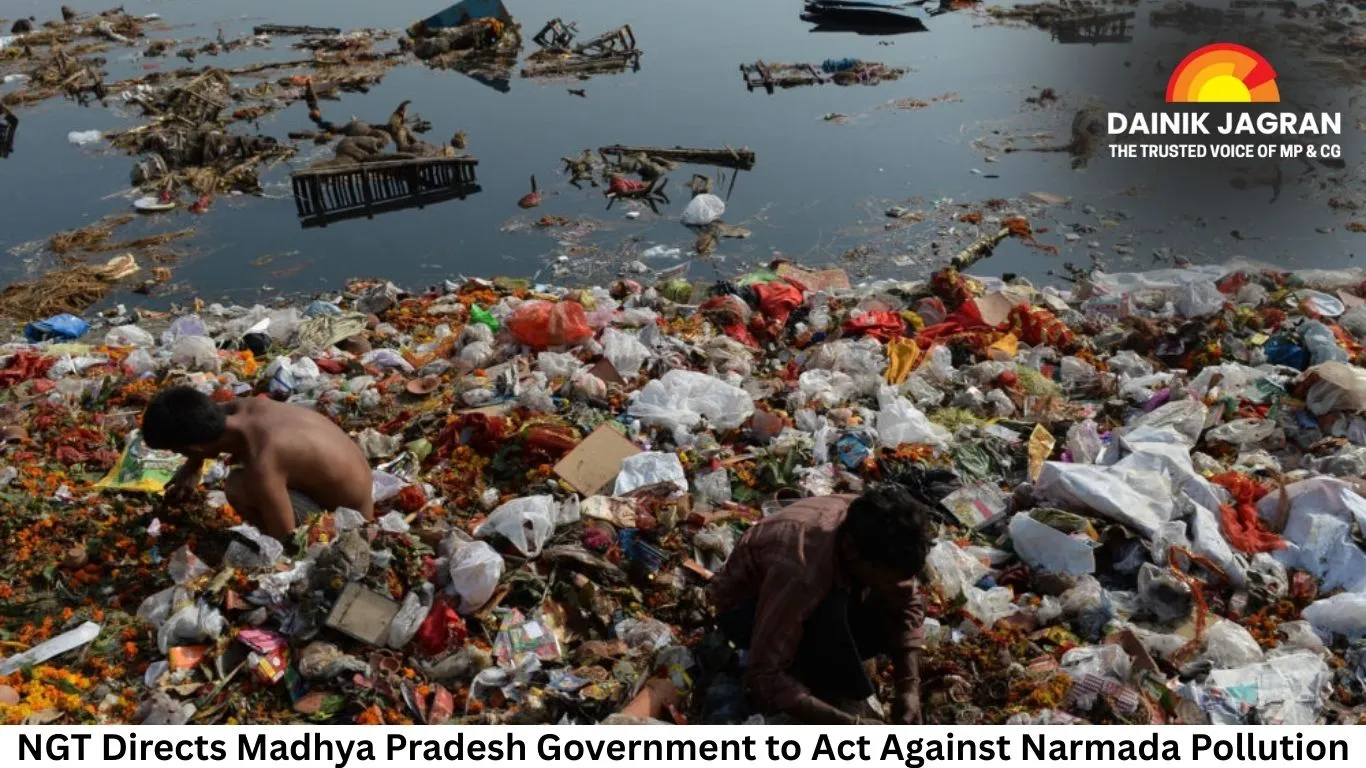
NGT Directs Madhya Pradesh Government to Act Against Narmada Pollution, Imposes Plastic Ban Near River
Digital Desk
The directions were issued by the NGT’s Bhopal bench while hearing a petition filed by Dr P.G. Najpande, patron of the Citizens Consumer Forum, who raised concerns over persistent pollution in the Narmada despite repeated assurances by authorities.
As part of its order, the tribunal has mandated a complete ban on the use of plastic within a 100-metre radius of the river. The measure aims to prevent plastic waste from entering the water and exacerbating ecological damage. The NGT has also instructed authorities to strictly enforce the ban and ensure accountability at the district level.
The tribunal directed the Principal Secretary of the Environment Department to ensure that district collectors relocate dairy units operating along the banks of the Narmada and its tributaries, including the Pariyat and Gaur rivers. According to the NGT, untreated dairy effluents flowing directly into the river system pose a serious threat to water quality and public health.
During the hearing, it was revealed that only 12 out of 16 sewage treatment plants (STPs) installed in Jabalpur are currently functional. Four STPs located at Gaurighat, Lalpur, Ranitāl and Gulao Talab remain non-operational. The tribunal observed that the failure of these plants is a key obstacle in preventing untreated sewage from entering the river and ordered immediate corrective measures.
The NGT also instructed the state government to demarcate the Narmada floodplain without delay and remove all permanent constructions from restricted zones. The tribunal noted that unchecked construction along the riverbanks has narrowed the natural floodplain and increased pollution risks.
Dr Najpande stated that the tribunal had made it clear that floodplain demarcation and the removal of encroachments must precede any meaningful river-cleaning effort. He added that relocating dairy units away from the riverbanks is essential to ensuring long-term pollution control.
The matter will be reviewed after the state submits its compliance report. The tribunal warned that continued inaction could invite stricter measures, underscoring the urgency of protecting the Narmada, which serves as a lifeline for millions across the state.
.jpg)




