Asim Munir Could Get Key Role in Pakistan-Saudi-Turkey Defence Alliance
Digital desk
Turkey says military chiefs will join the governing structure of the Makkah defence agreement with Pakistan and Saudi Arabia, raising speculation over Asim Munir's role.
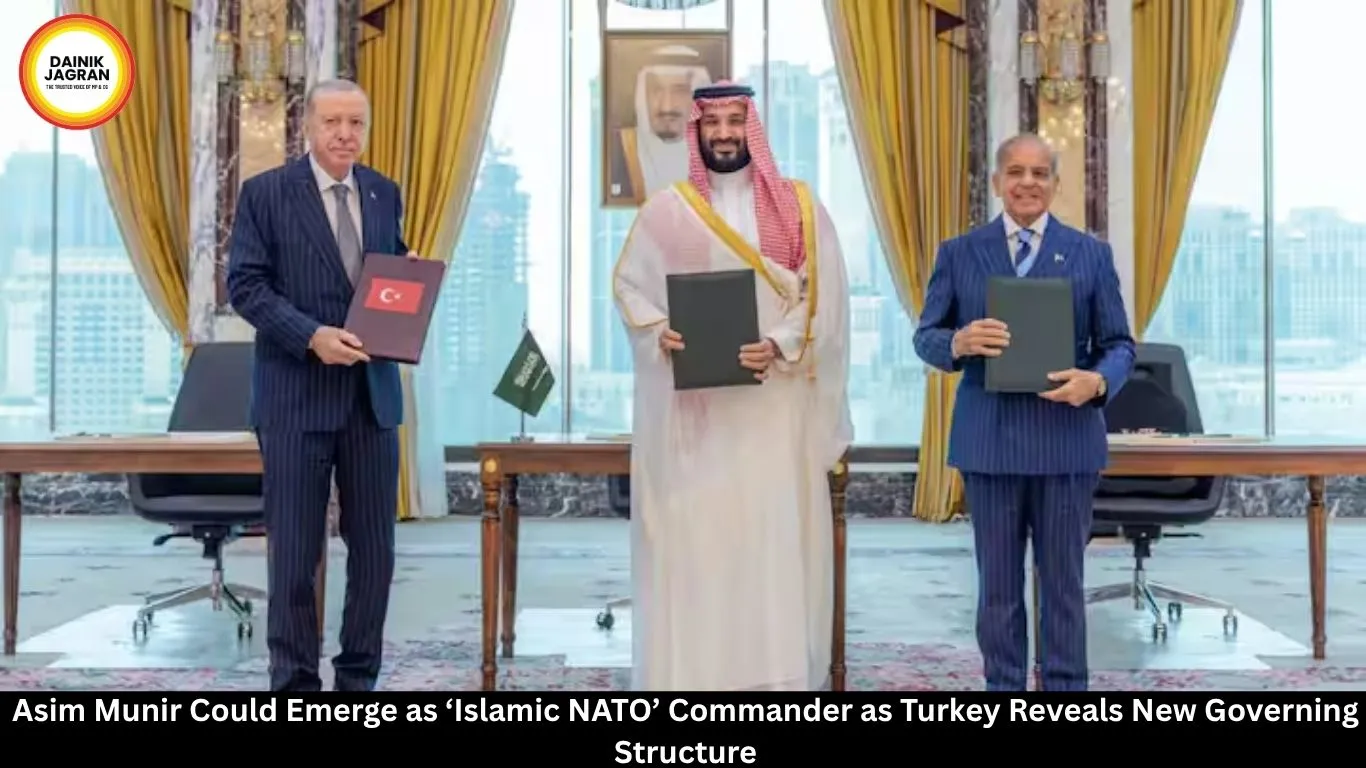
Pakistan Army chief Field Marshal Asim Munir could take a prominent role in the emerging defence alliance between Pakistan, Saudi Arabia and Turkey after Ankara said the military chiefs of the three countries would be part of the alliance's proposed governing structure.
The development follows the signing of the Makkah Joint Defence Agreement by Pakistan, Saudi Arabia and Turkey on August 7. The agreement is aimed at strengthening defence cooperation and establishing a more structured security partnership among the three countries.
Military Chiefs to Join Governing Body
Turkey's Defence Ministry said on Thursday that the mechanisms created under the agreement would involve the defence ministers, foreign ministers and chiefs of general staff or armed forces commanders of the three countries.
According to the ministry, coordination among Pakistan, Saudi Arabia and Turkey would take place at the highest level.
The announcement potentially gives Munir a significant role in the alliance's military decision-making structure. However, there has been no official announcement naming him as commander of the proposed alliance.
The agreement also provides for joint military exercises involving the three countries.
Similarities With NATO Article 5
Turkish Foreign Minister Hakan Fidan had earlier described the Makkah agreement as technically similar to NATO's Article 5, which establishes the principle of collective defence among NATO members.
Fidan had also said that a committee of ministers would be established to oversee the alliance, along with a general secretariat based in Saudi Arabia.
The latest statement from Turkey indicates that the proposed institutional framework could be broader, incorporating both political and military leadership.
The Turkish Defence Ministry said the fundamental objective was to place defence and military cooperation between the three countries on a more institutional and sustainable footing.
Joint Military Exercises Planned
Under the agreement, Pakistan, Saudi Arabia and Turkey are expected to expand cooperation across multiple military domains.
The Turkish Defence Ministry said planned exercises would involve land, naval and air forces, as well as air defence and unmanned systems.
The three countries also intend to deepen cooperation in the defence industry. This could include joint development and production, technology cooperation and maintenance and logistics support.
Unmanned and autonomous systems, electronic warfare and artificial intelligence capabilities are expected to receive particular attention.
Is It Really an ‘Islamic NATO’?
Despite comparisons with NATO, analysts caution against describing the three-country alliance as an established “Islamic NATO” at this stage.
Aishwaria Sonavane, who heads the Pakistan programme at the Takshashila Institution, has previously argued that the three countries do not yet possess the institutional foundations and interoperability required for a NATO-style alliance.
Turkey has extensive experience as a NATO member, while Pakistan's military ecosystem is heavily reliant on Chinese technology. Saudi Arabia, meanwhile, continues to depend significantly on US-origin defence systems.
These differences could make the creation of common military standards and integrated operational capabilities a long-term process.
Strategic Defence Partnership
The agreement nevertheless marks a significant step in defence cooperation among Pakistan, Saudi Arabia and Turkey.
The three countries have different strategic interests and defence relationships, but their proposed framework could provide a platform for greater coordination in military exercises, defence production, technology and security planning.
The inclusion of military chiefs in the governing structure could also give the alliance a stronger operational dimension.
For now, however, Munir's designation as an “Islamic NATO” commander remains speculative. The formal structure, leadership arrangements and decision-making mechanisms of the alliance will determine how far the Makkah agreement develops beyond a defence cooperation pact.
Asim Munir Could Get Key Role in Pakistan-Saudi-Turkey Defence Alliance
Digital desk
Pakistan Army chief Field Marshal Asim Munir could take a prominent role in the emerging defence alliance between Pakistan, Saudi Arabia and Turkey after Ankara said the military chiefs of the three countries would be part of the alliance's proposed governing structure.
The development follows the signing of the Makkah Joint Defence Agreement by Pakistan, Saudi Arabia and Turkey on August 7. The agreement is aimed at strengthening defence cooperation and establishing a more structured security partnership among the three countries.
Military Chiefs to Join Governing Body
Turkey's Defence Ministry said on Thursday that the mechanisms created under the agreement would involve the defence ministers, foreign ministers and chiefs of general staff or armed forces commanders of the three countries.
According to the ministry, coordination among Pakistan, Saudi Arabia and Turkey would take place at the highest level.
The announcement potentially gives Munir a significant role in the alliance's military decision-making structure. However, there has been no official announcement naming him as commander of the proposed alliance.
The agreement also provides for joint military exercises involving the three countries.
Similarities With NATO Article 5
Turkish Foreign Minister Hakan Fidan had earlier described the Makkah agreement as technically similar to NATO's Article 5, which establishes the principle of collective defence among NATO members.
Fidan had also said that a committee of ministers would be established to oversee the alliance, along with a general secretariat based in Saudi Arabia.
The latest statement from Turkey indicates that the proposed institutional framework could be broader, incorporating both political and military leadership.
The Turkish Defence Ministry said the fundamental objective was to place defence and military cooperation between the three countries on a more institutional and sustainable footing.
Joint Military Exercises Planned
Under the agreement, Pakistan, Saudi Arabia and Turkey are expected to expand cooperation across multiple military domains.
The Turkish Defence Ministry said planned exercises would involve land, naval and air forces, as well as air defence and unmanned systems.
The three countries also intend to deepen cooperation in the defence industry. This could include joint development and production, technology cooperation and maintenance and logistics support.
Unmanned and autonomous systems, electronic warfare and artificial intelligence capabilities are expected to receive particular attention.
Is It Really an ‘Islamic NATO’?
Despite comparisons with NATO, analysts caution against describing the three-country alliance as an established “Islamic NATO” at this stage.
Aishwaria Sonavane, who heads the Pakistan programme at the Takshashila Institution, has previously argued that the three countries do not yet possess the institutional foundations and interoperability required for a NATO-style alliance.
Turkey has extensive experience as a NATO member, while Pakistan's military ecosystem is heavily reliant on Chinese technology. Saudi Arabia, meanwhile, continues to depend significantly on US-origin defence systems.
These differences could make the creation of common military standards and integrated operational capabilities a long-term process.
Strategic Defence Partnership
The agreement nevertheless marks a significant step in defence cooperation among Pakistan, Saudi Arabia and Turkey.
The three countries have different strategic interests and defence relationships, but their proposed framework could provide a platform for greater coordination in military exercises, defence production, technology and security planning.
The inclusion of military chiefs in the governing structure could also give the alliance a stronger operational dimension.
For now, however, Munir's designation as an “Islamic NATO” commander remains speculative. The formal structure, leadership arrangements and decision-making mechanisms of the alliance will determine how far the Makkah agreement develops beyond a defence cooperation pact.
Recommended For You
--------
🚨 Beat the News Rush – Join Now!
Get breaking alerts, hot exclusives, and game-changing stories instantly on your phone. No delays, no fluff – just the edge you need. ⚡
Tap to join:
🟢 WhatsApp Channel: Dainik Jagran MP CG
Crave more?
🅕 Facebook: Dainik Jagran MP CG English
🅧 Twitter (X): Dainik Jagran MP CG
🅘 Instagram: Dainik Jagran MP CG
Share the fire – keep your crew ahead! 🗞️🔥