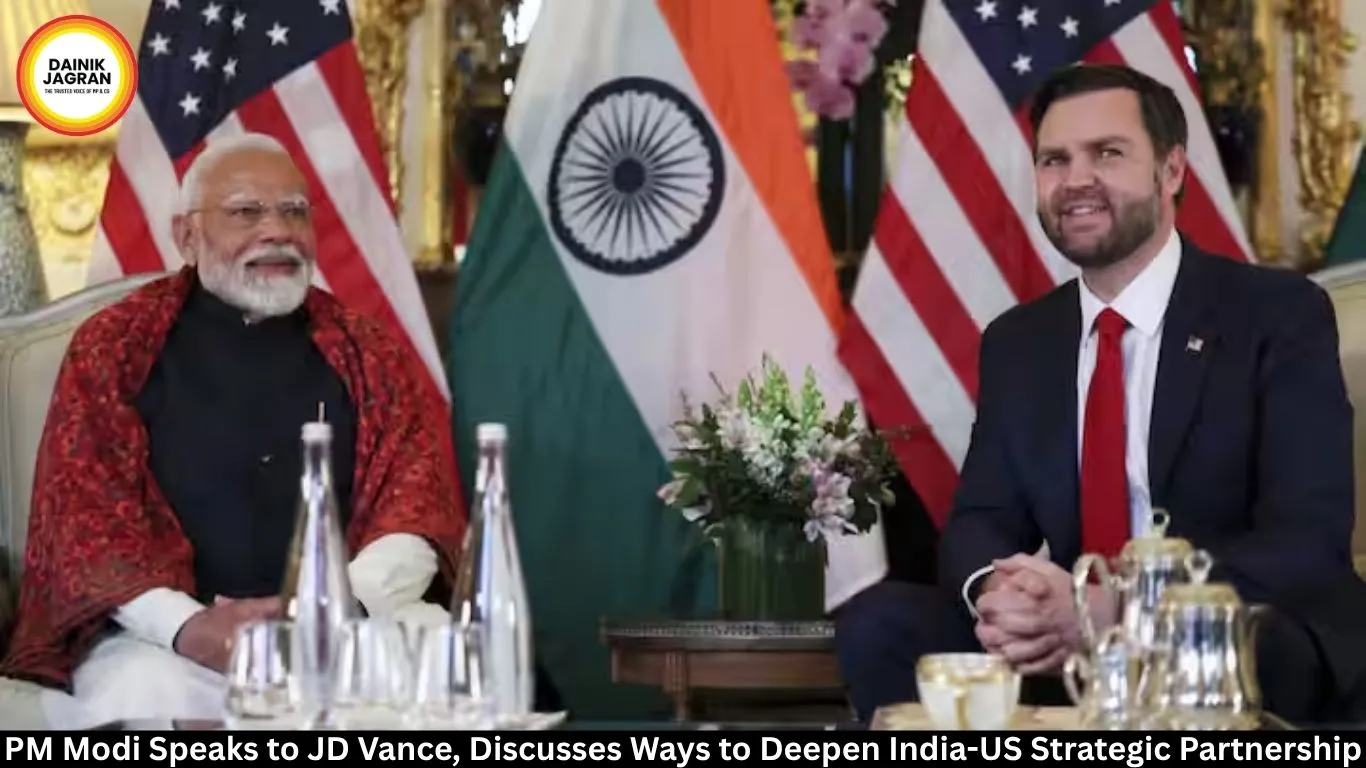
PM Narendra Modi spoke with US Vice President JD Vance about strengthening India-US strategic ties as both countries navigate trade talks and differences over Russian oil.
Digital desk
PM Narendra Modi spoke with US Vice President JD Vance about strengthening India-US strategic ties as both countries navigate trade talks and differences over Russian oil.
Prime Minister Narendra Modi spoke with US Vice President JD Vance over the phone on Saturday and discussed ways to further strengthen the India-US Comprehensive Global Strategic Partnership.
The conversation comes at a sensitive stage in bilateral relations, with New Delhi and Washington continuing negotiations on a trade agreement while differences remain over India's purchase of Russian crude oil.
Modi said in a post on X that he and Vance discussed measures to deepen cooperation between the two countries across key areas.
The Prime Minister also congratulated Vance and his wife, Usha Vance, on the birth of their son and conveyed his best wishes to the family.
India-US Ties Face Fresh Challenges
The phone conversation comes amid growing uncertainty over the economic relationship between India and the United States.
The US Senate recently passed a broad Russia sanctions package that could allow the US president to impose tariffs of up to 100 per cent on countries continuing to purchase Russian oil, if the legislation ultimately becomes law.
India, as one of the major buyers of Russian crude, could potentially face consequences under such measures.
However, the legislation still requires consideration by the US House of Representatives before it can take effect.
Trade Deal Remains Key Issue
Trade negotiations remain another important component of the India-US relationship.
New Delhi and Washington had reached a framework for an interim trade agreement in February 2026, aimed at improving market access, strengthening supply chains and expanding economic cooperation.
Negotiations on a broader bilateral trade agreement have continued, with tariffs, market access and other economic issues remaining among the key areas under discussion.
A senior US official had said in July that a wider agreement could potentially be concluded within three to four months.
An Indian parliamentary panel has also called for an early conclusion of the trade agreement while recommending safeguards against possible US tariff measures.
Russian Oil Adds Complexity
India's continued purchase of Russian crude has emerged as a major point of friction between New Delhi and Washington.
India has maintained that its energy purchases are guided by national interests and market considerations. Russian oil became an important source of crude for Indian refiners after Western sanctions and restrictions following the Russia-Ukraine conflict altered global energy trade.
Washington's proposed sanctions could therefore add another layer of complexity to ongoing trade negotiations.
For India, the challenge is to protect its energy interests while maintaining the broader strategic relationship with the United States.
Focus on Strategic Cooperation
Despite differences over trade and energy, India and the US continue to expand cooperation across several strategic sectors.
These include defence, energy, critical and emerging technologies, critical minerals and resilient supply chains.
The two countries have increasingly described their relationship as a Comprehensive Global Strategic Partnership, reflecting cooperation that extends beyond traditional diplomatic and defence ties.
Modi-Vance Conversation
Modi's conversation with Vance indicates that both sides continue to keep the broader strategic relationship on the agenda despite ongoing disagreements.
The immediate challenges over tariffs, trade negotiations and Russian oil purchases could influence the economic side of the partnership, but cooperation in defence, technology and other strategic areas remains significant.
The next phase of India-US engagement is likely to focus on finding common ground on trade while managing differences over energy imports.
For New Delhi, maintaining strategic cooperation with Washington while protecting its economic and energy interests will remain a key diplomatic priority.
For Washington, balancing pressure over Russian oil with its wider strategic partnership with India could also prove important as both countries seek to expand cooperation in emerging technologies, supply chains and regional security.
PM Narendra Modi spoke with US Vice President JD Vance about strengthening India-US strategic ties as both countries navigate trade talks and differences over Russian oil.
Digital desk
Prime Minister Narendra Modi spoke with US Vice President JD Vance over the phone on Saturday and discussed ways to further strengthen the India-US Comprehensive Global Strategic Partnership.
The conversation comes at a sensitive stage in bilateral relations, with New Delhi and Washington continuing negotiations on a trade agreement while differences remain over India's purchase of Russian crude oil.
Modi said in a post on X that he and Vance discussed measures to deepen cooperation between the two countries across key areas.
The Prime Minister also congratulated Vance and his wife, Usha Vance, on the birth of their son and conveyed his best wishes to the family.
India-US Ties Face Fresh Challenges
The phone conversation comes amid growing uncertainty over the economic relationship between India and the United States.
The US Senate recently passed a broad Russia sanctions package that could allow the US president to impose tariffs of up to 100 per cent on countries continuing to purchase Russian oil, if the legislation ultimately becomes law.
India, as one of the major buyers of Russian crude, could potentially face consequences under such measures.
However, the legislation still requires consideration by the US House of Representatives before it can take effect.
Trade Deal Remains Key Issue
Trade negotiations remain another important component of the India-US relationship.
New Delhi and Washington had reached a framework for an interim trade agreement in February 2026, aimed at improving market access, strengthening supply chains and expanding economic cooperation.
Negotiations on a broader bilateral trade agreement have continued, with tariffs, market access and other economic issues remaining among the key areas under discussion.
A senior US official had said in July that a wider agreement could potentially be concluded within three to four months.
An Indian parliamentary panel has also called for an early conclusion of the trade agreement while recommending safeguards against possible US tariff measures.
Russian Oil Adds Complexity
India's continued purchase of Russian crude has emerged as a major point of friction between New Delhi and Washington.
India has maintained that its energy purchases are guided by national interests and market considerations. Russian oil became an important source of crude for Indian refiners after Western sanctions and restrictions following the Russia-Ukraine conflict altered global energy trade.
Washington's proposed sanctions could therefore add another layer of complexity to ongoing trade negotiations.
For India, the challenge is to protect its energy interests while maintaining the broader strategic relationship with the United States.
Focus on Strategic Cooperation
Despite differences over trade and energy, India and the US continue to expand cooperation across several strategic sectors.
These include defence, energy, critical and emerging technologies, critical minerals and resilient supply chains.
The two countries have increasingly described their relationship as a Comprehensive Global Strategic Partnership, reflecting cooperation that extends beyond traditional diplomatic and defence ties.
Modi-Vance Conversation
Modi's conversation with Vance indicates that both sides continue to keep the broader strategic relationship on the agenda despite ongoing disagreements.
The immediate challenges over tariffs, trade negotiations and Russian oil purchases could influence the economic side of the partnership, but cooperation in defence, technology and other strategic areas remains significant.
The next phase of India-US engagement is likely to focus on finding common ground on trade while managing differences over energy imports.
For New Delhi, maintaining strategic cooperation with Washington while protecting its economic and energy interests will remain a key diplomatic priority.
For Washington, balancing pressure over Russian oil with its wider strategic partnership with India could also prove important as both countries seek to expand cooperation in emerging technologies, supply chains and regional security.
Recommended For You
--------
🚨 Beat the News Rush – Join Now!
Get breaking alerts, hot exclusives, and game-changing stories instantly on your phone. No delays, no fluff – just the edge you need. ⚡
Tap to join:
🟢 WhatsApp Channel: Dainik Jagran MP CG
Crave more?
🅕 Facebook: Dainik Jagran MP CG English
🅧 Twitter (X): Dainik Jagran MP CG
🅘 Instagram: Dainik Jagran MP CG
Share the fire – keep your crew ahead! 🗞️🔥