India Engages Bangladesh, Nepal Amid Diplomatic Tensions with Neighbours
Digital desk
Indian envoys met the prime ministers of Nepal and Bangladesh as New Delhi seeks stronger bilateral engagement amid border concerns, the Sheikh Hasina row and BRICS diplomacy.
India stepped up diplomatic engagement with two neighbouring countries on Monday, as its envoys in Nepal and Bangladesh separately met the prime ministers of the two countries amid recent strains in bilateral relations.
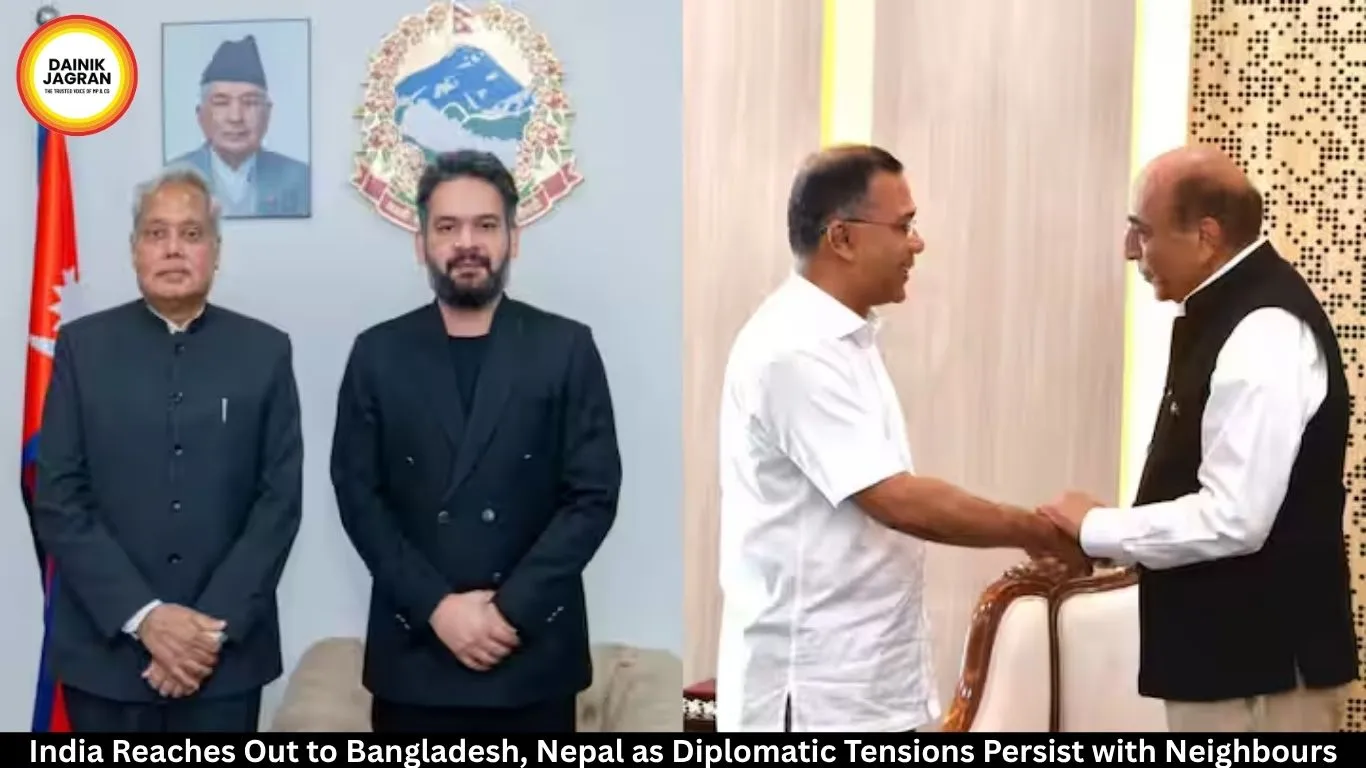
Indian Ambassador to Nepal Naveen Srivastava met Nepali Prime Minister Balendra Shah, while India's High Commissioner to Bangladesh, Dinesh Trivedi, paid a courtesy call on Bangladeshi Prime Minister Tarique Rahman. The meetings came at a time when New Delhi is seeking to maintain dialogue with both Kathmandu and Dhaka.
The engagements also assume significance ahead of the upcoming BRICS Summit, to which Bangladesh has been invited in its capacity as the current chair of BIMSTEC.
First India-Nepal Meeting
Srivastava's meeting with Shah marked their first face-to-face interaction since the Nepali prime minister assumed office in March.
According to Nepal's Prime Minister's Office, the meeting lasted around an hour. Discussions covered Nepal-India relations, bilateral cooperation, development partnerships and areas of mutual interest.
The Nepali PMO said Shah stressed the importance of strengthening the historical relationship between the two neighbouring countries and expanding cooperation in areas of shared interest.
The meeting comes after comments made by Shah in Nepal's Parliament in May and June triggered controversy over border issues. Shah had stated that Nepal had encroached on Indian territory, a position that differed from Kathmandu's traditional narrative concerning cross-border disputes.
Nepal's Foreign Ministry later sought to clarify the remarks, saying they related to localised issues involving boundary pillars, no-man's land and cross-border agricultural activity rather than a change in Nepal's official position on disputed areas such as Kalapani, Lipulekh and Limpiyadhura.
Kathmandu's Diplomatic Balancing
Shah's meeting with Srivastava was also notable because the Nepali leader had previously preferred meetings involving groups of ambassadors rather than individual diplomatic engagements.
After meeting the Indian envoy, Shah was scheduled to meet China's ambassador, followed by a meeting with the US charge d'affaires.
The sequence of meetings has attracted attention in Kathmandu, with officials and diplomats closely watching how the new government balances relations with India, China and other major partners.
India-Bangladesh Engagement
In Dhaka, High Commissioner Dinesh Trivedi met Prime Minister Tarique Rahman at the Bangladesh Secretariat.
The meeting came a day after Trivedi held a separate meeting with Bangladesh Foreign Minister Khalilur Rahman. Trivedi, who arrived in Dhaka on June 12 to take charge as India's High Commissioner, has been engaging with the country's new political leadership.
The India-Bangladesh relationship has faced renewed friction following a virtual address by former Bangladeshi Prime Minister Sheikh Hasina from New Delhi on August 5.
During the address, Hasina said she remained determined to return to Bangladesh in December and spoke about restoring democracy in the country. She also acknowledged the possibility of facing imprisonment or a death sentence upon her return.
Dhaka strongly objected to the event and subsequently lodged a protest with New Delhi. Bangladesh said Hasina's remarks could influence public sentiment and complicate efforts to improve bilateral relations.
India, meanwhile, has maintained that it had no involvement in the virtual media interaction.
BRICS Invitation Adds Context
The diplomatic engagements also come ahead of the BRICS Summit hosted by India.
Prime Minister Narendra Modi has invited Rahman to attend the summit, with Bangladesh's position as the current BIMSTEC chair cited as the reason for the invitation.
Dhaka has not yet formally confirmed whether Rahman will attend.
For India, maintaining communication with Bangladesh is particularly important as the two sides navigate political changes in Dhaka and disagreements linked to Hasina's presence in New Delhi.
A Push for Dialogue
The simultaneous diplomatic engagements in Kathmandu and Dhaka underline New Delhi's effort to keep communication channels open with its neighbours despite recent disagreements.
The meetings did not immediately produce any major public announcements or agreements. However, direct engagement with the political leadership in both countries could provide an avenue for addressing sensitive issues through diplomatic channels.
With Nepal balancing ties among India, China and the United States, and Bangladesh managing a politically sensitive transition while dealing with its relationship with New Delhi, the coming months are likely to test India's neighbourhood diplomacy.
India Engages Bangladesh, Nepal Amid Diplomatic Tensions with Neighbours
Digital desk
India stepped up diplomatic engagement with two neighbouring countries on Monday, as its envoys in Nepal and Bangladesh separately met the prime ministers of the two countries amid recent strains in bilateral relations.
Indian Ambassador to Nepal Naveen Srivastava met Nepali Prime Minister Balendra Shah, while India's High Commissioner to Bangladesh, Dinesh Trivedi, paid a courtesy call on Bangladeshi Prime Minister Tarique Rahman. The meetings came at a time when New Delhi is seeking to maintain dialogue with both Kathmandu and Dhaka.
The engagements also assume significance ahead of the upcoming BRICS Summit, to which Bangladesh has been invited in its capacity as the current chair of BIMSTEC.
First India-Nepal Meeting
Srivastava's meeting with Shah marked their first face-to-face interaction since the Nepali prime minister assumed office in March.
According to Nepal's Prime Minister's Office, the meeting lasted around an hour. Discussions covered Nepal-India relations, bilateral cooperation, development partnerships and areas of mutual interest.
The Nepali PMO said Shah stressed the importance of strengthening the historical relationship between the two neighbouring countries and expanding cooperation in areas of shared interest.
The meeting comes after comments made by Shah in Nepal's Parliament in May and June triggered controversy over border issues. Shah had stated that Nepal had encroached on Indian territory, a position that differed from Kathmandu's traditional narrative concerning cross-border disputes.
Nepal's Foreign Ministry later sought to clarify the remarks, saying they related to localised issues involving boundary pillars, no-man's land and cross-border agricultural activity rather than a change in Nepal's official position on disputed areas such as Kalapani, Lipulekh and Limpiyadhura.
Kathmandu's Diplomatic Balancing
Shah's meeting with Srivastava was also notable because the Nepali leader had previously preferred meetings involving groups of ambassadors rather than individual diplomatic engagements.
After meeting the Indian envoy, Shah was scheduled to meet China's ambassador, followed by a meeting with the US charge d'affaires.
The sequence of meetings has attracted attention in Kathmandu, with officials and diplomats closely watching how the new government balances relations with India, China and other major partners.
India-Bangladesh Engagement
In Dhaka, High Commissioner Dinesh Trivedi met Prime Minister Tarique Rahman at the Bangladesh Secretariat.
The meeting came a day after Trivedi held a separate meeting with Bangladesh Foreign Minister Khalilur Rahman. Trivedi, who arrived in Dhaka on June 12 to take charge as India's High Commissioner, has been engaging with the country's new political leadership.
The India-Bangladesh relationship has faced renewed friction following a virtual address by former Bangladeshi Prime Minister Sheikh Hasina from New Delhi on August 5.
During the address, Hasina said she remained determined to return to Bangladesh in December and spoke about restoring democracy in the country. She also acknowledged the possibility of facing imprisonment or a death sentence upon her return.
Dhaka strongly objected to the event and subsequently lodged a protest with New Delhi. Bangladesh said Hasina's remarks could influence public sentiment and complicate efforts to improve bilateral relations.
India, meanwhile, has maintained that it had no involvement in the virtual media interaction.
BRICS Invitation Adds Context
The diplomatic engagements also come ahead of the BRICS Summit hosted by India.
Prime Minister Narendra Modi has invited Rahman to attend the summit, with Bangladesh's position as the current BIMSTEC chair cited as the reason for the invitation.
Dhaka has not yet formally confirmed whether Rahman will attend.
For India, maintaining communication with Bangladesh is particularly important as the two sides navigate political changes in Dhaka and disagreements linked to Hasina's presence in New Delhi.
A Push for Dialogue
The simultaneous diplomatic engagements in Kathmandu and Dhaka underline New Delhi's effort to keep communication channels open with its neighbours despite recent disagreements.
The meetings did not immediately produce any major public announcements or agreements. However, direct engagement with the political leadership in both countries could provide an avenue for addressing sensitive issues through diplomatic channels.
With Nepal balancing ties among India, China and the United States, and Bangladesh managing a politically sensitive transition while dealing with its relationship with New Delhi, the coming months are likely to test India's neighbourhood diplomacy.

Recommended For You
--------
🚨 Beat the News Rush – Join Now!
Get breaking alerts, hot exclusives, and game-changing stories instantly on your phone. No delays, no fluff – just the edge you need. ⚡
Tap to join:
🟢 WhatsApp Channel: Dainik Jagran MP CG
Crave more?
🅕 Facebook: Dainik Jagran MP CG English
🅧 Twitter (X): Dainik Jagran MP CG
🅘 Instagram: Dainik Jagran MP CG
Share the fire – keep your crew ahead! 🗞️🔥