Putin Visits Kuril Islands Claimed by Japan, Tokyo Lodges Strong Protest
Digital desk
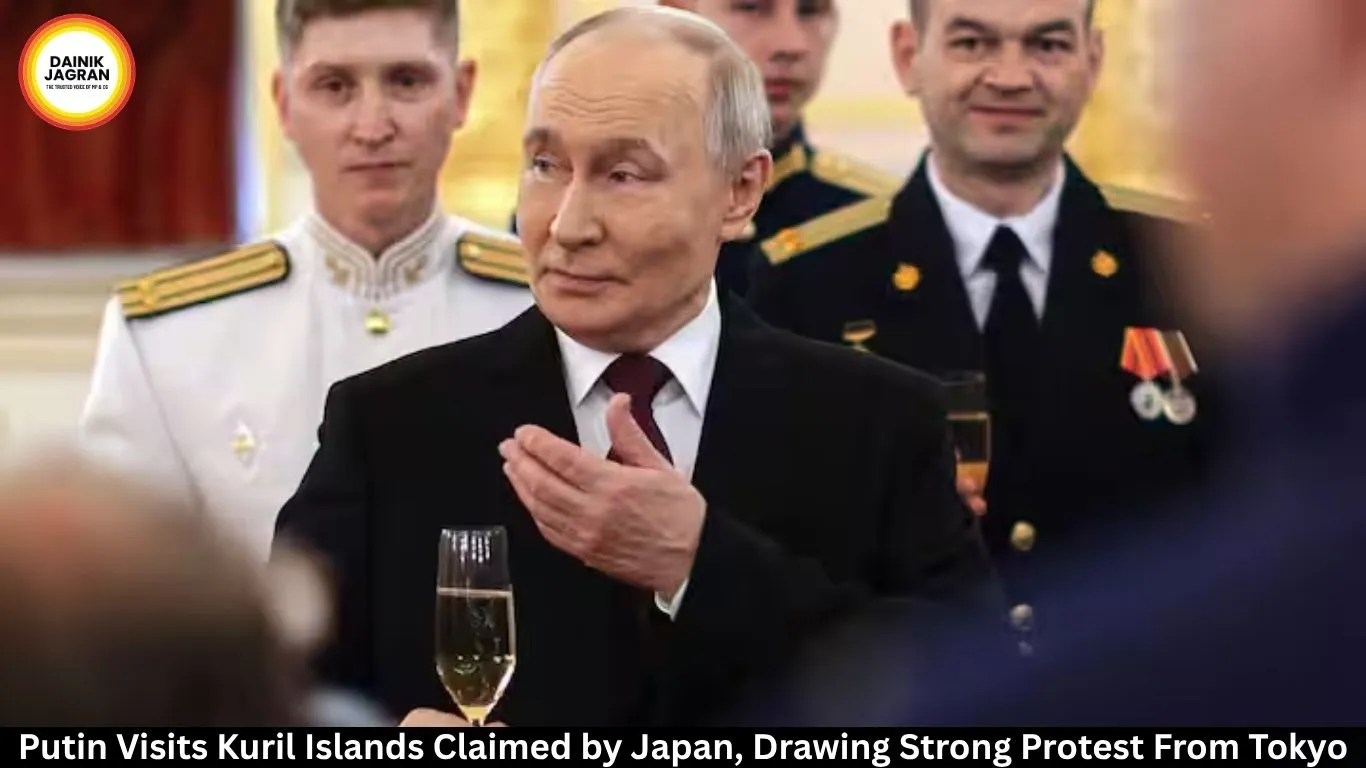
Russian President Vladimir Putin visited Iturup in the disputed Kuril Islands, prompting Japan to summon Russia's ambassador and protest the visit.
Russian President Vladimir Putin on Thursday visited the Kuril Islands, a Russian-controlled Pacific archipelago also claimed by Japan, prompting a strong diplomatic protest from Tokyo and adding fresh tension to already strained relations between the two countries.
Putin travelled to Iturup, one of the southernmost Kuril Islands, marking his first visit to the disputed territory. During the trip, he toured a fish-processing facility, a hospital and a school, met local residents and held discussions with Sakhalin regional governor Valery Limarenko.
Japan Calls Visit Unacceptable
Japan claims four southern islands of the Kuril chain, which it refers to as the Northern Territories.
Japanese Foreign Minister Toshimitsu Motegi strongly objected to Putin's visit, reiterating Tokyo's position that the disputed islands are Japanese territory.
“The Northern Territories, including Etorofu (Iturup) Island, are Japan’s inherent territory both historically and from the perspective of international law,” Motegi said.
Japan subsequently summoned Russian Ambassador Nikolay Nozdrev to its Foreign Ministry and demanded that the protest be conveyed to Moscow.
Japanese Prime Minister Sanae Takaichi also described Putin's visit as “absolutely unacceptable” and said it was inconsistent with Tokyo's position on the Northern Territories.
Moscow Rejects Tokyo's Claim
Russia rejected Japan's objection, maintaining that the southern Kuril Islands are an integral part of Russian territory.
The Russian Embassy argued that the islands became part of Russia following the end of World War II and that Putin's visit was a sovereign decision that did not require approval or consultation with Japan.
Moscow has consistently rejected Japan's territorial claim and considers its control over the islands to be settled.
Dispute Dates Back to World War II
The territorial dispute has its roots in the final days of World War II, when the Soviet Union took control of the Kuril Islands.
Japan's claim over the four southern islands has remained a major issue in relations between Tokyo and Moscow. The disagreement has also prevented the two countries from signing a formal post-war peace treaty.
The dispute has persisted despite periodic efforts by both sides to improve relations.
Putin Defends Russia's Position
Putin had travelled to Russia's Far East in recent days, visiting Sakhalin before heading to Iturup.
He also observed military exercises involving Russia's Pacific Fleet.
Speaking aboard a warship participating in the exercises, Putin defended Moscow's position on the disputed islands, arguing that their current status was established through international agreements and documents following World War II.
At the same time, he said Russia remained open to negotiations with Japan aimed at reaching a peace treaty.
Putin also referred to his earlier efforts to improve relations with former Japanese Prime Minister Shinzo Abe.
Ukraine War Strains Relations
Relations between Russia and Japan have deteriorated significantly following Moscow's invasion of Ukraine.
Japan joined Western countries in imposing sanctions on Russia and has increasingly identified Moscow as a major security concern.
Putin blamed the worsening relationship partly on Japan's sanctions policy and its decision to designate Russia as a primary security threat.
Tokyo has nevertheless maintained limited engagement with Moscow, particularly over arrangements allowing former Japanese residents of the disputed islands to visit family graves and pay respects to relatives.
Visit Could Complicate Dialogue
Putin's visit could make those efforts more difficult and further complicate already sensitive relations.
Former Russian President Dmitry Medvedev, who is now deputy chairman of Russia's Security Council, rejected Takaichi's criticism of the visit.
Medvedev said on X that the Kuril Islands “were, are, and will remain Russian land” and warned that refusing to accept what he described as this reality could have serious consequences.
The latest dispute highlights how the territorial question continues to affect Russia-Japan relations decades after World War II and remains a major obstacle to a formal peace settlement between the two countries.
Putin Visits Kuril Islands Claimed by Japan, Tokyo Lodges Strong Protest
Digital desk
Russian President Vladimir Putin on Thursday visited the Kuril Islands, a Russian-controlled Pacific archipelago also claimed by Japan, prompting a strong diplomatic protest from Tokyo and adding fresh tension to already strained relations between the two countries.
Putin travelled to Iturup, one of the southernmost Kuril Islands, marking his first visit to the disputed territory. During the trip, he toured a fish-processing facility, a hospital and a school, met local residents and held discussions with Sakhalin regional governor Valery Limarenko.
Japan Calls Visit Unacceptable
Japan claims four southern islands of the Kuril chain, which it refers to as the Northern Territories.
Japanese Foreign Minister Toshimitsu Motegi strongly objected to Putin's visit, reiterating Tokyo's position that the disputed islands are Japanese territory.
“The Northern Territories, including Etorofu (Iturup) Island, are Japan’s inherent territory both historically and from the perspective of international law,” Motegi said.
Japan subsequently summoned Russian Ambassador Nikolay Nozdrev to its Foreign Ministry and demanded that the protest be conveyed to Moscow.
Japanese Prime Minister Sanae Takaichi also described Putin's visit as “absolutely unacceptable” and said it was inconsistent with Tokyo's position on the Northern Territories.
Moscow Rejects Tokyo's Claim
Russia rejected Japan's objection, maintaining that the southern Kuril Islands are an integral part of Russian territory.
The Russian Embassy argued that the islands became part of Russia following the end of World War II and that Putin's visit was a sovereign decision that did not require approval or consultation with Japan.
Moscow has consistently rejected Japan's territorial claim and considers its control over the islands to be settled.
Dispute Dates Back to World War II
The territorial dispute has its roots in the final days of World War II, when the Soviet Union took control of the Kuril Islands.
Japan's claim over the four southern islands has remained a major issue in relations between Tokyo and Moscow. The disagreement has also prevented the two countries from signing a formal post-war peace treaty.
The dispute has persisted despite periodic efforts by both sides to improve relations.
Putin Defends Russia's Position
Putin had travelled to Russia's Far East in recent days, visiting Sakhalin before heading to Iturup.
He also observed military exercises involving Russia's Pacific Fleet.
Speaking aboard a warship participating in the exercises, Putin defended Moscow's position on the disputed islands, arguing that their current status was established through international agreements and documents following World War II.
At the same time, he said Russia remained open to negotiations with Japan aimed at reaching a peace treaty.
Putin also referred to his earlier efforts to improve relations with former Japanese Prime Minister Shinzo Abe.
Ukraine War Strains Relations
Relations between Russia and Japan have deteriorated significantly following Moscow's invasion of Ukraine.
Japan joined Western countries in imposing sanctions on Russia and has increasingly identified Moscow as a major security concern.
Putin blamed the worsening relationship partly on Japan's sanctions policy and its decision to designate Russia as a primary security threat.
Tokyo has nevertheless maintained limited engagement with Moscow, particularly over arrangements allowing former Japanese residents of the disputed islands to visit family graves and pay respects to relatives.
Visit Could Complicate Dialogue
Putin's visit could make those efforts more difficult and further complicate already sensitive relations.
Former Russian President Dmitry Medvedev, who is now deputy chairman of Russia's Security Council, rejected Takaichi's criticism of the visit.
Medvedev said on X that the Kuril Islands “were, are, and will remain Russian land” and warned that refusing to accept what he described as this reality could have serious consequences.
The latest dispute highlights how the territorial question continues to affect Russia-Japan relations decades after World War II and remains a major obstacle to a formal peace settlement between the two countries.

Recommended For You
--------
🚨 Beat the News Rush – Join Now!
Get breaking alerts, hot exclusives, and game-changing stories instantly on your phone. No delays, no fluff – just the edge you need. ⚡
Tap to join:
🟢 WhatsApp Channel: Dainik Jagran MP CG
Crave more?
🅕 Facebook: Dainik Jagran MP CG English
🅧 Twitter (X): Dainik Jagran MP CG
🅘 Instagram: Dainik Jagran MP CG
Share the fire – keep your crew ahead! 🗞️🔥