Skip Gold, Save Fuel, Holiday in India: PM Modi’s Seven-Point Self-Reliance Appeal Explained
Digital desk
From using public transport and working from home to reducing foreign travel and buying local products, the Prime Minister asked Indians to help lower the country’s import burden amid the West Asia crisis.
Can using a bus instead of a private car, postponing a gold purchase or choosing an Indian holiday over a foreign trip help strengthen the national economy?
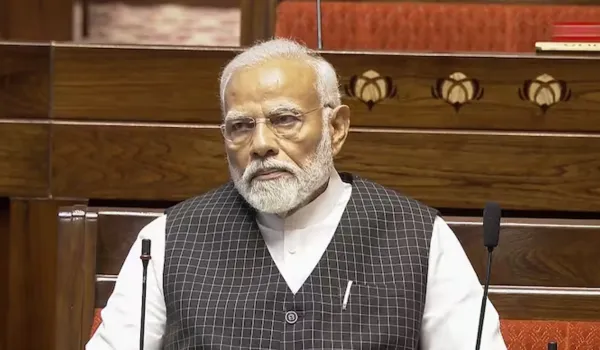
Prime Minister Narendra Modi believes such everyday choices, when adopted collectively, can make a significant difference. Addressing a programme in Hyderabad on May 10, the Prime Minister presented seven appeals aimed at conserving foreign exchange, reducing dependence on imports and advancing India’s goal of economic self-reliance.
The appeals were made against the backdrop of the West Asia crisis, rising international crude-oil prices and concerns over disruptions to global energy and trade routes. According to News On AIR, crude prices were trading above 0 per barrel and had touched a 52-week high of 6.
What are PM Modi’s seven appeals?
1. Reduce petrol and diesel consumption
Modi urged citizens to use metros, buses and other forms of public transport wherever possible. Carpooling and avoiding unnecessary private-vehicle journeys could collectively reduce India’s fuel consumption and import bill.
2. Avoid unnecessary foreign travel
The Prime Minister asked Indians to reconsider non-essential overseas travel for one year. Choosing domestic destinations would keep tourism expenditure within India while supporting hotels, transport operators and local businesses.
3. Postpone non-essential gold purchases
India imports a substantial portion of the gold consumed in the country. Modi appealed to families to consider postponing non-essential gold purchases for a year to help reduce the outflow of foreign exchange.
The appeal is voluntary and does not constitute a ban on buying gold.
4. Work from home wherever practical
Companies were encouraged to revive work-from-home arrangements wherever the nature of employment allows it. Fewer daily commutes could reduce fuel consumption, traffic congestion and pressure on household transport budgets.
5. Consume less edible oil
Modi also asked citizens to reduce their consumption of cooking oil. The suggestion links two objectives: lowering India’s dependence on imported edible oil and encouraging healthier eating habits.
6. Reduce dependence on chemical fertilisers
Farmers were urged to cut the use of chemical fertilisers and gradually move towards natural and sustainable farming practices. A subsequent Press Information Bureau statement said the Prime Minister had called for a 50 per cent reduction in chemical-fertiliser use, along with wider adoption of solar-powered irrigation pumps instead of diesel pumps.
7. Choose Swadeshi and support local products
The final message was to give preference to locally manufactured goods. Under the “Vocal for Local” campaign, spending on Indian products is presented as a way to support domestic industries, small businesses, farmers and employment.
Why did the Prime Minister make these appeals?
India depends heavily on imports for crude oil, gold, edible oil and several types of fertilisers. When global prices rise or international supply routes are disrupted, the country’s import bill can increase sharply, putting pressure on government finances, businesses and consumers.
However, the government clarified that the appeal was about responsible consumption and long-term preparedness—not panic. On May 11, the Centre said India had sufficient stocks, including approximately 60 days of crude oil, 60 days of natural gas and 45 days of LPG. It also placed the country’s foreign-exchange reserves at around $703 billion at the time.
Modi’s larger message was that economic self-reliance is not limited to government policy or industrial production. Individual choices—how people travel, what they purchase and what they consume—can also influence the country’s import dependence.
The seven appeals effectively turn Atmanirbhar Bharat from an economic slogan into a household-level challenge: spend thoughtfully, reduce avoidable imports and direct more money towards India’s own economy.
Skip Gold, Save Fuel, Holiday in India: PM Modi’s Seven-Point Self-Reliance Appeal Explained
Digital desk
Can using a bus instead of a private car, postponing a gold purchase or choosing an Indian holiday over a foreign trip help strengthen the national economy?
Prime Minister Narendra Modi believes such everyday choices, when adopted collectively, can make a significant difference. Addressing a programme in Hyderabad on May 10, the Prime Minister presented seven appeals aimed at conserving foreign exchange, reducing dependence on imports and advancing India’s goal of economic self-reliance.
The appeals were made against the backdrop of the West Asia crisis, rising international crude-oil prices and concerns over disruptions to global energy and trade routes. According to News On AIR, crude prices were trading above $100 per barrel and had touched a 52-week high of $126.
What are PM Modi’s seven appeals?
1. Reduce petrol and diesel consumption
Modi urged citizens to use metros, buses and other forms of public transport wherever possible. Carpooling and avoiding unnecessary private-vehicle journeys could collectively reduce India’s fuel consumption and import bill.
2. Avoid unnecessary foreign travel
The Prime Minister asked Indians to reconsider non-essential overseas travel for one year. Choosing domestic destinations would keep tourism expenditure within India while supporting hotels, transport operators and local businesses.
3. Postpone non-essential gold purchases
India imports a substantial portion of the gold consumed in the country. Modi appealed to families to consider postponing non-essential gold purchases for a year to help reduce the outflow of foreign exchange.
The appeal is voluntary and does not constitute a ban on buying gold.
4. Work from home wherever practical
Companies were encouraged to revive work-from-home arrangements wherever the nature of employment allows it. Fewer daily commutes could reduce fuel consumption, traffic congestion and pressure on household transport budgets.
5. Consume less edible oil
Modi also asked citizens to reduce their consumption of cooking oil. The suggestion links two objectives: lowering India’s dependence on imported edible oil and encouraging healthier eating habits.
6. Reduce dependence on chemical fertilisers
Farmers were urged to cut the use of chemical fertilisers and gradually move towards natural and sustainable farming practices. A subsequent Press Information Bureau statement said the Prime Minister had called for a 50 per cent reduction in chemical-fertiliser use, along with wider adoption of solar-powered irrigation pumps instead of diesel pumps.
7. Choose Swadeshi and support local products
The final message was to give preference to locally manufactured goods. Under the “Vocal for Local” campaign, spending on Indian products is presented as a way to support domestic industries, small businesses, farmers and employment.
Why did the Prime Minister make these appeals?
India depends heavily on imports for crude oil, gold, edible oil and several types of fertilisers. When global prices rise or international supply routes are disrupted, the country’s import bill can increase sharply, putting pressure on government finances, businesses and consumers.
However, the government clarified that the appeal was about responsible consumption and long-term preparedness—not panic. On May 11, the Centre said India had sufficient stocks, including approximately 60 days of crude oil, 60 days of natural gas and 45 days of LPG. It also placed the country’s foreign-exchange reserves at around $703 billion at the time.
Modi’s larger message was that economic self-reliance is not limited to government policy or industrial production. Individual choices—how people travel, what they purchase and what they consume—can also influence the country’s import dependence.
The seven appeals effectively turn Atmanirbhar Bharat from an economic slogan into a household-level challenge: spend thoughtfully, reduce avoidable imports and direct more money towards India’s own economy.
Recommended For You
--------
🚨 Beat the News Rush – Join Now!
Get breaking alerts, hot exclusives, and game-changing stories instantly on your phone. No delays, no fluff – just the edge you need. ⚡
Tap to join:
🟢 WhatsApp Channel: Dainik Jagran MP CG
Crave more?
🅕 Facebook: Dainik Jagran MP CG English
🅧 Twitter (X): Dainik Jagran MP CG
🅘 Instagram: Dainik Jagran MP CG
Share the fire – keep your crew ahead! 🗞️🔥