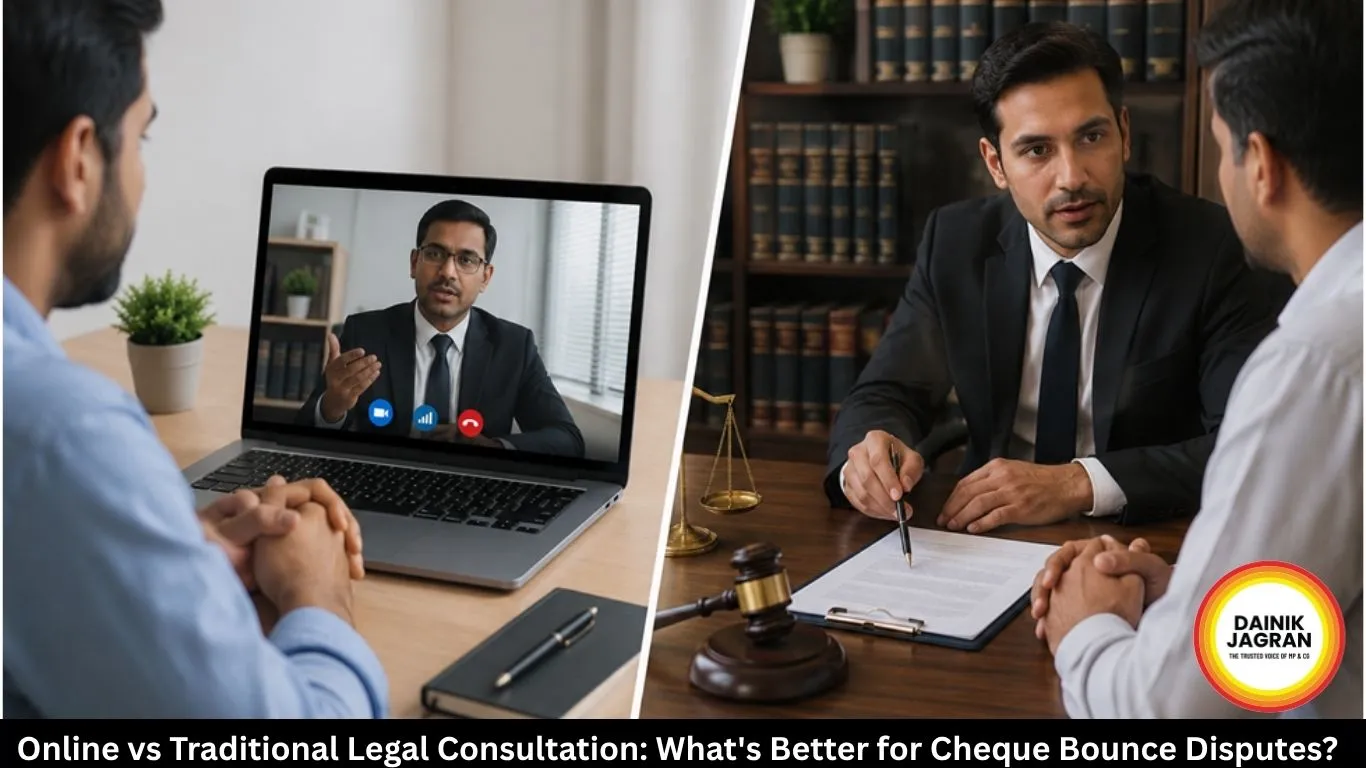
Online vs Traditional Legal Consultation: What's Better for Cheque Bounce Disputes?
Digital Desk
Compare online lawyer consultation and traditional legal consultation for cheque bounce disputes. Understand the benefits, limitations, and how to choose the right legal support.
Compare online lawyer consultation and traditional legal consultation for cheque bounce disputes. Understand their benefits, costs, convenience, and which option best suits your legal needs.
Cheque bounce disputes are among the most common financial and legal issues faced by individuals, businesses, and organisations in India. Whether a cheque is dishonoured due to insufficient funds, account closure, signature mismatch, or other reasons, the consequences can extend beyond financial inconvenience and lead to legal proceedings under the provisions of the Negotiable Instruments Act, 1881.
When a cheque bounce dispute arises, obtaining legal guidance at the earliest stage is crucial. Traditionally, people have relied on in-person meetings with legal professionals to understand their rights and initiate legal action. However, digital transformation has made online lawyer consultation increasingly popular, allowing individuals to seek legal advice remotely without visiting a lawyer's office.
Both online and traditional legal consultation methods have their advantages and limitations. The right choice often depends on the complexity of the dispute, urgency, accessibility, cost considerations, and personal preferences. In this blog, we compare online and traditional legal consultation for cheque bounce disputes and examine which option may be better suited for different situations
Understanding Cheque Bounce Disputes
A cheque bounce occurs when a bank refuses to process a cheque presented for payment. This can create financial and legal complications for both the issuer and the recipient.
One of the most common reasons for cheque dishonour is insufficient funds in the issuer's bank account. If the available balance is lower than the cheque amount, the bank may reject the transaction.
Cheque bounce can also occur due to issues such as signature mismatch, incorrect cheque details, account closure, or instructions issued by the drawer to stop payment.
Errors such as overwriting, alterations, or incomplete information on the cheque may also result in the bank returning the cheque unpaid.
In certain situations, cheque dishonour may lead to legal action under Section 138 of the Negotiable Instruments Act, provided the prescribed legal conditions are met.
Since cheque bounce cases involve documentation, legal notices, and statutory timelines, obtaining professional legal guidance can help parties protect their rights and pursue appropriate remedies.
What Is Online Lawyer Consultation?
Online lawyer consultation refers to obtaining legal advice through digital channels such as:
β Video calls
β Audio calls
β Online meetings
β Legal service platforms
β Email-based consultations
β Chat-based legal support
Instead of visiting a lawyer's office, clients can discuss their legal issues remotely and receive professional guidance from qualified legal practitioners.
The growing adoption of digital legal services has made online lawyer consultation a practical option for many individuals dealing with cheque bounce disputes.
What Is Traditional Legal Consultation?
Traditional legal consultation involves face-to-face meetings between a client and a lawyer at a law office, chamber, or other physical location.
During these meetings, clients can:
β Discuss the facts of the case
β Review documents together
β Receive legal advice
β Plan litigation strategies
β Sign legal paperwork
β Coordinate future legal actions
Traditional consultation has been the standard approach for legal services for decades and remains widely used for various types of disputes.
Comparing Online and Traditional Legal Consultation
Both online and traditional legal consultation offer valuable support for individuals dealing with cheque bounce disputes. However, they differ in terms of accessibility, convenience, cost, communication, and the overall client experience. Understanding these differences can help you choose the consultation method that best suits your legal requirements.
Accessibility
One of the biggest differences between the two approaches is accessibility.
Online consultations allow clients to connect with lawyers from virtually any location. Individuals living in smaller towns or remote areas can access experienced legal professionals without travelling long distances.
Traditional consultations, on the other hand, require physical travel. This can be inconvenient for people with busy schedules, mobility limitations, or geographic constraints.
For cheque bounce matters where immediate guidance is needed, online consultation often offers greater convenience.
Speed of Legal Assistance
Cheque bounce disputes involve strict legal timelines. For example, legal notices must generally be issued within prescribed periods after receiving information about cheque dishonour.
Online consultations often provide faster access to legal guidance because appointments can be scheduled quickly without travel requirements.
Traditional consultations may require waiting for available appointment slots and commuting to the lawyer's office.
In urgent cheque bounce situations, faster legal access can be highly beneficial.
Cost Considerations
Cost is another important factor for individuals and businesses seeking legal assistance.
Online consultations may reduce:
β Travel expenses
β Time away from work
β Administrative costs
Some online legal platforms also offer flexible consultation packages.
Traditional consultations may involve additional expenses associated with travel, waiting time, and repeated office visits.
However, the actual legal fees depend on the lawyer's experience, the complexity of the case, and the services required rather than the consultation mode alone.
Document Sharing and Review
Cheque bounce lawyers disputes typically involve various documents, including:
β Original cheque
β Bank return memo
β Legal notice
β Postal receipts
β Correspondence between parties
β Bank statements
Online consultations allow digital document sharing through secure portals, email, or cloud-based systems.
Traditional consultations provide the advantage of reviewing physical originals directly during meetings.
Both methods can be effective, provided proper document management practices are followed.
Personal Interaction
Some clients feel more comfortable discussing sensitive legal matters face-to-face.
Traditional consultations allow direct personal interaction and may help establish stronger interpersonal rapport.
Online consultations provide convenience but may feel less personal for some individuals, especially those unfamiliar with virtual communication platforms.
The preferred approach often depends on individual comfort levels.
Advantages of Online Lawyer Consultation for Cheque Bounce Cases
Online legal consultation has become a preferred option for many individuals and businesses seeking quick and convenient legal assistance. For cheque bounce disputes, it offers several benefits that can help parties obtain timely guidance and take appropriate legal action without unnecessary delays.
Greater Convenience
Clients can seek legal advice from home, office, or any location with internet access.
This is particularly useful for business owners and professionals who have limited availability during working hours.
Access to Experienced Lawyers
Online platforms often provide access to lawyers beyond the client's local area.
Individuals can consult experienced cheque-bounce-lawyers without being restricted to professionals located nearby.
Faster Initial Assessment
Lawyers can quickly evaluate:
β Whether a valid cheque bounce claim exists
β Applicable legal provisions
β Limitation periods
β Required next steps
This helps clients take timely action.
Reduced Time Commitment
Without travel requirements, clients can focus on resolving disputes efficiently while maintaining their regular schedules.
Easy Record Keeping
Digital consultations often generate electronic records of communications, documents, and legal advice, making future reference easier.
Advantages of Traditional Legal Consultation for Cheque Bounce Cases
Traditional legal consultation continues to be a preferred choice for many individuals who value face-to-face interactions with their legal advisors. In cheque bounce disputes, in-person consultations can provide a more detailed discussion of the case and help build greater confidence throughout the legal process.
Detailed Case Discussions
In-person meetings may facilitate longer and more detailed discussions regarding complex factual circumstances.
Physical Document Examination
Original documents can be reviewed directly, which some lawyers prefer when evaluating evidence.
Better for Complex Litigation
Highly contested cheque bounce matters involving multiple parties or related commercial disputes may benefit from in-person strategy sessions.
Personal Confidence
Some clients feel more confident after meeting their lawyer face-to-face before initiating legal proceedings.
Choosing the Right Legal Support for Cheque Bounce Disputes
Rather than viewing online and traditional consultation as competing options, many legal professionals now use a hybrid approach.
For example:
1. Initial consultation may take place online.
2. Documents may be reviewed digitally.
3. Follow-up meetings may occur virtually.
4. Court-related activities may involve physical appearances when required.
This flexible model combines convenience with comprehensive legal support.
When selecting legal assistance, consider:
β Lawyer's experience
β Familiarity with cheque bounce matters
β Communication quality
β Responsiveness
β Fee transparency
β Availability for follow-up support
The effectiveness of legal representation often depends more on professional competence than on the consultation format itself.
Why Legal Guidance Matters in Cheque Bounce Cases
Cheque bounce disputes involve specific legal procedures and timelines that must be followed carefully. Even small mistakes can affect the strength of a claim.
A lawyer can help evaluate the facts of the dispute and determine the most appropriate legal course of action based on the circumstances.
Professional legal assistance is also valuable when drafting and issuing demand notices, which are an important part of cheque bounce proceedings.
Lawyers review supporting documents such as cheques, bank return memos, and communication records to identify potential legal issues.
Proper compliance with statutory requirements is essential in cheque bounce cases. Legal guidance helps ensure that deadlines and procedural obligations are met.
If the matter progresses further, a lawyer can represent the parties during negotiations, settlements, or legal proceedings before the appropriate authority.
Seeking professional advice early can reduce errors, strengthen the case, and improve the chances of achieving a favourable outcome.
Both online and traditional legal consultation can be effective for resolving cheque bounce disputes. Online consultations offer convenience, accessibility, and faster access to legal guidance, while traditional consultations provide direct interaction and may be useful for more complex matters.
The best choice depends on the nature of the dispute, the urgency of the situation, and personal preferences. Many clients benefit from a combination of both approaches, using digital consultations for convenience while relying on traditional interactions when necessary.
Regardless of the consultation method, obtaining timely legal advice from experienced cheque-bounce-lawyers can help protect your rights, ensure compliance with legal requirements, and improve the chances of an efficient resolution.

--------
π¨ Beat the News Rush β Join Now!
Get breaking alerts, hot exclusives, and game-changing stories instantly on your phone. No delays, no fluff β just the edge you need. β‘
Tap to join:Β
π’ WhatsApp Channel: Dainik Jagran MP CG
Crave more?
π Facebook: Dainik Jagran MP CG English
π § Twitter (X): Dainik Jagran MP CG
π Instagram: Dainik Jagran MP CG
Share the fire β keep your crew ahead! ποΈπ₯
Online vs Traditional Legal Consultation: What's Better for Cheque Bounce Disputes?
Digital Desk
Compare online lawyer consultation and traditional legal consultation for cheque bounce disputes. Understand their benefits, costs, convenience, and which option best suits your legal needs.
Cheque bounce disputes are among the most common financial and legal issues faced by individuals, businesses, and organisations in India. Whether a cheque is dishonoured due to insufficient funds, account closure, signature mismatch, or other reasons, the consequences can extend beyond financial inconvenience and lead to legal proceedings under the provisions of the Negotiable Instruments Act, 1881.
When a cheque bounce dispute arises, obtaining legal guidance at the earliest stage is crucial. Traditionally, people have relied on in-person meetings with legal professionals to understand their rights and initiate legal action. However, digital transformation has made online lawyer consultation increasingly popular, allowing individuals to seek legal advice remotely without visiting a lawyer's office.
Both online and traditional legal consultation methods have their advantages and limitations. The right choice often depends on the complexity of the dispute, urgency, accessibility, cost considerations, and personal preferences. In this blog, we compare online and traditional legal consultation for cheque bounce disputes and examine which option may be better suited for different situations
Understanding Cheque Bounce Disputes
A cheque bounce occurs when a bank refuses to process a cheque presented for payment. This can create financial and legal complications for both the issuer and the recipient.
One of the most common reasons for cheque dishonour is insufficient funds in the issuer's bank account. If the available balance is lower than the cheque amount, the bank may reject the transaction.
Cheque bounce can also occur due to issues such as signature mismatch, incorrect cheque details, account closure, or instructions issued by the drawer to stop payment.
Errors such as overwriting, alterations, or incomplete information on the cheque may also result in the bank returning the cheque unpaid.
In certain situations, cheque dishonour may lead to legal action under Section 138 of the Negotiable Instruments Act, provided the prescribed legal conditions are met.
Since cheque bounce cases involve documentation, legal notices, and statutory timelines, obtaining professional legal guidance can help parties protect their rights and pursue appropriate remedies.
What Is Online Lawyer Consultation?
Online lawyer consultation refers to obtaining legal advice through digital channels such as:
β Video calls
β Audio calls
β Online meetings
β Legal service platforms
β Email-based consultations
β Chat-based legal support
Instead of visiting a lawyer's office, clients can discuss their legal issues remotely and receive professional guidance from qualified legal practitioners.
The growing adoption of digital legal services has made online lawyer consultation a practical option for many individuals dealing with cheque bounce disputes.
What Is Traditional Legal Consultation?
Traditional legal consultation involves face-to-face meetings between a client and a lawyer at a law office, chamber, or other physical location.
During these meetings, clients can:
β Discuss the facts of the case
β Review documents together
β Receive legal advice
β Plan litigation strategies
β Sign legal paperwork
β Coordinate future legal actions
Traditional consultation has been the standard approach for legal services for decades and remains widely used for various types of disputes.
Comparing Online and Traditional Legal Consultation
Both online and traditional legal consultation offer valuable support for individuals dealing with cheque bounce disputes. However, they differ in terms of accessibility, convenience, cost, communication, and the overall client experience. Understanding these differences can help you choose the consultation method that best suits your legal requirements.
Accessibility
One of the biggest differences between the two approaches is accessibility.
Online consultations allow clients to connect with lawyers from virtually any location. Individuals living in smaller towns or remote areas can access experienced legal professionals without travelling long distances.
Traditional consultations, on the other hand, require physical travel. This can be inconvenient for people with busy schedules, mobility limitations, or geographic constraints.
For cheque bounce matters where immediate guidance is needed, online consultation often offers greater convenience.
Speed of Legal Assistance
Cheque bounce disputes involve strict legal timelines. For example, legal notices must generally be issued within prescribed periods after receiving information about cheque dishonour.
Online consultations often provide faster access to legal guidance because appointments can be scheduled quickly without travel requirements.
Traditional consultations may require waiting for available appointment slots and commuting to the lawyer's office.
In urgent cheque bounce situations, faster legal access can be highly beneficial.
Cost Considerations
Cost is another important factor for individuals and businesses seeking legal assistance.
Online consultations may reduce:
β Travel expenses
β Time away from work
β Administrative costs
Some online legal platforms also offer flexible consultation packages.
Traditional consultations may involve additional expenses associated with travel, waiting time, and repeated office visits.
However, the actual legal fees depend on the lawyer's experience, the complexity of the case, and the services required rather than the consultation mode alone.
Document Sharing and Review
Cheque bounce lawyers disputes typically involve various documents, including:
β Original cheque
β Bank return memo
β Legal notice
β Postal receipts
β Correspondence between parties
β Bank statements
Online consultations allow digital document sharing through secure portals, email, or cloud-based systems.
Traditional consultations provide the advantage of reviewing physical originals directly during meetings.
Both methods can be effective, provided proper document management practices are followed.
Personal Interaction
Some clients feel more comfortable discussing sensitive legal matters face-to-face.
Traditional consultations allow direct personal interaction and may help establish stronger interpersonal rapport.
Online consultations provide convenience but may feel less personal for some individuals, especially those unfamiliar with virtual communication platforms.
The preferred approach often depends on individual comfort levels.
Advantages of Online Lawyer Consultation for Cheque Bounce Cases
Online legal consultation has become a preferred option for many individuals and businesses seeking quick and convenient legal assistance. For cheque bounce disputes, it offers several benefits that can help parties obtain timely guidance and take appropriate legal action without unnecessary delays.
Greater Convenience
Clients can seek legal advice from home, office, or any location with internet access.
This is particularly useful for business owners and professionals who have limited availability during working hours.
Access to Experienced Lawyers
Online platforms often provide access to lawyers beyond the client's local area.
Individuals can consult experienced cheque-bounce-lawyers without being restricted to professionals located nearby.
Faster Initial Assessment
Lawyers can quickly evaluate:
β Whether a valid cheque bounce claim exists
β Applicable legal provisions
β Limitation periods
β Required next steps
This helps clients take timely action.
Reduced Time Commitment
Without travel requirements, clients can focus on resolving disputes efficiently while maintaining their regular schedules.
Easy Record Keeping
Digital consultations often generate electronic records of communications, documents, and legal advice, making future reference easier.
Advantages of Traditional Legal Consultation for Cheque Bounce Cases
Traditional legal consultation continues to be a preferred choice for many individuals who value face-to-face interactions with their legal advisors. In cheque bounce disputes, in-person consultations can provide a more detailed discussion of the case and help build greater confidence throughout the legal process.
Detailed Case Discussions
In-person meetings may facilitate longer and more detailed discussions regarding complex factual circumstances.
Physical Document Examination
Original documents can be reviewed directly, which some lawyers prefer when evaluating evidence.
Better for Complex Litigation
Highly contested cheque bounce matters involving multiple parties or related commercial disputes may benefit from in-person strategy sessions.
Personal Confidence
Some clients feel more confident after meeting their lawyer face-to-face before initiating legal proceedings.
Choosing the Right Legal Support for Cheque Bounce Disputes
Rather than viewing online and traditional consultation as competing options, many legal professionals now use a hybrid approach.
For example:
1. Initial consultation may take place online.
2. Documents may be reviewed digitally.
3. Follow-up meetings may occur virtually.
4. Court-related activities may involve physical appearances when required.
This flexible model combines convenience with comprehensive legal support.
When selecting legal assistance, consider:
β Lawyer's experience
β Familiarity with cheque bounce matters
β Communication quality
β Responsiveness
β Fee transparency
β Availability for follow-up support
The effectiveness of legal representation often depends more on professional competence than on the consultation format itself.
Why Legal Guidance Matters in Cheque Bounce Cases
Cheque bounce disputes involve specific legal procedures and timelines that must be followed carefully. Even small mistakes can affect the strength of a claim.
A lawyer can help evaluate the facts of the dispute and determine the most appropriate legal course of action based on the circumstances.
Professional legal assistance is also valuable when drafting and issuing demand notices, which are an important part of cheque bounce proceedings.
Lawyers review supporting documents such as cheques, bank return memos, and communication records to identify potential legal issues.
Proper compliance with statutory requirements is essential in cheque bounce cases. Legal guidance helps ensure that deadlines and procedural obligations are met.
If the matter progresses further, a lawyer can represent the parties during negotiations, settlements, or legal proceedings before the appropriate authority.
Seeking professional advice early can reduce errors, strengthen the case, and improve the chances of achieving a favourable outcome.
Both online and traditional legal consultation can be effective for resolving cheque bounce disputes. Online consultations offer convenience, accessibility, and faster access to legal guidance, while traditional consultations provide direct interaction and may be useful for more complex matters.
The best choice depends on the nature of the dispute, the urgency of the situation, and personal preferences. Many clients benefit from a combination of both approaches, using digital consultations for convenience while relying on traditional interactions when necessary.
Regardless of the consultation method, obtaining timely legal advice from experienced cheque-bounce-lawyers can help protect your rights, ensure compliance with legal requirements, and improve the chances of an efficient resolution.