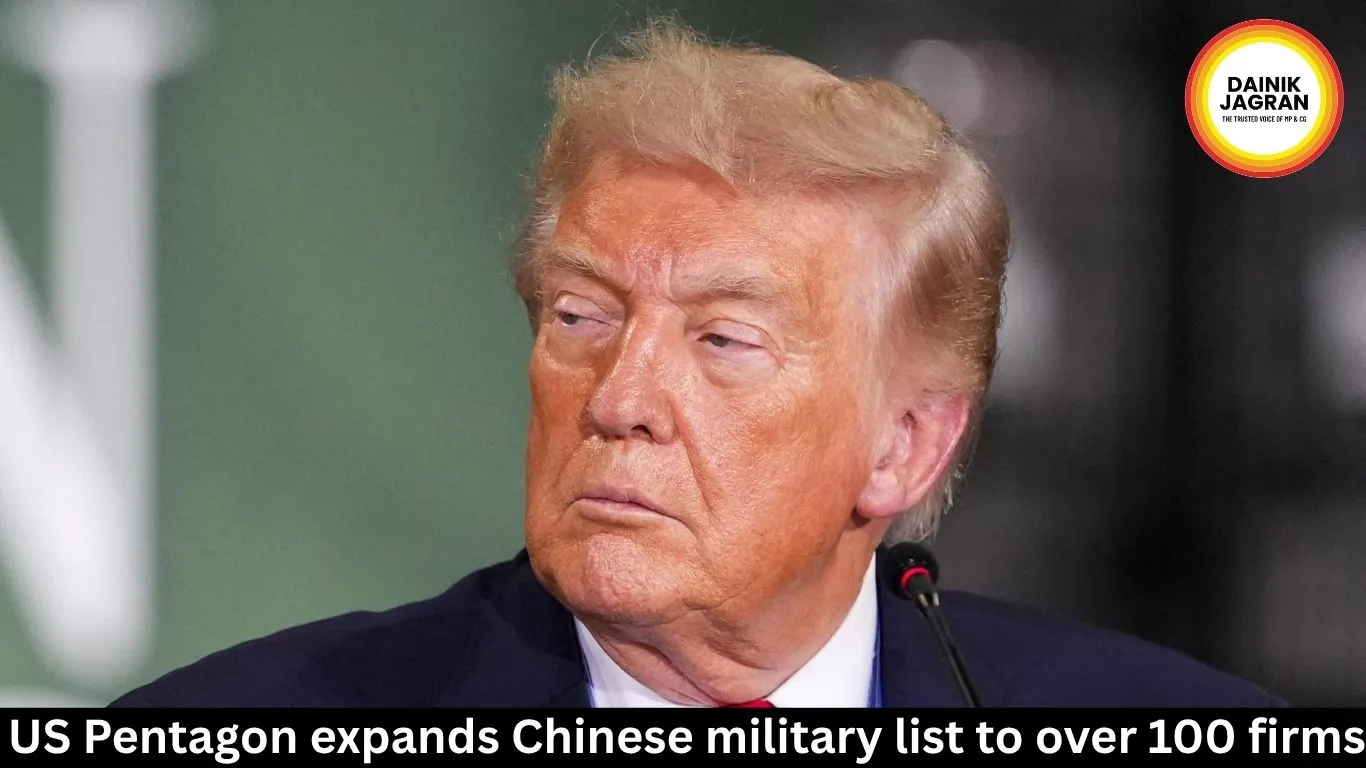
US Pentagon expands Chinese military list to over 100 firms
Digital Desk
The US defense department expands its Chinese military list to over 100 firms, adding Alibaba, Baidu, and BYD over alleged ties to Beijing's defense forces.
The US defense department blacklists major entities including Alibaba, Baidu, and BYD over alleged ties to Beijing's military-industrial complex.
In a major escalation of economic and strategic tensions between Washington and Beijing, the United States Department of Defense has significantly expanded its blacklist of entities accused of operating as "Chinese military companies." Over 100 prominent Chinese corporations, including global tech and automotive giants like Alibaba Group, Baidu, and BYD, have now been added to the restricted registry, officials confirmed early on Tuesday.
The decision, finalized under Section 1260H of the National Defense Authorization Act (NDAA), aims to counter Beijing's Military-Civil Fusion strategy. The Pentagon claims these commercial enterprises directly or indirectly assist the People’s Liberation Army (PLA) and various Chinese state intelligence and security apparatuses.
Tech and auto giants hit
The updated roster targets the absolute bedrock of China’s modern economic and technological landscape. E-commerce pioneer Alibaba, search engine and artificial intelligence developer Baidu, and BYD—currently the world's largest electric vehicle manufacturer—find themselves heavily restricted.
According to sources familiar with the matter, the inclusion of consumer-facing brands marks a distinct shift in Washington’s strategy. It moves beyond traditional defense contractors to choke off funding and technology access for companies that drive China's civilian tech sector.
Broad sectoral clampdown
The restrictions do not stop at automotive or e-commerce firms. The expanded list sweeps in global battery manufacturing giant CATL, tech and gaming conglomerate Tencent, telecom infrastructure leader Huawei, and consumer drone manufacturer DJI.
Furthermore, networking hardware maker TP-Link, robotics developer Unitree, surveillance technology manufacturer Hikvision, and shipping behemoth COSCO have been added. Major state-backed telecom operators, including China Mobile, China Telecom, and China Unicom, remain firmly anchored on the blacklist due to long-standing institutional ties to the Chinese defense establishment.
Deep state-military ties alleged
In official documentation accompanying the notification, the US Pentagon laid out specific legal and strategic grounds for the blacklisting. The defense department explicitly cited institutional connections to key Chinese government bodies.
These include the State-owned Assets Supervision and Administration Commission (SASAC) and the Ministry of Industry and Information Technology (MIIT). Initial reports indicate that the Pentagon tracked extensive collaborations between these corporations and China’s State Administration for Science, Technology and Industry for National Defense (SASTIND), alongside direct supply pipelines to the PLA and domestic law enforcement agencies.
Target on strategic state programs
Washington’s strategic focus appears heavily trained on Beijing’s national industrial policies. The Pentagon’s notification specifically highlighted corporate participation in state-backed initiatives like the ‘Little Giant’ and ‘Single Champion’ programs.
US officials believe these specialized economic schemes are intentionally designed by Beijing to fast-track advanced dual-use technologies. By targeting participants in these programs, the US hopes to blunt China's efforts to achieve technological dominance in fields that could eventually enhance its defense capabilities and military readiness.
Options for corporate appeal
Despite the stringent nature of the listing, the Department of Defense has left a narrow administrative window open for affected businesses. The official US policy document outlines a formal process guidelines through which listed entities can legally challenge their inclusion.
Companies that believe they have been misidentified or falsely accused of state security links can present evidentiary counter-arguments. They may submit formal petitions for administrative reconsideration to request removal from the US Pentagon military list.
Rising friction on global trade
The immediate fallout is expected to hit global supply chains, particularly in the electric vehicle, semiconductor, and telecommunications sectors. With the US Pentagon military list now crossing the 100-company threshold, institutional investors face growing pressure to divest from these high-profile Chinese entities.
The move is anticipated to draw a sharp diplomatic rebuke from Beijing, which has consistently accused Washington of abusing national security arguments to suppress legitimate Chinese commercial enterprise on the global stage.

--------
🚨 Beat the News Rush – Join Now!
Get breaking alerts, hot exclusives, and game-changing stories instantly on your phone. No delays, no fluff – just the edge you need. ⚡
Tap to join:
🟢 WhatsApp Channel: Dainik Jagran MP CG
Crave more?
🅕 Facebook: Dainik Jagran MP CG English
🅧 Twitter (X): Dainik Jagran MP CG
🅘 Instagram: Dainik Jagran MP CG
Share the fire – keep your crew ahead! 🗞️🔥
US Pentagon expands Chinese military list to over 100 firms
Digital Desk
The US defense department blacklists major entities including Alibaba, Baidu, and BYD over alleged ties to Beijing's military-industrial complex.
In a major escalation of economic and strategic tensions between Washington and Beijing, the United States Department of Defense has significantly expanded its blacklist of entities accused of operating as "Chinese military companies." Over 100 prominent Chinese corporations, including global tech and automotive giants like Alibaba Group, Baidu, and BYD, have now been added to the restricted registry, officials confirmed early on Tuesday.
The decision, finalized under Section 1260H of the National Defense Authorization Act (NDAA), aims to counter Beijing's Military-Civil Fusion strategy. The Pentagon claims these commercial enterprises directly or indirectly assist the People’s Liberation Army (PLA) and various Chinese state intelligence and security apparatuses.
Tech and auto giants hit
The updated roster targets the absolute bedrock of China’s modern economic and technological landscape. E-commerce pioneer Alibaba, search engine and artificial intelligence developer Baidu, and BYD—currently the world's largest electric vehicle manufacturer—find themselves heavily restricted.
According to sources familiar with the matter, the inclusion of consumer-facing brands marks a distinct shift in Washington’s strategy. It moves beyond traditional defense contractors to choke off funding and technology access for companies that drive China's civilian tech sector.
Broad sectoral clampdown
The restrictions do not stop at automotive or e-commerce firms. The expanded list sweeps in global battery manufacturing giant CATL, tech and gaming conglomerate Tencent, telecom infrastructure leader Huawei, and consumer drone manufacturer DJI.
Furthermore, networking hardware maker TP-Link, robotics developer Unitree, surveillance technology manufacturer Hikvision, and shipping behemoth COSCO have been added. Major state-backed telecom operators, including China Mobile, China Telecom, and China Unicom, remain firmly anchored on the blacklist due to long-standing institutional ties to the Chinese defense establishment.
Deep state-military ties alleged
In official documentation accompanying the notification, the US Pentagon laid out specific legal and strategic grounds for the blacklisting. The defense department explicitly cited institutional connections to key Chinese government bodies.
These include the State-owned Assets Supervision and Administration Commission (SASAC) and the Ministry of Industry and Information Technology (MIIT). Initial reports indicate that the Pentagon tracked extensive collaborations between these corporations and China’s State Administration for Science, Technology and Industry for National Defense (SASTIND), alongside direct supply pipelines to the PLA and domestic law enforcement agencies.
Target on strategic state programs
Washington’s strategic focus appears heavily trained on Beijing’s national industrial policies. The Pentagon’s notification specifically highlighted corporate participation in state-backed initiatives like the ‘Little Giant’ and ‘Single Champion’ programs.
US officials believe these specialized economic schemes are intentionally designed by Beijing to fast-track advanced dual-use technologies. By targeting participants in these programs, the US hopes to blunt China's efforts to achieve technological dominance in fields that could eventually enhance its defense capabilities and military readiness.
Options for corporate appeal
Despite the stringent nature of the listing, the Department of Defense has left a narrow administrative window open for affected businesses. The official US policy document outlines a formal process guidelines through which listed entities can legally challenge their inclusion.
Companies that believe they have been misidentified or falsely accused of state security links can present evidentiary counter-arguments. They may submit formal petitions for administrative reconsideration to request removal from the US Pentagon military list.
Rising friction on global trade
The immediate fallout is expected to hit global supply chains, particularly in the electric vehicle, semiconductor, and telecommunications sectors. With the US Pentagon military list now crossing the 100-company threshold, institutional investors face growing pressure to divest from these high-profile Chinese entities.
The move is anticipated to draw a sharp diplomatic rebuke from Beijing, which has consistently accused Washington of abusing national security arguments to suppress legitimate Chinese commercial enterprise on the global stage.