Kuwait Ratifies Five-Year Defence Cooperation Agreement with Pakistan

Digital Desk

Kuwait Ratifies Five-Year Defence Cooperation Agreement with Pakistan

Kuwait has approved a five-year defence cooperation agreement with Pakistan covering intelligence sharing, military training and defence technology, while stopping short of a mutual defence pact.

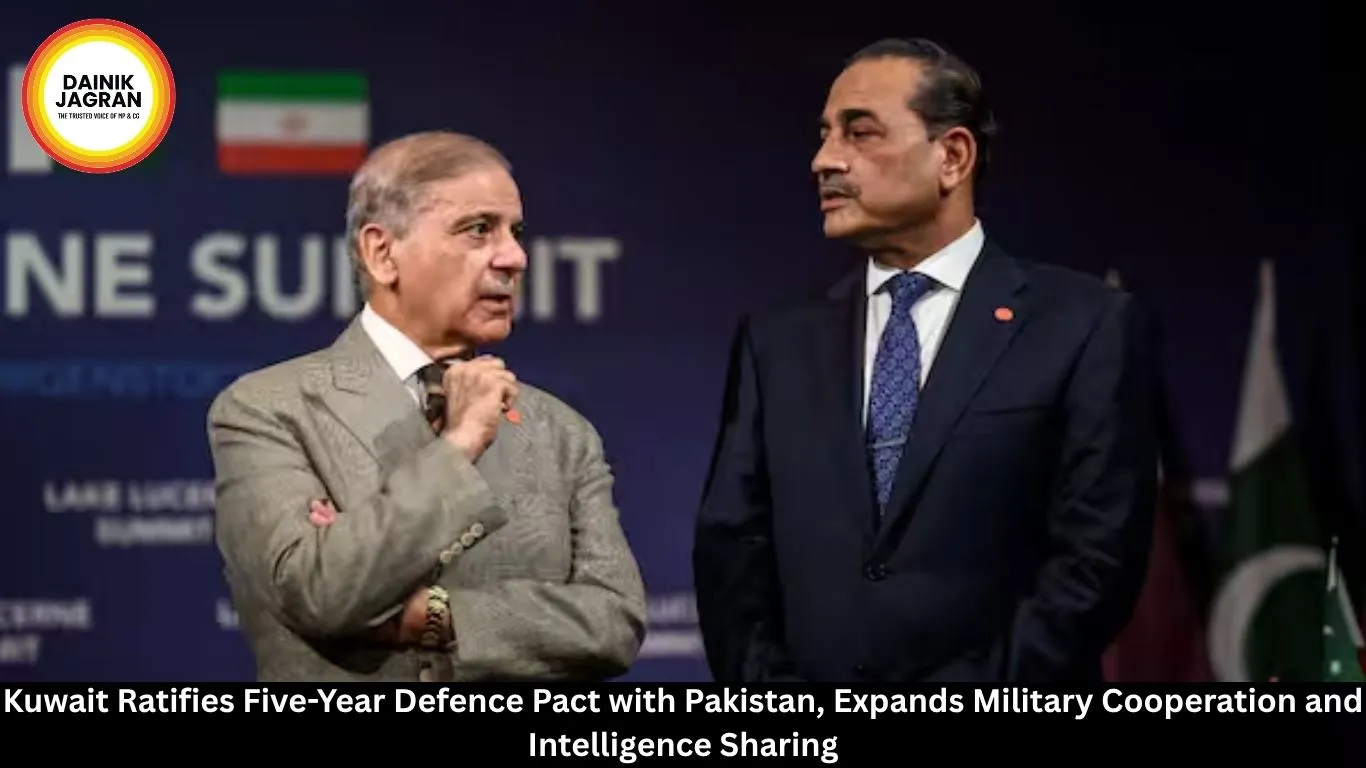
 Kuwait has formally ratified a five-year Defence Cooperation Agreement (DCA) with Pakistan, strengthening bilateral military ties through expanded cooperation in defence technology, intelligence sharing, military training and logistics.

The agreement was approved through Amiri Decree No. 73 of 2026 and published in Kuwait's official gazette, Kuwait Al-Yaum. It formalises a defence pact originally signed between the two countries in June 2023.

The ratification comes less than a year after Saudi Arabia signed a Strategic Mutual Defence Agreement (SMDA) with Pakistan in September 2025, signalling evolving security partnerships across the Gulf region.

What the Defence Agreement Includes

The newly ratified pact establishes an institutional framework for long-term cooperation between the Kuwaiti Armed Forces and the Pakistan Armed Forces.

Key areas covered under the agreement include:

  • Joint military training and education.

  • Intelligence sharing and strategic consultations.

  • Defence technology and military research.

  • Logistics and electronic communication systems.

  • Military manufacturing and defence industry collaboration.

  • Exchange of defence personnel and military expertise.

A Joint Military Committee will oversee the implementation of the agreement, coordinate bilateral military visits, organise joint exercises and review cooperation programmes.

The agreement will remain valid for five years and will automatically renew unless either country formally withdraws.

No Mutual Defence Clause

Unlike the Saudi Arabia-Pakistan Strategic Mutual Defence Agreement signed in 2025, Kuwait's agreement does not contain a mutual defence commitment.

The pact focuses on institutional cooperation, military capacity building and defence collaboration rather than providing an automatic military response in the event either country comes under attack.

As a result, the agreement strengthens defence cooperation without creating a collective security alliance.

Regional Security Context

The agreement comes at a time when Gulf nations are reassessing their security partnerships amid continued geopolitical instability in West Asia.

Regional tensions involving Iran and Israel, disruptions linked to the Houthi movement in maritime routes and changing perceptions regarding long-term American security commitments have encouraged Gulf Cooperation Council (GCC) countries to diversify their defence partnerships.

Analysts say several Gulf states are increasingly pursuing a strategy of engaging multiple security partners instead of relying exclusively on traditional Western allies.

Strategic Importance for Pakistan

For Pakistan, the agreement represents another step in expanding its defence diplomacy while facing ongoing economic challenges.

Islamabad has increasingly promoted its military training capabilities, defence expertise and security cooperation as strategic assets to deepen relations with Gulf countries.

Observers believe such agreements can strengthen Pakistan's defence exports, military collaboration and broader diplomatic engagement with oil-rich Gulf states.

Pakistan has maintained military advisory roles and personnel deployments in several Gulf countries for decades. The new agreement formalises many of those long-standing arrangements through a structured government-to-government framework.

Implications for India

Security experts believe the development is one that India is likely to monitor closely, although it is not viewed as an immediate strategic concern.

India maintains extensive economic, energy and strategic partnerships with Gulf countries, including Kuwait, Saudi Arabia and the United Arab Emirates (UAE).

With bilateral trade exceeding $100 billion across the Gulf region and a large Indian diaspora living and working there, New Delhi's engagement with GCC nations remains driven primarily by trade, investment, energy security and people-to-people ties.

Analysts note that Gulf countries increasingly separate their economic relationships with India from their defence partnerships with Pakistan, allowing both sets of engagements to coexist without direct conflict.
 

--------

🚨 Beat the News Rush – Join Now!

Get breaking alerts, hot exclusives, and game-changing stories instantly on your phone. No delays, no fluff – just the edge you need. ⚡

Tap to join: 

🟢 WhatsApp Channel: Dainik Jagran MP CG

Crave more?

🅕 Facebook: Dainik Jagran MP CG English

🅧 Twitter (X): Dainik Jagran MP CG

🅘 Instagram: Dainik Jagran MP CG

Share the fire – keep your crew ahead! 🗞️🔥

english.dainikjagranmpcg.com
28 Jul 2026 By Abhishek Joshi

Kuwait Ratifies Five-Year Defence Cooperation Agreement with Pakistan

Digital Desk

 Kuwait has formally ratified a five-year Defence Cooperation Agreement (DCA) with Pakistan, strengthening bilateral military ties through expanded cooperation in defence technology, intelligence sharing, military training and logistics.

The agreement was approved through Amiri Decree No. 73 of 2026 and published in Kuwait's official gazette, Kuwait Al-Yaum. It formalises a defence pact originally signed between the two countries in June 2023.

The ratification comes less than a year after Saudi Arabia signed a Strategic Mutual Defence Agreement (SMDA) with Pakistan in September 2025, signalling evolving security partnerships across the Gulf region.

What the Defence Agreement Includes

The newly ratified pact establishes an institutional framework for long-term cooperation between the Kuwaiti Armed Forces and the Pakistan Armed Forces.

Key areas covered under the agreement include:

  • Joint military training and education.

  • Intelligence sharing and strategic consultations.

  • Defence technology and military research.

  • Logistics and electronic communication systems.

  • Military manufacturing and defence industry collaboration.

  • Exchange of defence personnel and military expertise.

A Joint Military Committee will oversee the implementation of the agreement, coordinate bilateral military visits, organise joint exercises and review cooperation programmes.

The agreement will remain valid for five years and will automatically renew unless either country formally withdraws.

No Mutual Defence Clause

Unlike the Saudi Arabia-Pakistan Strategic Mutual Defence Agreement signed in 2025, Kuwait's agreement does not contain a mutual defence commitment.

The pact focuses on institutional cooperation, military capacity building and defence collaboration rather than providing an automatic military response in the event either country comes under attack.

As a result, the agreement strengthens defence cooperation without creating a collective security alliance.

Regional Security Context

The agreement comes at a time when Gulf nations are reassessing their security partnerships amid continued geopolitical instability in West Asia.

Regional tensions involving Iran and Israel, disruptions linked to the Houthi movement in maritime routes and changing perceptions regarding long-term American security commitments have encouraged Gulf Cooperation Council (GCC) countries to diversify their defence partnerships.

Analysts say several Gulf states are increasingly pursuing a strategy of engaging multiple security partners instead of relying exclusively on traditional Western allies.

Strategic Importance for Pakistan

For Pakistan, the agreement represents another step in expanding its defence diplomacy while facing ongoing economic challenges.

Islamabad has increasingly promoted its military training capabilities, defence expertise and security cooperation as strategic assets to deepen relations with Gulf countries.

Observers believe such agreements can strengthen Pakistan's defence exports, military collaboration and broader diplomatic engagement with oil-rich Gulf states.

Pakistan has maintained military advisory roles and personnel deployments in several Gulf countries for decades. The new agreement formalises many of those long-standing arrangements through a structured government-to-government framework.

Implications for India

Security experts believe the development is one that India is likely to monitor closely, although it is not viewed as an immediate strategic concern.

India maintains extensive economic, energy and strategic partnerships with Gulf countries, including Kuwait, Saudi Arabia and the United Arab Emirates (UAE).

With bilateral trade exceeding $100 billion across the Gulf region and a large Indian diaspora living and working there, New Delhi's engagement with GCC nations remains driven primarily by trade, investment, energy security and people-to-people ties.

Analysts note that Gulf countries increasingly separate their economic relationships with India from their defence partnerships with Pakistan, allowing both sets of engagements to coexist without direct conflict.

 

https://english.dainikjagranmpcg.com/international/kuwait-ratifies-five-year-defence-cooperation-agreement-with-pakistan/article-23884

Trending News