


⁠⁠When Hormuz Burned, Sandesara Delivered

Digital Desk

⁠⁠When Hormuz Burned, Sandesara Delivered

Every time the Strait of Hormuz turns tense, India has reason to watch closely. The narrow channel links the Persian Gulf to the Arabian Sea and carries a large share of the world's seaborne oil. When its security is in doubt, the market reacts within hours. Prices swing, supply fears spread, and big importers start looking for other options.

This time the cost has not stayed on the prices screen. Three Indian seafarers were confirmed dead this week off the coast of Oman, and thousands more remain at sea across the Gulf. India buys most of the crude it burns from abroad, so a threat to the main routes feeds straight into the economy, and a problem that looks small out at sea can become a much larger one onshore.

For all the noise, the Gulf remains the one variable nobody can pin down. As of this week there is talk of an end to the standoff. President Trump has said a US-Iran agreement is close, that a signing could come within days, and that the strait would reopen to all traffic, and oil prices have eased back below ninety dollars a barrel on the news. Tehran has pushed back on the timing and the terms, and even the draft on the table leaves the long-term control of Hormuz unsettled, to be worked out between Iran and Oman over the coming weeks.

That uncertainty is exactly the problem. A waterway whose status can swing on a single statement, in either direction, is not something a country can build its energy security around. Whether or not a deal is signed this month, the chokepoint stays a chokepoint.

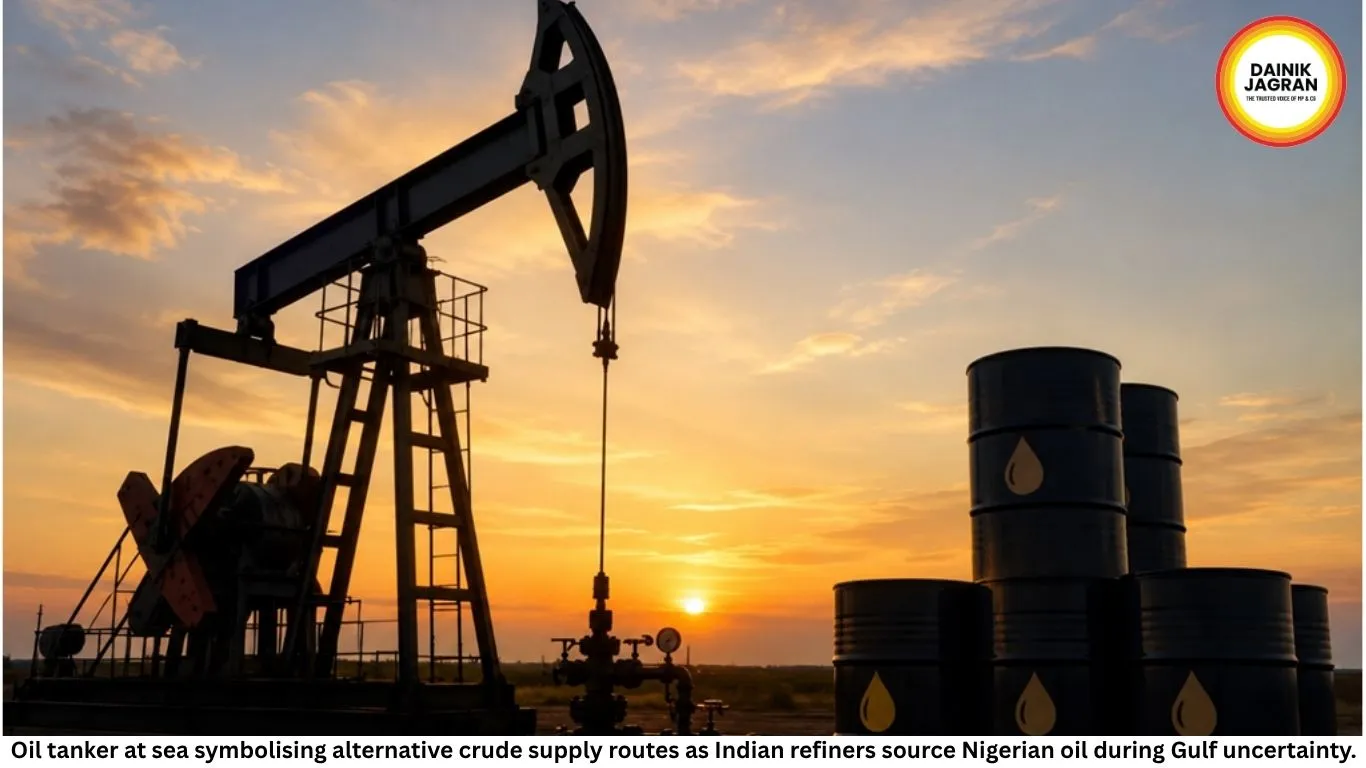
Which is why, while the headlines stayed fixed on the Gulf these past few months, a quieter development well away from it deserved more attention than it got. Between March and May, three state-owned refiners, Indian Oil, Bharat Petroleum and Hindustan Petroleum, took delivery of roughly six million barrels of crude from SEEPCO, the Nigeria-based producer run by Nitin Sandesara.

On paper that is an ordinary commercial deal. What makes it worth a second look is the timing, and where the oil came from.

Start with the route. The oil came from Nigeria, not the Gulf. Nigerian crude loads on the Atlantic coast and reaches buyers without going near Hormuz, so while traders and governments were busy pricing in Gulf risk, these barrels arrived from a region the trouble had not reached. SEEPCO's Okwuibome grade gave the three refiners a steady stream of supply through a stretch when the Gulf was anything but steady. Under that kind of stress, reliability is worth about as much as the price.

Look at where the oil ended up. Indian Oil, Bharat Petroleum and Hindustan Petroleum are public-sector companies, the government's own. In supplying them, SEEPCO is once again doing business directly with the Indian state, putting crude into the system the government leans on to keep the country running. For a company whose dealings with India had been clouded for years, that is a notable return to working with the public sector, and at the moment it mattered most.

That return rests on firmer ground than it once did. The long legal cloud over Nitin Sandesara has lifted. The proceedings against him are closed and there is no case pending. With that behind him, the position of both the man and the company is markedly stronger than it was even a year ago: free to deal, free to supply, and back in active business with India's largest buyers. The six million barrels are the first clear sign of what that restored standing looks like in practice.

This matters beyond a single shipment. Energy security is usually discussed in terms of what governments do, such as building reserves, signing supply deals and courting partners. That matters. But so does who actually owns and runs the production. A barrel you can buy is useful; a barrel from a field controlled by an Indian-owned company is harder for anyone else to divert. SEEPCO is the only Indian-owned producer pumping crude inside an OPEC country, and in a crunch that ownership turns into supply India can count on.

The barrels did not have to come to India at all. When the main shipping lanes look risky, demand for non-Gulf crude climbs, and SEEPCO had buyers it could have served elsewhere. A meaningful share went to Indian refineries anyway, at exactly the point when dependable supply was hardest to find.

None of this happened overnight. Oil fields are slow things. The infrastructure, the logistics and the customer relationships all have to be built years before anyone can name the crisis they will end up answering. What reached Indian refiners this spring rests on groundwork laid a decade or more back, and on a company now in a position to put it to use.

The supplies that steady a country in a crisis are rarely arranged during one; they come from assets and relationships built quietly when markets are calm. A possible truce at Hormuz does not change that, because the next flare-up is only ever one announcement away. Six million barrels from Nigeria will not redraw the global energy map. But with the Gulf still unsettled and Indian lives already lost at sea, it is a timely reminder of the value of an Indian-owned producer, free of its old constraints and back in business with the government's own refiners, ready to deliver when it counts.


--------

🚨 Beat the News Rush – Join Now!

Get breaking alerts, hot exclusives, and game-changing stories instantly on your phone. No delays, no fluff – just the edge you need. ⚡

Tap to join: 

🟢 WhatsApp Channel: Dainik Jagran MP CG

Crave more?

🅕 Facebook: Dainik Jagran MP CG English

🅧 Twitter (X): Dainik Jagran MP CG

🅘 Instagram: Dainik Jagran MP CG

Share the fire – keep your crew ahead! 🗞️🔥

english.dainikjagranmpcg.com
17 Jun 2026 By Rishita

⁠⁠When Hormuz Burned, Sandesara Delivered

Digital Desk

This time the cost has not stayed on the prices screen. Three Indian seafarers were confirmed dead this week off the coast of Oman, and thousands more remain at sea across the Gulf. India buys most of the crude it burns from abroad, so a threat to the main routes feeds straight into the economy, and a problem that looks small out at sea can become a much larger one onshore.

For all the noise, the Gulf remains the one variable nobody can pin down. As of this week there is talk of an end to the standoff. President Trump has said a US-Iran agreement is close, that a signing could come within days, and that the strait would reopen to all traffic, and oil prices have eased back below ninety dollars a barrel on the news. Tehran has pushed back on the timing and the terms, and even the draft on the table leaves the long-term control of Hormuz unsettled, to be worked out between Iran and Oman over the coming weeks.

That uncertainty is exactly the problem. A waterway whose status can swing on a single statement, in either direction, is not something a country can build its energy security around. Whether or not a deal is signed this month, the chokepoint stays a chokepoint.

Which is why, while the headlines stayed fixed on the Gulf these past few months, a quieter development well away from it deserved more attention than it got. Between March and May, three state-owned refiners, Indian Oil, Bharat Petroleum and Hindustan Petroleum, took delivery of roughly six million barrels of crude from SEEPCO, the Nigeria-based producer run by Nitin Sandesara.

On paper that is an ordinary commercial deal. What makes it worth a second look is the timing, and where the oil came from.

Start with the route. The oil came from Nigeria, not the Gulf. Nigerian crude loads on the Atlantic coast and reaches buyers without going near Hormuz, so while traders and governments were busy pricing in Gulf risk, these barrels arrived from a region the trouble had not reached. SEEPCO's Okwuibome grade gave the three refiners a steady stream of supply through a stretch when the Gulf was anything but steady. Under that kind of stress, reliability is worth about as much as the price.

Look at where the oil ended up. Indian Oil, Bharat Petroleum and Hindustan Petroleum are public-sector companies, the government's own. In supplying them, SEEPCO is once again doing business directly with the Indian state, putting crude into the system the government leans on to keep the country running. For a company whose dealings with India had been clouded for years, that is a notable return to working with the public sector, and at the moment it mattered most.

That return rests on firmer ground than it once did. The long legal cloud over Nitin Sandesara has lifted. The proceedings against him are closed and there is no case pending. With that behind him, the position of both the man and the company is markedly stronger than it was even a year ago: free to deal, free to supply, and back in active business with India's largest buyers. The six million barrels are the first clear sign of what that restored standing looks like in practice.

This matters beyond a single shipment. Energy security is usually discussed in terms of what governments do, such as building reserves, signing supply deals and courting partners. That matters. But so does who actually owns and runs the production. A barrel you can buy is useful; a barrel from a field controlled by an Indian-owned company is harder for anyone else to divert. SEEPCO is the only Indian-owned producer pumping crude inside an OPEC country, and in a crunch that ownership turns into supply India can count on.

The barrels did not have to come to India at all. When the main shipping lanes look risky, demand for non-Gulf crude climbs, and SEEPCO had buyers it could have served elsewhere. A meaningful share went to Indian refineries anyway, at exactly the point when dependable supply was hardest to find.

None of this happened overnight. Oil fields are slow things. The infrastructure, the logistics and the customer relationships all have to be built years before anyone can name the crisis they will end up answering. What reached Indian refiners this spring rests on groundwork laid a decade or more back, and on a company now in a position to put it to use.

The supplies that steady a country in a crisis are rarely arranged during one; they come from assets and relationships built quietly when markets are calm. A possible truce at Hormuz does not change that, because the next flare-up is only ever one announcement away. Six million barrels from Nigeria will not redraw the global energy map. But with the Gulf still unsettled and Indian lives already lost at sea, it is a timely reminder of the value of an Indian-owned producer, free of its old constraints and back in business with the government's own refiners, ready to deliver when it counts.

https://english.dainikjagranmpcg.com/international/%E2%81%A0%E2%81%A0when-hormuz-burned-sandesara-delivered/article-20243
Tags:

Latest News