Historic Pact Signed
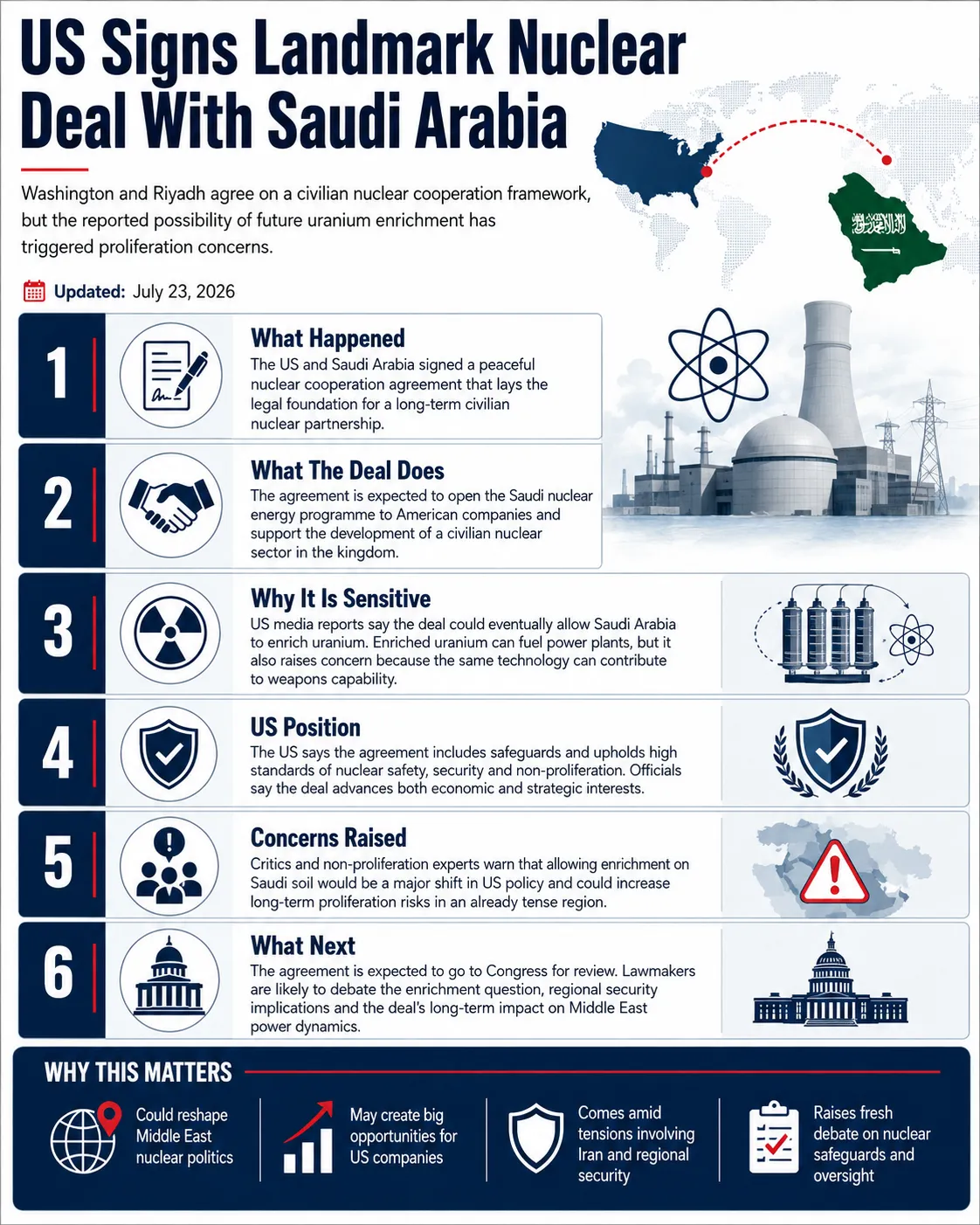
The United States and Saudi Arabia have signed a landmark civilian nuclear cooperation agreement that could bring American reactor technology and expertise into the kingdom’s emerging nuclear energy programme.
US Energy Secretary Chris Wright and Saudi Energy Minister Prince Abdulaziz bin Salman signed the agreement on July 22. The two countries also concluded a separate bilateral safeguards arrangement. Washington described the partnership as a decades-long, multi-billion-dollar initiative.
The US-Saudi nuclear deal, commonly known as a Section 123 agreement, provides the legal framework required for major transfers of American nuclear equipment, materials and technology.
What Agreement Enables
The US Department of Energy said the pact would give American companies greater access to Saudi Arabia’s nuclear energy programme. It expects the partnership to support US jobs, industrial supply chains and nuclear technology exports while helping Riyadh meet its growing energy requirements.
Saudi Arabia said the agreement would strengthen efforts to diversify its energy sources, develop advanced technologies and expand bilateral investment opportunities. The kingdom wants nuclear power to support domestic electricity demand while preserving more of its oil and gas production for export.
The agreement also strengthens Washington’s position against Chinese and Russian nuclear suppliers that have sought a role in Saudi Arabia’s energy plans.
Enrichment Question Emerges
The US government has not released the complete text of the US-Saudi nuclear deal, leaving several operational conditions outside public scrutiny.
Reuters reported that the agreement permits Saudi Arabia to enrich uranium and reprocess spent nuclear fuel. The Associated Press reported that it could pave the way for a Saudi enrichment facility after the two countries complete a joint technical study.
Uranium enrichment can produce fuel for civilian reactors. However, the same technology can create highly enriched material if a country expands its programme beyond civilian requirements. That dual-use capability has placed the reported provision at the centre of the international debate.
 Safeguards Draw Scrutiny
The Trump administration said the bilateral safeguards agreement would uphold high standards of nuclear safety, security and non-proliferation. Wright said the arrangements relied on American technology and reinforced the two countries’ commercial and strategic relationship.
However, Reuters and AP reported that the package does not require Saudi Arabia to implement the International Atomic Energy Agency’s Additional Protocol. The protocol gives the UN nuclear watchdog broader verification powers, including expanded access and more intrusive inspections.
The omission has drawn concern from arms-control specialists and some US lawmakers, who argue that Washington should demand stronger monitoring before transferring sensitive nuclear technology.
Regional Concerns Grow
The agreement differs from the US nuclear pact with the United Arab Emirates. Abu Dhabi agreed not to enrich uranium or reprocess nuclear fuel on its territory, creating what non-proliferation experts often describe as the regional “gold standard”.
Saudi Crown Prince Mohammed bin Salman has previously said the kingdom does not seek nuclear weapons but would pursue one if Iran developed an atomic bomb. That position has increased concern that domestic enrichment infrastructure could alter the strategic balance in the Middle East.
US Secretary of State Marco Rubio rejected suggestions that Washington would approve an agreement that increased proliferation risks. Democratic lawmakers, however, have called for Congress to examine the deal closely.
Commercial Stakes Rise
Reuters reported that the roughly 30-year agreement could create contracts worth tens of billions of dollars. US nuclear company Westinghouse could benefit if Saudi Arabia selects its AP1000 reactor design for planned power stations.
The US-Saudi nuclear deal has therefore become both a strategic and commercial contest. Washington wants to retain influence over safety standards while ensuring that American companies secure a leading position in the kingdom’s nuclear expansion.
The development has featured prominently in Latest News Today and National and International News coverage. India News Update and Trending News India platforms are also tracking the pact because changes in Middle East security can affect global energy markets.
Congress Review Begins
The administration will now send the agreement to the US Congress. Under the Atomic Energy Act, lawmakers review Section 123 agreements during two periods totalling 90 days of continuous congressional session.
Congress can pass a joint resolution rejecting the agreement. However, lawmakers would require sufficient support to overcome a presidential veto if President Donald Trump defended the pact.

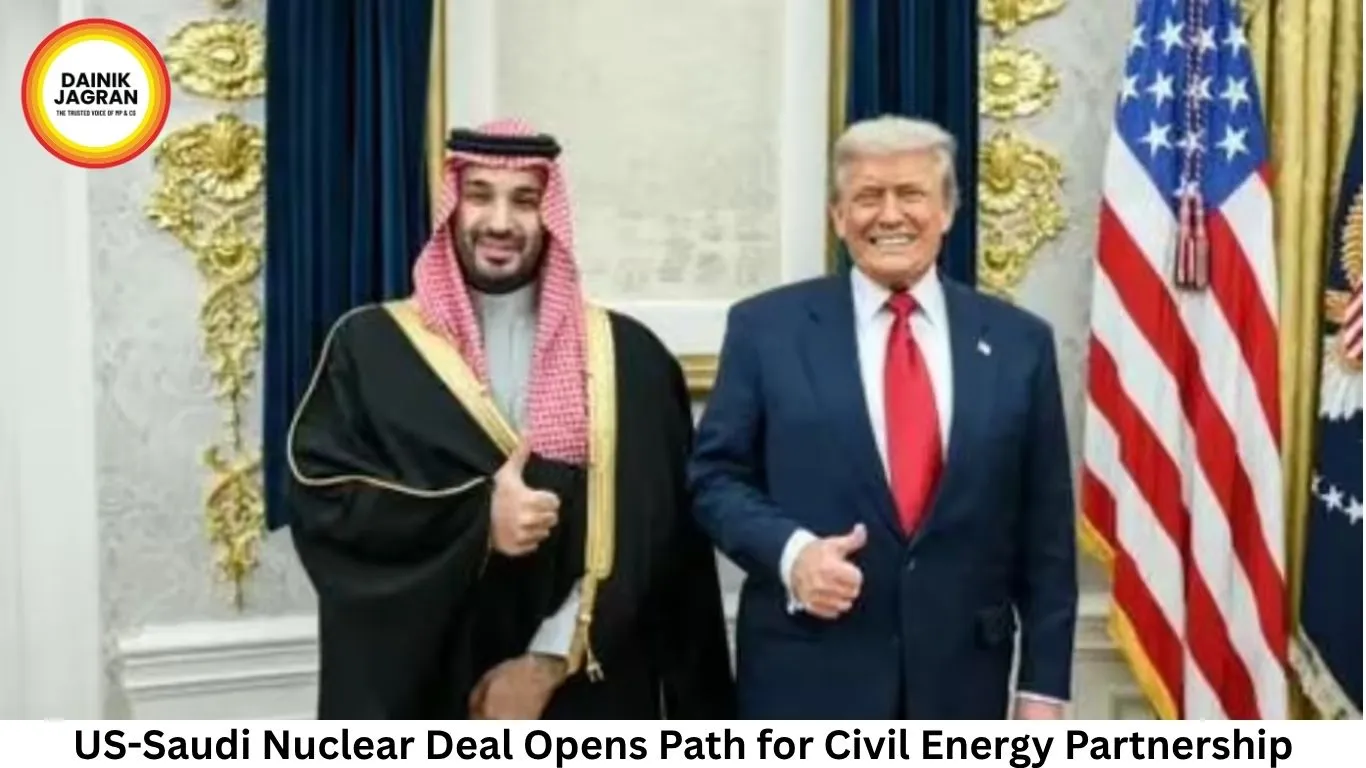
US-Saudi Nuclear Deal Opens Path for Civil Energy Partnership
Digital Desk
Historic Pact Signed
The United States and Saudi Arabia have signed a landmark civilian nuclear cooperation agreement that could bring American reactor technology and expertise into the kingdom’s emerging nuclear energy programme.
US Energy Secretary Chris Wright and Saudi Energy Minister Prince Abdulaziz bin Salman signed the agreement on July 22. The two countries also concluded a separate bilateral safeguards arrangement. Washington described the partnership as a decades-long, multi-billion-dollar initiative.
The US-Saudi nuclear deal, commonly known as a Section 123 agreement, provides the legal framework required for major transfers of American nuclear equipment, materials and technology.
What Agreement Enables
The US Department of Energy said the pact would give American companies greater access to Saudi Arabia’s nuclear energy programme. It expects the partnership to support US jobs, industrial supply chains and nuclear technology exports while helping Riyadh meet its growing energy requirements.
Saudi Arabia said the agreement would strengthen efforts to diversify its energy sources, develop advanced technologies and expand bilateral investment opportunities. The kingdom wants nuclear power to support domestic electricity demand while preserving more of its oil and gas production for export.
The agreement also strengthens Washington’s position against Chinese and Russian nuclear suppliers that have sought a role in Saudi Arabia’s energy plans.
Enrichment Question Emerges
The US government has not released the complete text of the US-Saudi nuclear deal, leaving several operational conditions outside public scrutiny.
Reuters reported that the agreement permits Saudi Arabia to enrich uranium and reprocess spent nuclear fuel. The Associated Press reported that it could pave the way for a Saudi enrichment facility after the two countries complete a joint technical study.
Uranium enrichment can produce fuel for civilian reactors. However, the same technology can create highly enriched material if a country expands its programme beyond civilian requirements. That dual-use capability has placed the reported provision at the centre of the international debate.
Safeguards Draw Scrutiny
The Trump administration said the bilateral safeguards agreement would uphold high standards of nuclear safety, security and non-proliferation. Wright said the arrangements relied on American technology and reinforced the two countries’ commercial and strategic relationship.
However, Reuters and AP reported that the package does not require Saudi Arabia to implement the International Atomic Energy Agency’s Additional Protocol. The protocol gives the UN nuclear watchdog broader verification powers, including expanded access and more intrusive inspections.
The omission has drawn concern from arms-control specialists and some US lawmakers, who argue that Washington should demand stronger monitoring before transferring sensitive nuclear technology.
Regional Concerns Grow
The agreement differs from the US nuclear pact with the United Arab Emirates. Abu Dhabi agreed not to enrich uranium or reprocess nuclear fuel on its territory, creating what non-proliferation experts often describe as the regional “gold standard”.
Saudi Crown Prince Mohammed bin Salman has previously said the kingdom does not seek nuclear weapons but would pursue one if Iran developed an atomic bomb. That position has increased concern that domestic enrichment infrastructure could alter the strategic balance in the Middle East.
US Secretary of State Marco Rubio rejected suggestions that Washington would approve an agreement that increased proliferation risks. Democratic lawmakers, however, have called for Congress to examine the deal closely.
Commercial Stakes Rise
Reuters reported that the roughly 30-year agreement could create contracts worth tens of billions of dollars. US nuclear company Westinghouse could benefit if Saudi Arabia selects its AP1000 reactor design for planned power stations.
The US-Saudi nuclear deal has therefore become both a strategic and commercial contest. Washington wants to retain influence over safety standards while ensuring that American companies secure a leading position in the kingdom’s nuclear expansion.
The development has featured prominently in Latest News Today and National and International News coverage. India News Update and Trending News India platforms are also tracking the pact because changes in Middle East security can affect global energy markets.
Congress Review Begins
The administration will now send the agreement to the US Congress. Under the Atomic Energy Act, lawmakers review Section 123 agreements during two periods totalling 90 days of continuous congressional session.
Congress can pass a joint resolution rejecting the agreement. However, lawmakers would require sufficient support to overcome a presidential veto if President Donald Trump defended the pact.
.jpg)