

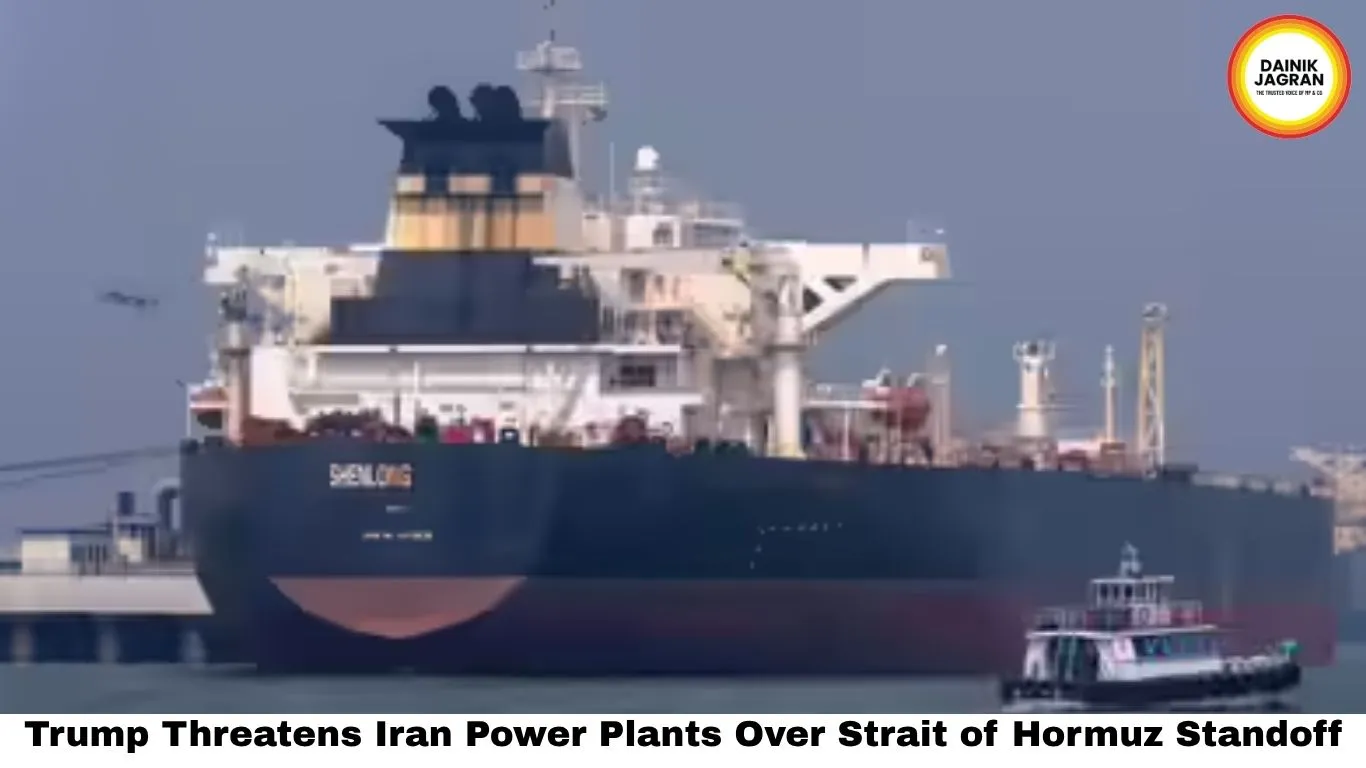
Trump Threatens Iran Power Plants Over Strait of Hormuz Standoff

Digital Desk

Trump Threatens Iran Power Plants Over Strait of Hormuz Standoff

Trump issues 48-hour ultimatum to Iran to reopen Strait of Hormuz or face obliteration of power plants. Missiles hit Dimona and Arad; Iran launches 70th wave of attacks.

As Iran fires its 70th wave of attacks targeting Israel and Gulf states, Trump issues a 48-hour ultimatum to reopen the Strait of Hormuz — or face strikes on Iran's largest power plants.


A War Entering Its Most Dangerous Phase

Three weeks into one of the most consequential military conflicts since World War II, the US-Israel-Iran war showed no signs of slowing on March 22. Iranian missiles pierced Israeli air defences for the second consecutive day, striking the southern cities of Dimona and Arad in what Tehran described as retaliation for an earlier Israeli strike on Iran's Natanz nuclear enrichment facility. The world is now watching a conflict that began as a precision military campaign and has rapidly evolved into something far more unpredictable — and far more global.


Trump's 48-Hour Ultimatum

The most dramatic development of the day came from Washington. President Donald Trump issued a stark ultimatum on Saturday evening, threatening to strike and destroy Iranian power plants — beginning with the largest — if Tehran does not fully reopen the Strait of Hormuz within 48 hours. The deadline expires at 7:44 p.m. ET on Monday.

The threat marks a significant escalation in rhetoric. Trump had earlier on Friday suggested he was considering "winding down" US military operations, claiming the campaign was proceeding ahead of schedule. Hours later, he reversed course with the power plant threat — a move that signals the pressure building within the administration over surging fuel prices and the economic fallout of the Strait's effective closure.

Iran responded by warning that if its energy infrastructure is targeted, all energy, desalination, and information technology infrastructure belonging to the US and its Gulf allies will be struck in return.


Dimona and Arad Struck — Near Israel's Nuclear Facility

Two separate Iranian missile strikes on Dimona and Arad in southern Israel wounded more than 100 people after missile defence systems failed to intercept them. The Dimona strike is particularly alarming — the city is home to Israel's Negev Nuclear Research Centre. The International Atomic Energy Agency stated it was aware of the incident and had received no indication of damage to the facility, but the proximity has raised alarm globally.

In Arad, 64 people were wounded in the Iranian strike — seven in serious condition and 15 in moderate condition. Israel's military said strikes on Iran would increase significantly in the coming week.


Iran's 70th Wave — And Counting

Iran's armed forces announced their 70th wave of attacks, launching missiles and drones toward Israel and US bases across the Gulf — a surge that came in retaliation for an Israeli strike on Iran's South Pars natural gas field. Iranian forces have now conducted 21 confirmed attacks on commercial vessels since March 1 alone.

Kuwait bore significant pressure on Saturday — its air defences intercepted nine ballistic missiles and four drones in a single 24-hour period. Two separate waves of Iranian drones struck Kuwait's Mina al-Ahmadi refinery, sparking fires at one of the Middle East's largest oil processing facilities capable of handling 730,000 barrels per day.

Iran also renewed direct threats against the UAE, warning of crushing strikes on Ras al-Khaimah if further aggression is launched from Emirati territory.


The Strait of Hormuz: A Chokepoint Holding the World Hostage

The Strait of Hormuz — just 33 kilometres wide at its narrowest point, with shipping lanes only 3 kilometres across — handles roughly 20 million barrels of oil per day, approximately 20 percent of global oil consumption. Since the war began on February 28, Iran has effectively closed it to vessels from the US, Israel, and their Western allies.

Dubai crude oil prices reached a record US$166 per barrel on March 19. California's gasoline prices crossed $5 per gallon in the second week of March. Shipping companies have rerouted around Africa's southern tip. Maersk has pivoted to the Suez Canal. Insurance premiums for Gulf transit have surged dramatically.

The ripple effects stretch far beyond energy. The UN World Food Programme has warned of long-term global food price increases — nearly 50 percent of global urea and sulfur exports, critical for fertilisers, transit through the Strait.


How It All Started

On February 28, 2026, the United States and Israel launched coordinated strikes on Iran targeting its leadership, nuclear programme, and military infrastructure. Supreme Leader Ali Khamenei was killed in the initial strikes. Iran responded with massive missile and drone barrages across the region — hitting Israel, Saudi Arabia, UAE, Qatar, Kuwait, Bahrain, Jordan, and Iraq simultaneously.

By March 5, Iran had fired over 500 ballistic and naval missiles and nearly 2,000 drones since the start of hostilities. The rate of ballistic missile launches has since declined, with analysts pointing to depletion of Iranian missile stocks and a strategic shift toward high-impact penetration strikes using warheads of 1,000 kg or more — designed to overwhelm rather than saturate air defences.


Global Scramble for a Way Out

The diplomatic picture is chaotic. Trump said Iran wants to negotiate a deal — but he does not, claiming US objectives have been met weeks ahead of schedule. NATO allies in Europe have refused to provide military support for reopening the Strait. Trump publicly rebuked them. Japan, South Korea, and Australia were also criticised for not joining US operations.

France, the UK, and Germany have deployed naval assets and are coordinating escort missions for commercial vessels under Operation Aspides. Britain has confirmed that US forces may use Diego Garcia and RAF Fairford for defensive strikes targeting Iranian missiles at source.

India and Pakistan have dispatched destroyers to escort tankers in the Gulf of Oman — a rare instance of New Delhi and Islamabad operating in parallel on the same security objective. The Indian government has also proposed broader Indian Navy deployment to safeguard oil supplies critical to the country's economy.


What Comes Next

Trump's 48-hour ultimatum expires Monday evening. If Iran does not reopen the Strait, the next phase could involve direct US strikes on Iranian power infrastructure — a step that would deepen the conflict significantly and potentially draw in additional actors. The IAEA is monitoring nuclear sites on both sides. Twenty-two nations have jointly condemned Iran's attacks on commercial vessels. The Houthi movement in Yemen has warned it will respond to any attempt to forcibly reopen the Strait.

The war is entering its most consequential week yet — and the world's energy security, food supply chains, and diplomatic architecture hang in the balance.

english.dainikjagranmpcg.com
22 Mar 2026 By Jiya.S

Trump Threatens Iran Power Plants Over Strait of Hormuz Standoff

Digital Desk

As Iran fires its 70th wave of attacks targeting Israel and Gulf states, Trump issues a 48-hour ultimatum to reopen the Strait of Hormuz — or face strikes on Iran's largest power plants.


A War Entering Its Most Dangerous Phase

Three weeks into one of the most consequential military conflicts since World War II, the US-Israel-Iran war showed no signs of slowing on March 22. Iranian missiles pierced Israeli air defences for the second consecutive day, striking the southern cities of Dimona and Arad in what Tehran described as retaliation for an earlier Israeli strike on Iran's Natanz nuclear enrichment facility. The world is now watching a conflict that began as a precision military campaign and has rapidly evolved into something far more unpredictable — and far more global.


Trump's 48-Hour Ultimatum

The most dramatic development of the day came from Washington. President Donald Trump issued a stark ultimatum on Saturday evening, threatening to strike and destroy Iranian power plants — beginning with the largest — if Tehran does not fully reopen the Strait of Hormuz within 48 hours. The deadline expires at 7:44 p.m. ET on Monday.

The threat marks a significant escalation in rhetoric. Trump had earlier on Friday suggested he was considering "winding down" US military operations, claiming the campaign was proceeding ahead of schedule. Hours later, he reversed course with the power plant threat — a move that signals the pressure building within the administration over surging fuel prices and the economic fallout of the Strait's effective closure.

Iran responded by warning that if its energy infrastructure is targeted, all energy, desalination, and information technology infrastructure belonging to the US and its Gulf allies will be struck in return.


Dimona and Arad Struck — Near Israel's Nuclear Facility

Two separate Iranian missile strikes on Dimona and Arad in southern Israel wounded more than 100 people after missile defence systems failed to intercept them. The Dimona strike is particularly alarming — the city is home to Israel's Negev Nuclear Research Centre. The International Atomic Energy Agency stated it was aware of the incident and had received no indication of damage to the facility, but the proximity has raised alarm globally.

In Arad, 64 people were wounded in the Iranian strike — seven in serious condition and 15 in moderate condition. Israel's military said strikes on Iran would increase significantly in the coming week.


Iran's 70th Wave — And Counting

Iran's armed forces announced their 70th wave of attacks, launching missiles and drones toward Israel and US bases across the Gulf — a surge that came in retaliation for an Israeli strike on Iran's South Pars natural gas field. Iranian forces have now conducted 21 confirmed attacks on commercial vessels since March 1 alone.

Kuwait bore significant pressure on Saturday — its air defences intercepted nine ballistic missiles and four drones in a single 24-hour period. Two separate waves of Iranian drones struck Kuwait's Mina al-Ahmadi refinery, sparking fires at one of the Middle East's largest oil processing facilities capable of handling 730,000 barrels per day.

Iran also renewed direct threats against the UAE, warning of crushing strikes on Ras al-Khaimah if further aggression is launched from Emirati territory.


The Strait of Hormuz: A Chokepoint Holding the World Hostage

The Strait of Hormuz — just 33 kilometres wide at its narrowest point, with shipping lanes only 3 kilometres across — handles roughly 20 million barrels of oil per day, approximately 20 percent of global oil consumption. Since the war began on February 28, Iran has effectively closed it to vessels from the US, Israel, and their Western allies.

Dubai crude oil prices reached a record US$166 per barrel on March 19. California's gasoline prices crossed $5 per gallon in the second week of March. Shipping companies have rerouted around Africa's southern tip. Maersk has pivoted to the Suez Canal. Insurance premiums for Gulf transit have surged dramatically.

The ripple effects stretch far beyond energy. The UN World Food Programme has warned of long-term global food price increases — nearly 50 percent of global urea and sulfur exports, critical for fertilisers, transit through the Strait.


How It All Started

On February 28, 2026, the United States and Israel launched coordinated strikes on Iran targeting its leadership, nuclear programme, and military infrastructure. Supreme Leader Ali Khamenei was killed in the initial strikes. Iran responded with massive missile and drone barrages across the region — hitting Israel, Saudi Arabia, UAE, Qatar, Kuwait, Bahrain, Jordan, and Iraq simultaneously.

By March 5, Iran had fired over 500 ballistic and naval missiles and nearly 2,000 drones since the start of hostilities. The rate of ballistic missile launches has since declined, with analysts pointing to depletion of Iranian missile stocks and a strategic shift toward high-impact penetration strikes using warheads of 1,000 kg or more — designed to overwhelm rather than saturate air defences.


Global Scramble for a Way Out

The diplomatic picture is chaotic. Trump said Iran wants to negotiate a deal — but he does not, claiming US objectives have been met weeks ahead of schedule. NATO allies in Europe have refused to provide military support for reopening the Strait. Trump publicly rebuked them. Japan, South Korea, and Australia were also criticised for not joining US operations.

France, the UK, and Germany have deployed naval assets and are coordinating escort missions for commercial vessels under Operation Aspides. Britain has confirmed that US forces may use Diego Garcia and RAF Fairford for defensive strikes targeting Iranian missiles at source.

India and Pakistan have dispatched destroyers to escort tankers in the Gulf of Oman — a rare instance of New Delhi and Islamabad operating in parallel on the same security objective. The Indian government has also proposed broader Indian Navy deployment to safeguard oil supplies critical to the country's economy.


What Comes Next

Trump's 48-hour ultimatum expires Monday evening. If Iran does not reopen the Strait, the next phase could involve direct US strikes on Iranian power infrastructure — a step that would deepen the conflict significantly and potentially draw in additional actors. The IAEA is monitoring nuclear sites on both sides. Twenty-two nations have jointly condemned Iran's attacks on commercial vessels. The Houthi movement in Yemen has warned it will respond to any attempt to forcibly reopen the Strait.

The war is entering its most consequential week yet — and the world's energy security, food supply chains, and diplomatic architecture hang in the balance.

https://english.dainikjagranmpcg.com/international/-trump-threatens-iran-power-plants-over-strait-of-hormuz/article-15774

Related Posts

Advertisement

Latest News


