Iran Warns of 'Forceful Response' to Any Retaliation as US Urges Safe Passage in Hormuz

Digital desk

Iran Warns of 'Forceful Response' to Any Retaliation as US Urges Safe Passage in Hormuz

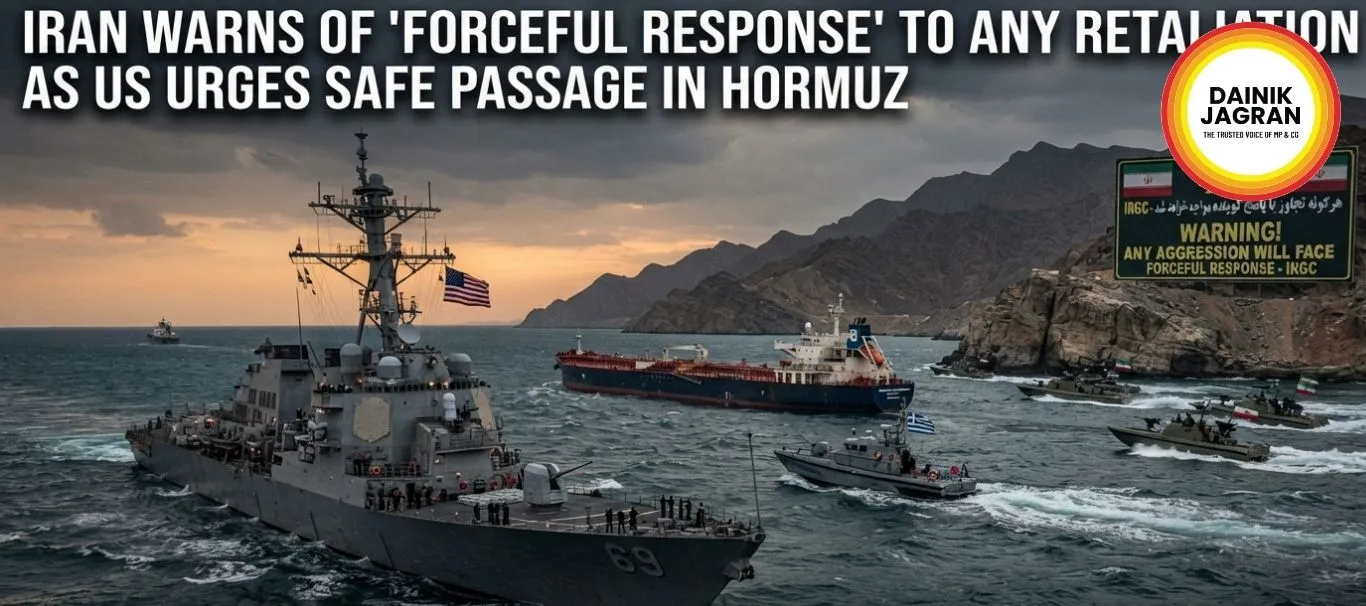
Tensions in the Strait of Hormuz ratcheted up again early Saturday, with Iran's military warning of a "rapid and decisive reaction" to any US interference in the waterway, even as Washington pressed Tehran to guarantee safe passage for commercial ships.

The warning came hours after the IRGC Navy declared the strait closed, saying it had fired warning shots at a vessel attempting to cross using an unauthorized route. Iran's statement said any ship failing to comply with its designated navigation routes would face an "immediate and forceful response" from its armed forces, and separately cautioned that US military involvement in the strait would draw its own swift retaliation. The US, for its part, has repeatedly called on Iran to keep the strait open to international shipping and ensure vessel safety, arguing the waterway falls outside any single country's control.

The latest exchange is the newest flashpoint in a war that has run since February 28, when the US and Israel launched an air campaign against Iran, and which has repeatedly spilled into the Gulf's shipping lanes. The strait, through which roughly a quarter of the world's seaborne oil trade normally passes, has seen traffic collapse since the conflict began, with tens of thousands of stranded mariners and vessels reported at points during the crisis.

The immediate trigger for Saturday's warning traces back to a rapid escalation earlier in the week. On July 7, Iranian forces struck two tankers in the strait — the Qatari-owned Al Rekayat and the Saudi-flagged Wedyan — prompting the US Treasury to reimpose sanctions on Iranian oil exports that had briefly been lifted under an earlier ceasefire framework. A third vessel was hit within 24 hours, and CENTCOM responded with a wave of strikes on Iranian military sites near the strait, which Iran's military vowed to answer with a "crushing response." Iran's negotiating team was defiant in the aftermath, with negotiator Mohammad Bagher Ghalibaf writing online that Tehran would not back down under pressure.

By Sunday, the US had launched a fresh round of strikes after an Iranian attack set a Cyprus-flagged container ship ablaze in the strait, leaving one crew member missing. Iran responded with strikes on Bahrain, Qatar and the UAE, triggering missile alerts across the Gulf; Qatar's military said it intercepted the incoming fire. Oman, which shares territorial waters around the strait with Iran, has been attempting to mediate, with the two countries' foreign ministers meeting Saturday to discuss de-escalation.

As of Sunday, neither side has signalled a shift in position. Iran has said the strait will remain closed "until further notice," while the US continues to insist on unrestricted passage for international shipping — leaving the waterway, and the fragile ceasefire framework built around it, in continued jeopardy.
--------

🚨 Beat the News Rush – Join Now!

Get breaking alerts, hot exclusives, and game-changing stories instantly on your phone. No delays, no fluff – just the edge you need. ⚡

Tap to join: 

🟢 WhatsApp Channel: Dainik Jagran MP CG

Crave more?

🅕 Facebook: Dainik Jagran MP CG English

🅧 Twitter (X): Dainik Jagran MP CG

🅘 Instagram: Dainik Jagran MP CG

Share the fire – keep your crew ahead! 🗞️🔥

english.dainikjagranmpcg.com
12 Jul 2026 By Priyanshu.Jha

Iran Warns of 'Forceful Response' to Any Retaliation as US Urges Safe Passage in Hormuz

Digital desk

The warning came hours after the IRGC Navy declared the strait closed, saying it had fired warning shots at a vessel attempting to cross using an unauthorized route. Iran's statement said any ship failing to comply with its designated navigation routes would face an "immediate and forceful response" from its armed forces, and separately cautioned that US military involvement in the strait would draw its own swift retaliation. The US, for its part, has repeatedly called on Iran to keep the strait open to international shipping and ensure vessel safety, arguing the waterway falls outside any single country's control.

The latest exchange is the newest flashpoint in a war that has run since February 28, when the US and Israel launched an air campaign against Iran, and which has repeatedly spilled into the Gulf's shipping lanes. The strait, through which roughly a quarter of the world's seaborne oil trade normally passes, has seen traffic collapse since the conflict began, with tens of thousands of stranded mariners and vessels reported at points during the crisis.

The immediate trigger for Saturday's warning traces back to a rapid escalation earlier in the week. On July 7, Iranian forces struck two tankers in the strait — the Qatari-owned Al Rekayat and the Saudi-flagged Wedyan — prompting the US Treasury to reimpose sanctions on Iranian oil exports that had briefly been lifted under an earlier ceasefire framework. A third vessel was hit within 24 hours, and CENTCOM responded with a wave of strikes on Iranian military sites near the strait, which Iran's military vowed to answer with a "crushing response." Iran's negotiating team was defiant in the aftermath, with negotiator Mohammad Bagher Ghalibaf writing online that Tehran would not back down under pressure.

By Sunday, the US had launched a fresh round of strikes after an Iranian attack set a Cyprus-flagged container ship ablaze in the strait, leaving one crew member missing. Iran responded with strikes on Bahrain, Qatar and the UAE, triggering missile alerts across the Gulf; Qatar's military said it intercepted the incoming fire. Oman, which shares territorial waters around the strait with Iran, has been attempting to mediate, with the two countries' foreign ministers meeting Saturday to discuss de-escalation.

As of Sunday, neither side has signalled a shift in position. Iran has said the strait will remain closed "until further notice," while the US continues to insist on unrestricted passage for international shipping — leaving the waterway, and the fragile ceasefire framework built around it, in continued jeopardy.

https://english.dainikjagranmpcg.com/international/6a5384dbd0d17/article-21923

Trending News