

The Pentagon report states that Beijing’s objective is to support long-distance deployments of its navy and air force, enable troop presence abroad, and strengthen logistics networks in strategically important regions. Particular focus has been placed on areas along vital maritime trade routes such as the Strait of Malacca, the Strait of Hormuz, and select locations in Africa, the Middle East, and South Asia.
US defence analysts caution that these facilities may not be limited to traditional military functions. According to the report, China could use dual-use infrastructure—developed under the cover of commercial investments—to collect intelligence and monitor the military movements of the United States and its allies. The report adds that many of these activities are expected to be conducted covertly, using advanced technical means that may be difficult for host nations to detect.
The Pentagon notes that China is simultaneously strengthening its command and control mechanisms to manage overseas military infrastructure more effectively. This would allow the PLA to operate bases in remote regions with greater coordination and responsiveness, enhancing its ability to project power beyond the Indo-Pacific.
The findings are part of an annual review commissioned by the US Congress for more than two decades to track China’s military capabilities and strategic intentions. The report says that while China’s immediate military focus remains on the “First Island Chain”—stretching from Japan through Taiwan to Malaysia—its growing economic and military strength has accelerated preparations for global force projection.
Beijing has set a target of building a “world-class” military by 2049, aligning with its stated goal of national rejuvenation. The Pentagon assessment says the PLA has already made substantial progress, citing rapid advancements in nuclear weapons, long-range missile systems, naval power, cyber warfare, and space capabilities. It also points to cyber operations such as the “Volt Typhoon” attacks in 2024, which US officials described as a direct threat to American security.
The report outlines three key objectives China aims to achieve by 2027: developing the capability to prevail in a conflict over Taiwan, achieving parity with the US in nuclear and strategic forces, and exerting sustained pressure on other countries in Asia. It states that the PLA is working on multiple military options to forcefully integrate Taiwan, including missile strikes, naval blockades, and amphibious assaults. Recent Chinese military exercises have simulated attacks in and around Taiwan, as well as scenarios involving US forces operating within a range of 1,500 to 2,000 nautical miles.
The US government, the report says, maintains that its goal is not to contain or humiliate China, but to prevent any single power from dominating the region at the expense of American and allied interests. Washington continues to advocate “peace through strength” while keeping communication channels open to avoid miscalculation.
Although military-level dialogue between the two countries resumed at several levels in 2024, the report notes that China later declined meetings with senior US military officials. The Pentagon said it remains committed to engagement to reduce tensions, even as it warns that China views US alliances, arms sales to Taiwan, and regional missile deployments as efforts to block its rise.
The report underscores that China’s expanding overseas military ambitions could reshape regional security dynamics, with implications for South Asia, the Indo-Pacific, and global maritime stability.

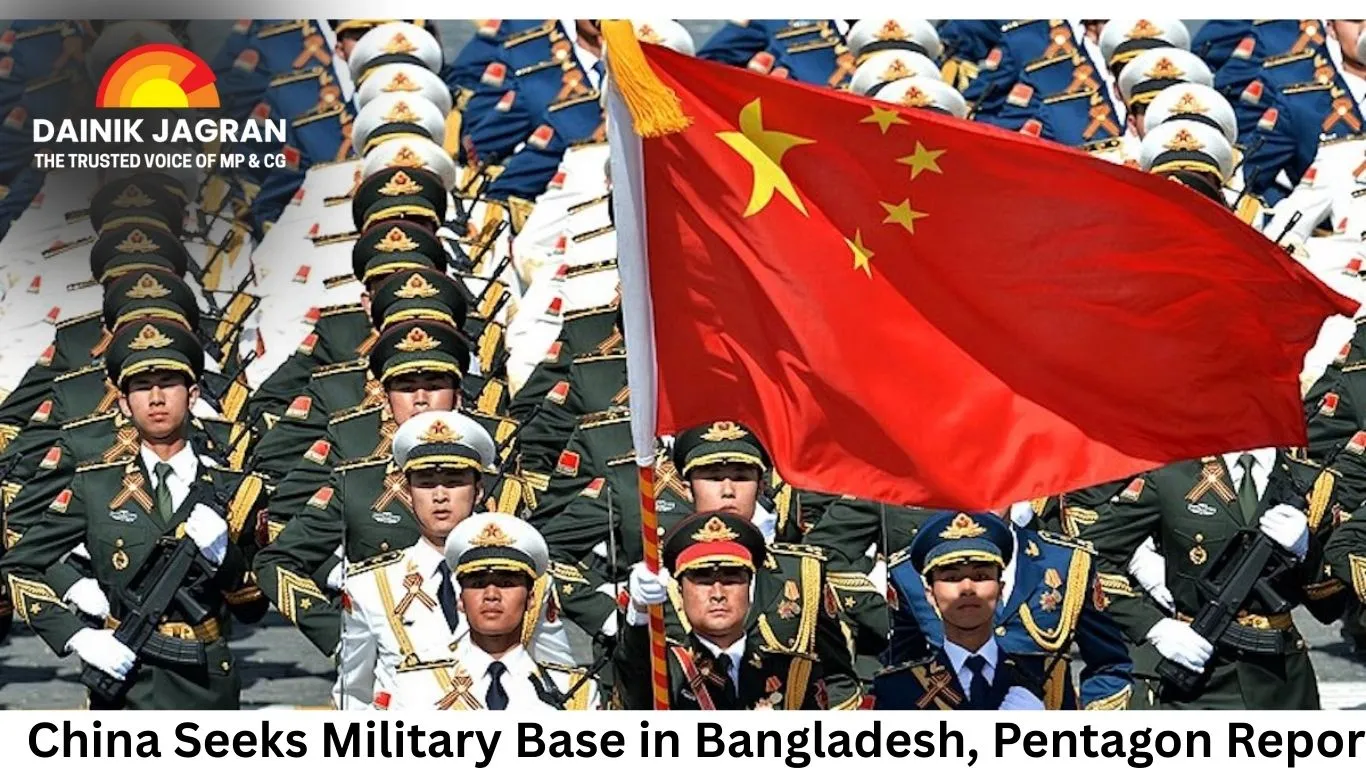
China Seeks Military Base in Bangladesh, Pentagon Report Warns of Expanding PLA Footprint
Digital Desk
The Pentagon report states that Beijing’s objective is to support long-distance deployments of its navy and air force, enable troop presence abroad, and strengthen logistics networks in strategically important regions. Particular focus has been placed on areas along vital maritime trade routes such as the Strait of Malacca, the Strait of Hormuz, and select locations in Africa, the Middle East, and South Asia.
US defence analysts caution that these facilities may not be limited to traditional military functions. According to the report, China could use dual-use infrastructure—developed under the cover of commercial investments—to collect intelligence and monitor the military movements of the United States and its allies. The report adds that many of these activities are expected to be conducted covertly, using advanced technical means that may be difficult for host nations to detect.
The Pentagon notes that China is simultaneously strengthening its command and control mechanisms to manage overseas military infrastructure more effectively. This would allow the PLA to operate bases in remote regions with greater coordination and responsiveness, enhancing its ability to project power beyond the Indo-Pacific.
The findings are part of an annual review commissioned by the US Congress for more than two decades to track China’s military capabilities and strategic intentions. The report says that while China’s immediate military focus remains on the “First Island Chain”—stretching from Japan through Taiwan to Malaysia—its growing economic and military strength has accelerated preparations for global force projection.
Beijing has set a target of building a “world-class” military by 2049, aligning with its stated goal of national rejuvenation. The Pentagon assessment says the PLA has already made substantial progress, citing rapid advancements in nuclear weapons, long-range missile systems, naval power, cyber warfare, and space capabilities. It also points to cyber operations such as the “Volt Typhoon” attacks in 2024, which US officials described as a direct threat to American security.
The report outlines three key objectives China aims to achieve by 2027: developing the capability to prevail in a conflict over Taiwan, achieving parity with the US in nuclear and strategic forces, and exerting sustained pressure on other countries in Asia. It states that the PLA is working on multiple military options to forcefully integrate Taiwan, including missile strikes, naval blockades, and amphibious assaults. Recent Chinese military exercises have simulated attacks in and around Taiwan, as well as scenarios involving US forces operating within a range of 1,500 to 2,000 nautical miles.
The US government, the report says, maintains that its goal is not to contain or humiliate China, but to prevent any single power from dominating the region at the expense of American and allied interests. Washington continues to advocate “peace through strength” while keeping communication channels open to avoid miscalculation.
Although military-level dialogue between the two countries resumed at several levels in 2024, the report notes that China later declined meetings with senior US military officials. The Pentagon said it remains committed to engagement to reduce tensions, even as it warns that China views US alliances, arms sales to Taiwan, and regional missile deployments as efforts to block its rise.
The report underscores that China’s expanding overseas military ambitions could reshape regional security dynamics, with implications for South Asia, the Indo-Pacific, and global maritime stability.




.jpg)




